
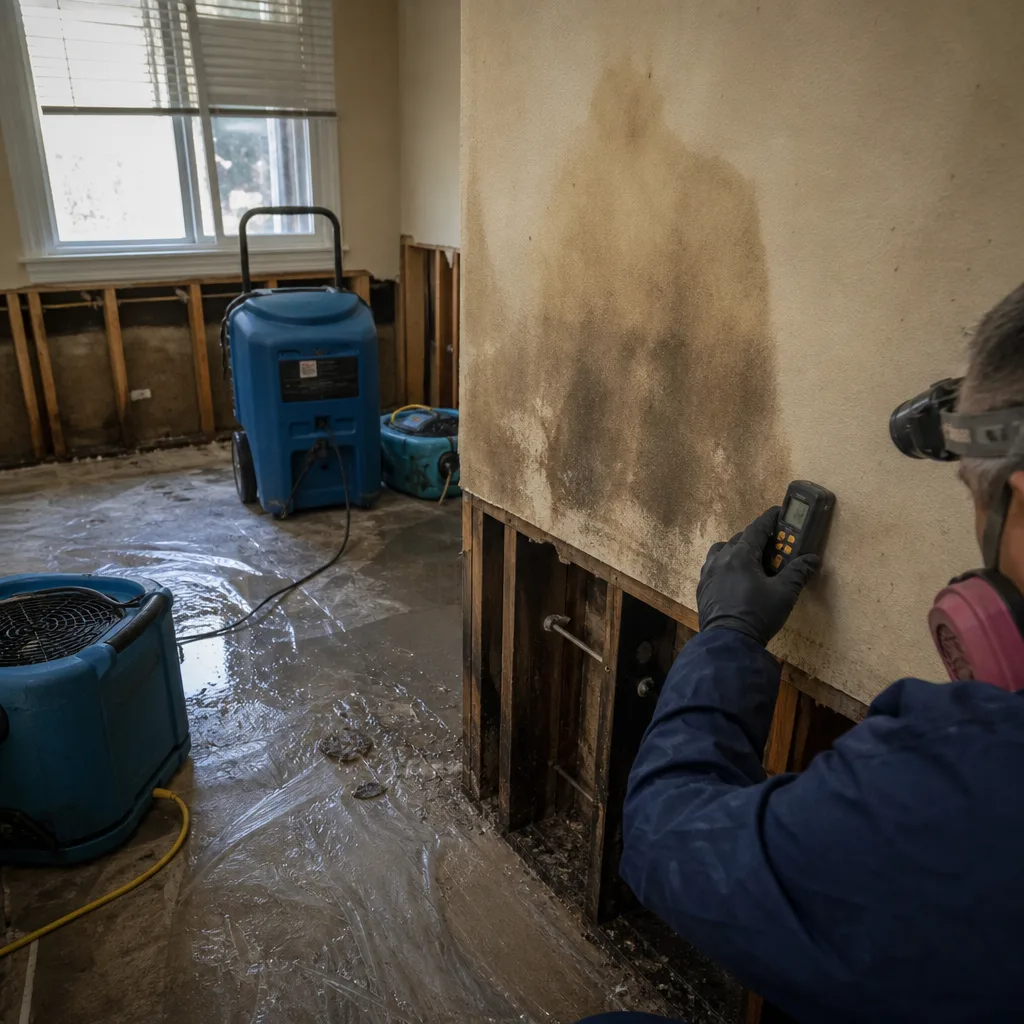
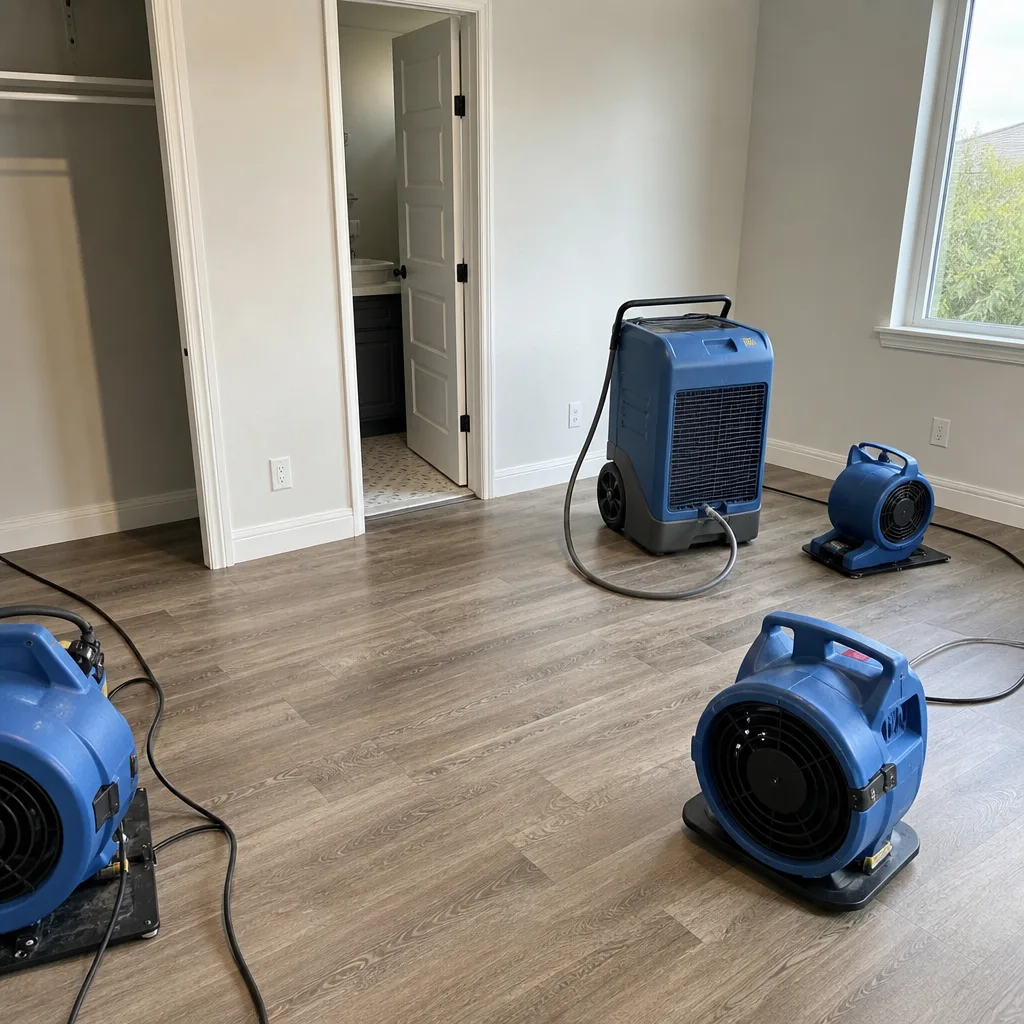
Free visual inspection and a written scope of work before any mitigation begins - photos, moisture readings, and drying logs go in your claim file
The scope we write is the scope we bill. Anything new gets shown to you, in writing, before we touch it.
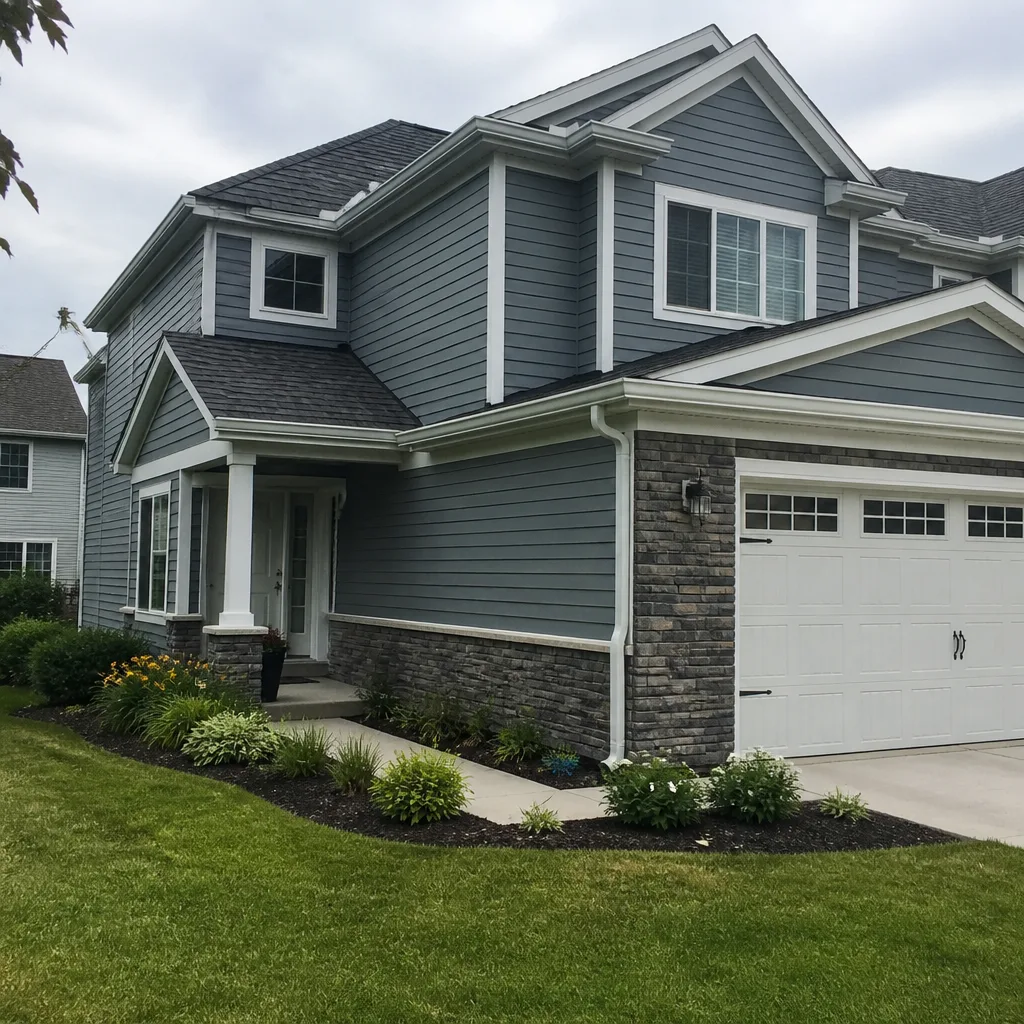
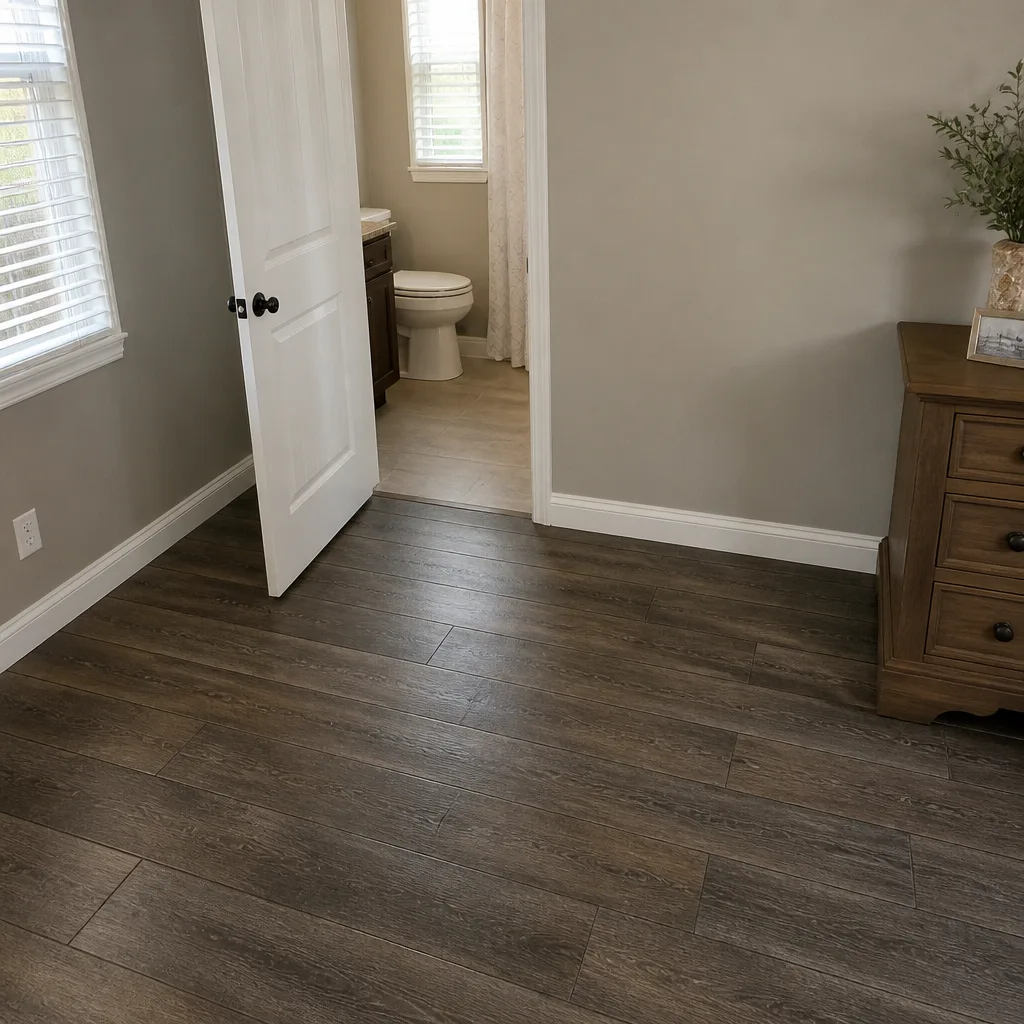
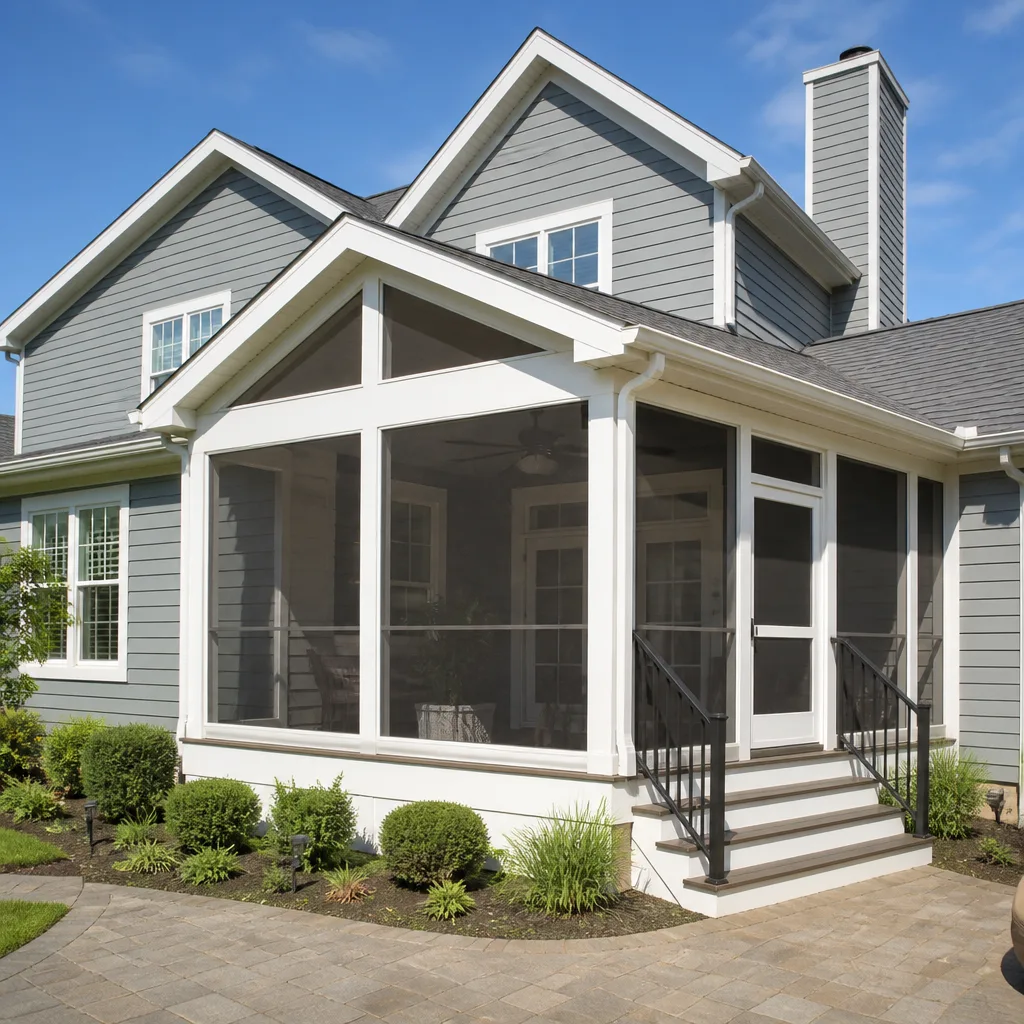
 Before
 After
After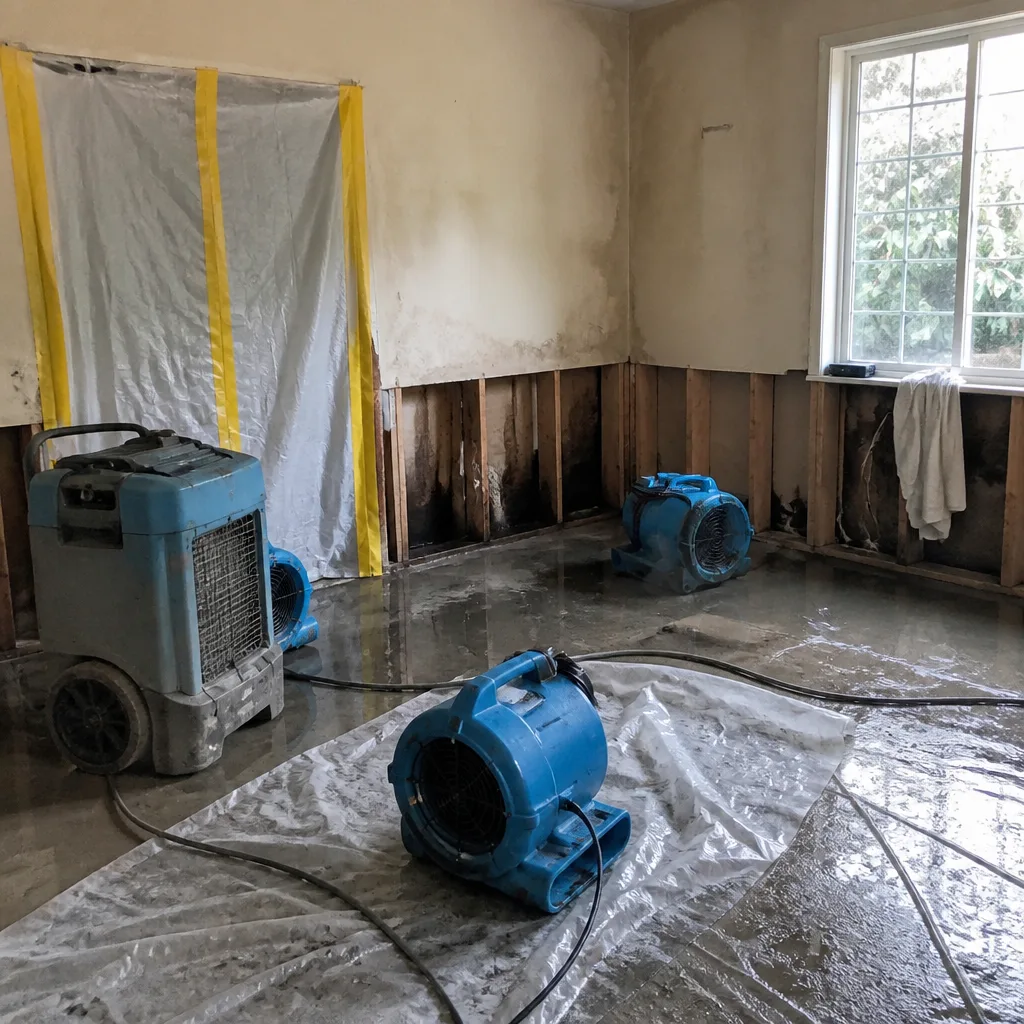 Before
 After
After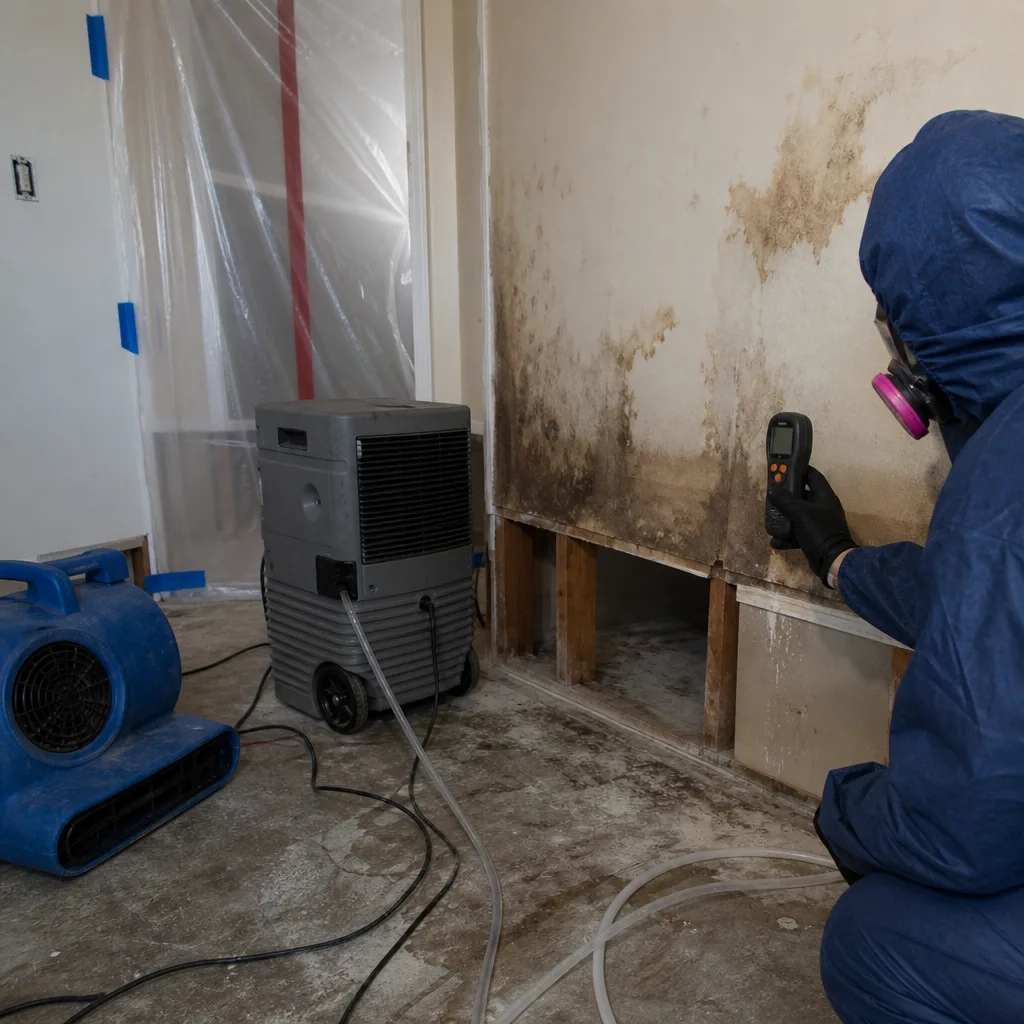 Before
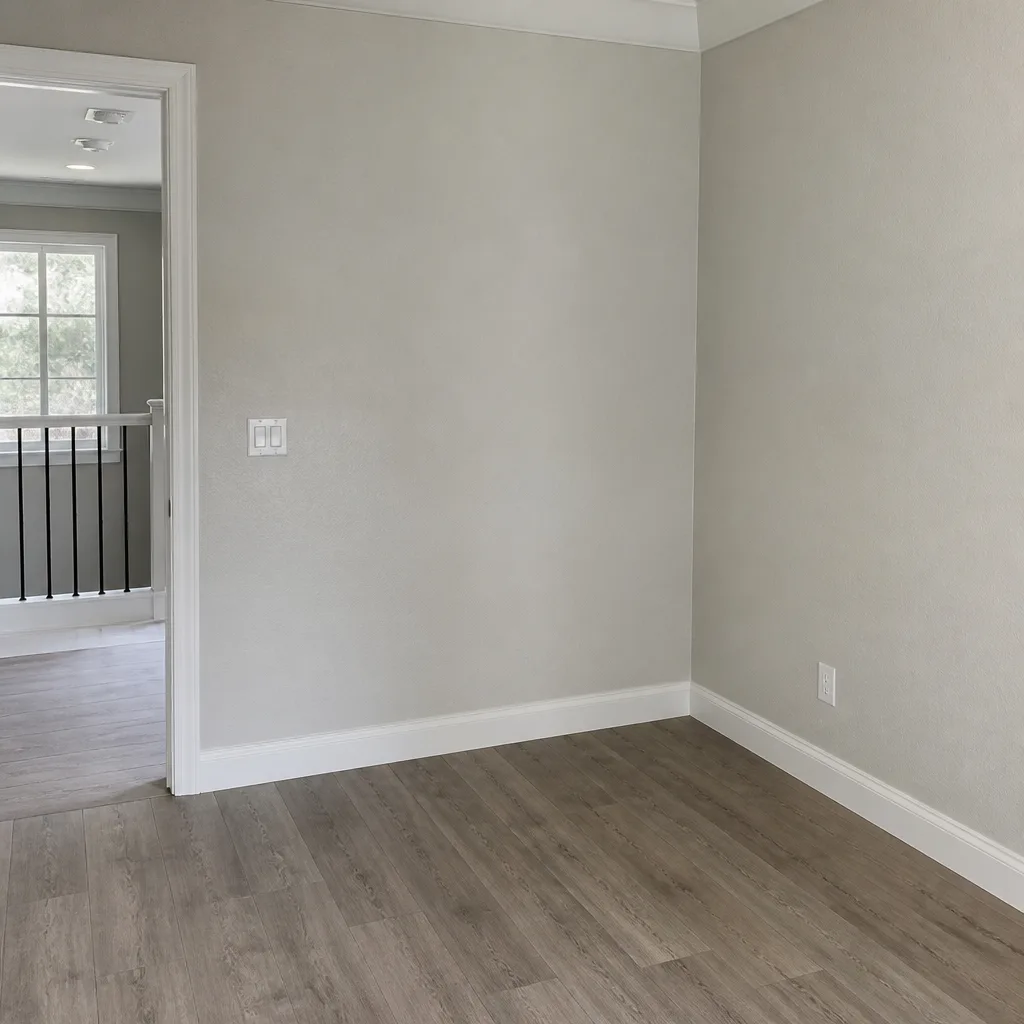 After
After24/7 Emergency Fire & Smoke Damage Restoration in Santa Ana
A kitchen fire in a Santa Ana fourplex can send smoke through shared wall cavities before the alarm sounds, and every minute between the 911 call and our arrival lets soot settle deeper into porous surfaces. That’s why our crews live inside the Santa Ana response radius and our phones ring to a live person, never voicemail, at (657) 212-2570. We’ll dispatch immediately, perform a free visual inspection on arrival, and deliver a written scope before any work begins. The first hour determines whether your drywall can be cleaned or must be replaced, whether your contents can be restored or are totaled, and whether the odor will lift with thermal fogging or require full encapsulation. In Santa Ana’s dense 1960s housing stock, that first hour also reveals whether neighboring units are affected and whether asbestos testing is required before we can open a single wall.
Understanding Fire & Smoke Damage Restoration Severity in Santa Ana Properties
Fire damage in Santa Ana follows a severity ladder that starts with dry soot, moves to wet smoke residue, and peaks at protein fires that leave nearly invisible but deeply penetrating films. Dry soot, common from paper and wood combustion, brushes off hard surfaces with HEPA vacuuming and chemical sponges. Wet smoke, produced by plastics and synthetics burning at lower temperatures, smears on contact and requires solvent-based cleaning with pH-specific detergents. Protein fires, the bane of Santa Ana’s older kitchens with decades of grease buildup, deposit a varnish-like residue that standard cleaners cannot touch.
Santa Ana’s housing stock intensifies every severity level. The city’s pre-1978 buildings, concentrated in Logan, Midtown, and Floral Park, contain asbestos floor tiles, popcorn ceilings, and lead paint that trigger California mandatory testing protocols before any demolition. A seemingly contained kitchen fire in a 1968 stucco apartment often cannot be opened for assessment until lab results return, extending the stabilization phase by 24 to 72 hours while soot continues to etch glass and corrode metal. Our crews carry Class H vacuums and negative-air containment for these regulated environments, and our scopes build in testing timelines so insurers understand why work cannot proceed immediately.
Smoke migration through Santa Ana’s buildings follows paths that surprise homeowners. In wood-frame bungalows with balloon framing, smoke travels vertically through wall cavities from basement to attic. In stucco fourplexes with shared demising walls, it moves laterally between units through gaps around electrical boxes and plumbing chases. Our thermal imaging cameras map these migration paths before cleaning begins, documenting the full affected square footage for your adjuster.
Why Santa Ana Property Owners Choose DryMark Restoration Irvine
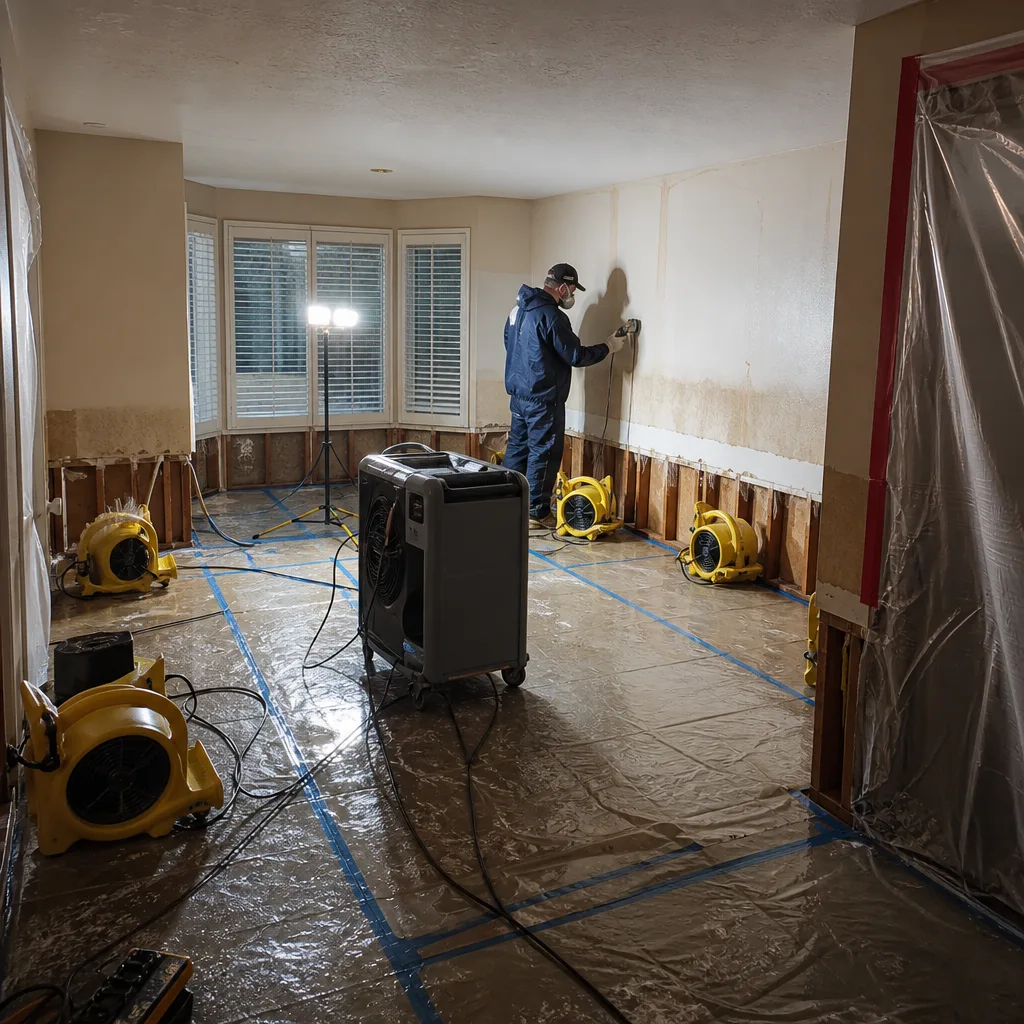
- 45-minute response commitment to Santa Ana addresses, with crews staged inside the local service radius.
- 24/7 live answer by a real person, never an automated system or voicemail tree, on every call to (657) 212-2570.
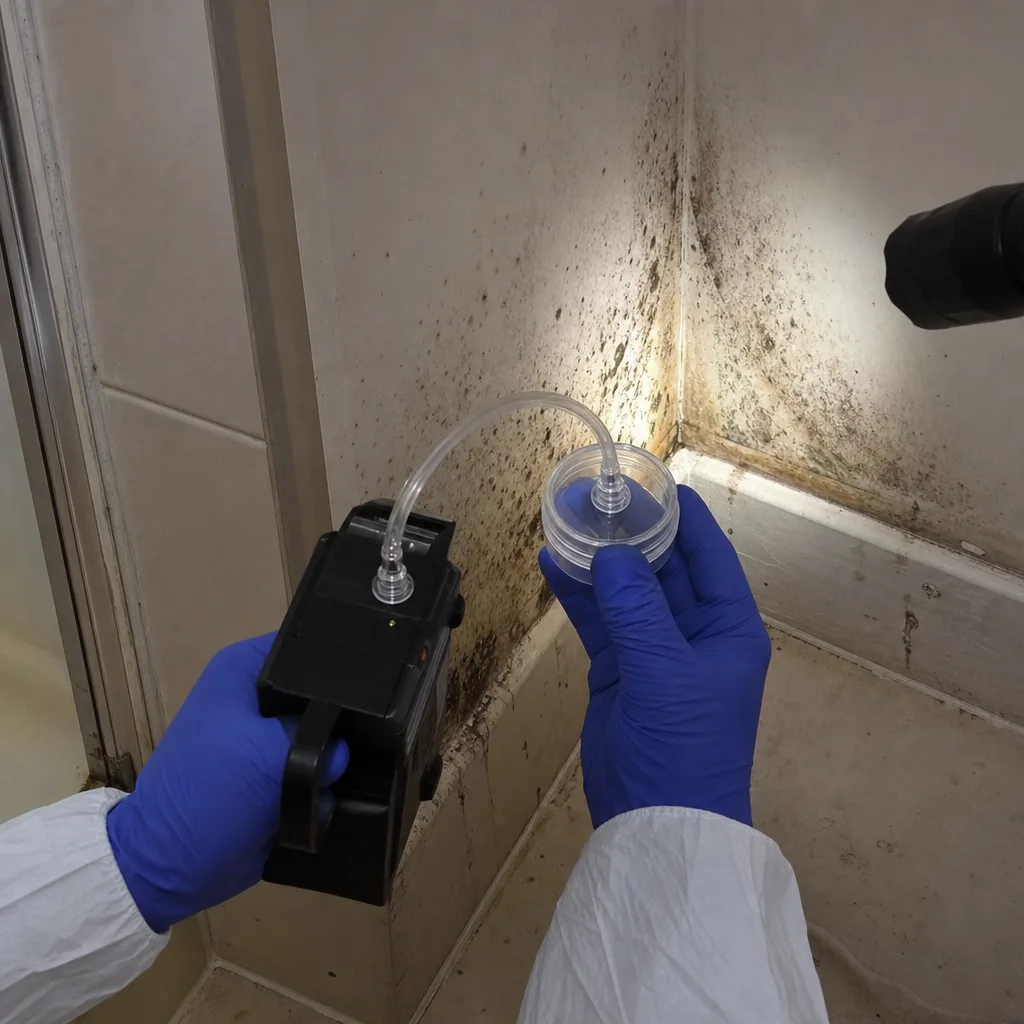
- IICRC-certified crews holding FSRT (Fire and Smoke Restoration Technician) and WRT (Water Damage Restoration Technician) certifications, with AMRT (Applied Microbial Remediation Technician) for the mold that fire suppression water inevitably triggers in Santa Ana’s humid wall cavities.
- Free visual inspection and written scope delivered before any work begins, every time, with no exceptions.
- Direct insurance billing and adjuster coordination, with photo-documented estimates formatted to carrier standards.
- One team from emergency board-up through structural repair, eliminating handoff gaps that lose documentation and delay claims.
 Before
 After
AfterOur Fire & Smoke Damage Restoration Process
1. Inspection & Assessment
We arrive with thermal imaging cameras, moisture meters, and combustion residue test kits to map the full damage perimeter. In Santa Ana’s older buildings, we immediately flag potential asbestos and lead hazards, collect samples, and establish containment per California regulations. Every finding is photographed and logged before we leave the site.
2. Emergency Board-Up & Stabilization
Broken windows, compromised roofs, and fire-damaged doors get secured with plywood and weatherproof tarps. In Santa Ana’s coastal environment, salt air begins corroding exposed metal within hours, so we prioritize garage-door hardware and opener systems that fire damage has already weakened.
3. Smoke & Soot Extraction
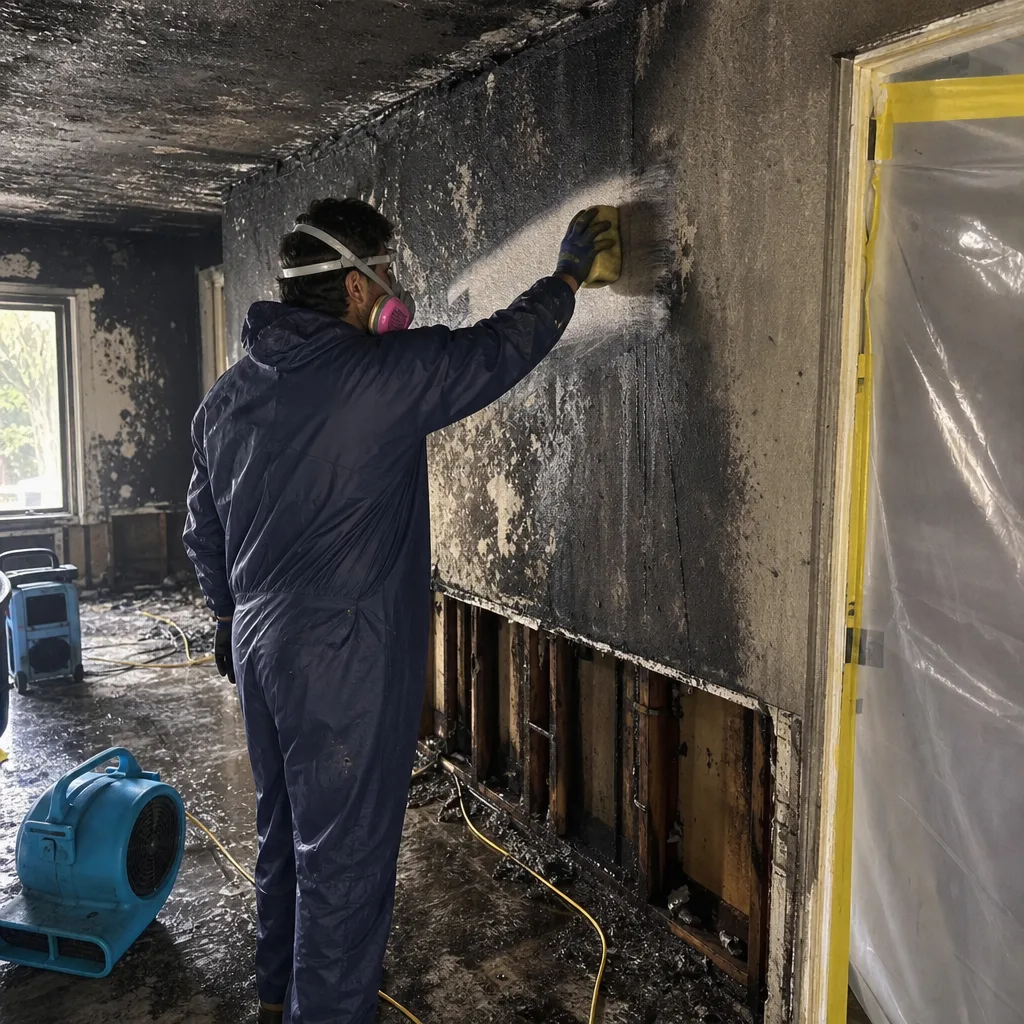
HEPA air scrubbers and negative-air machines establish pressure differentials that prevent cross-contamination while our crews remove loose soot with dry sponges and vacuum systems. For wet smoke residues, we apply solvent-based cleaners matched to the combustion source, testing on inconspicuous surfaces first to prevent staining.
4. Odor Removal & Deodorization
Thermal fogging with odor-counteracting agents penetrates the same porous materials that absorbed smoke molecules. In Santa Ana’s humid climate, where marine-layer moisture reactivates odor compounds, we often follow with ozone or hydroxyl generators and seal encapsulants on structural members that cannot be fully deodorized.
5. Contents Cleaning & Pack-Out
Salvageable items are inventoried, photographed, and transported to our facility for ultrasonic cleaning, deodorization, and specialized restoration. Non-salvageable items are documented for your insurance claim with replacement cost estimates. In Santa Ana’s dense housing, pack-outs often require coordinating access through narrow alleys and shared courtyards.
6. Structural Repair & Rebuild
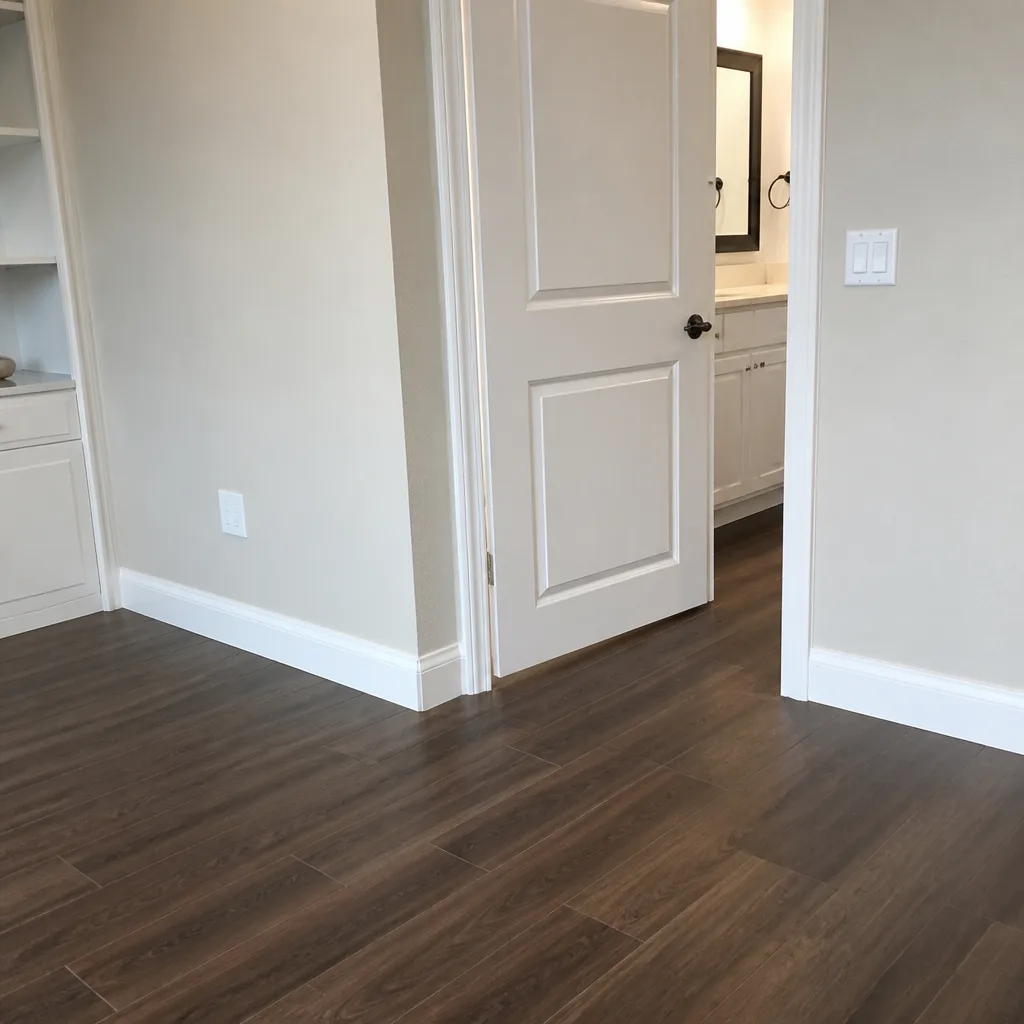
Once cleaning is complete and air quality testing confirms safe levels, our rebuild crews replace drywall, flooring, cabinetry, and structural members with materials specified in your written scope. Every phase is photo-documented, and our 365-Day Done Right Promise covers all workmanship.
Need Emergency Fire & Smoke Damage Restoration in Santa Ana Now?
Crews minutes away, answering live 24 hours a day. The sooner we start, the less it costs.
Working With Your Insurance Company
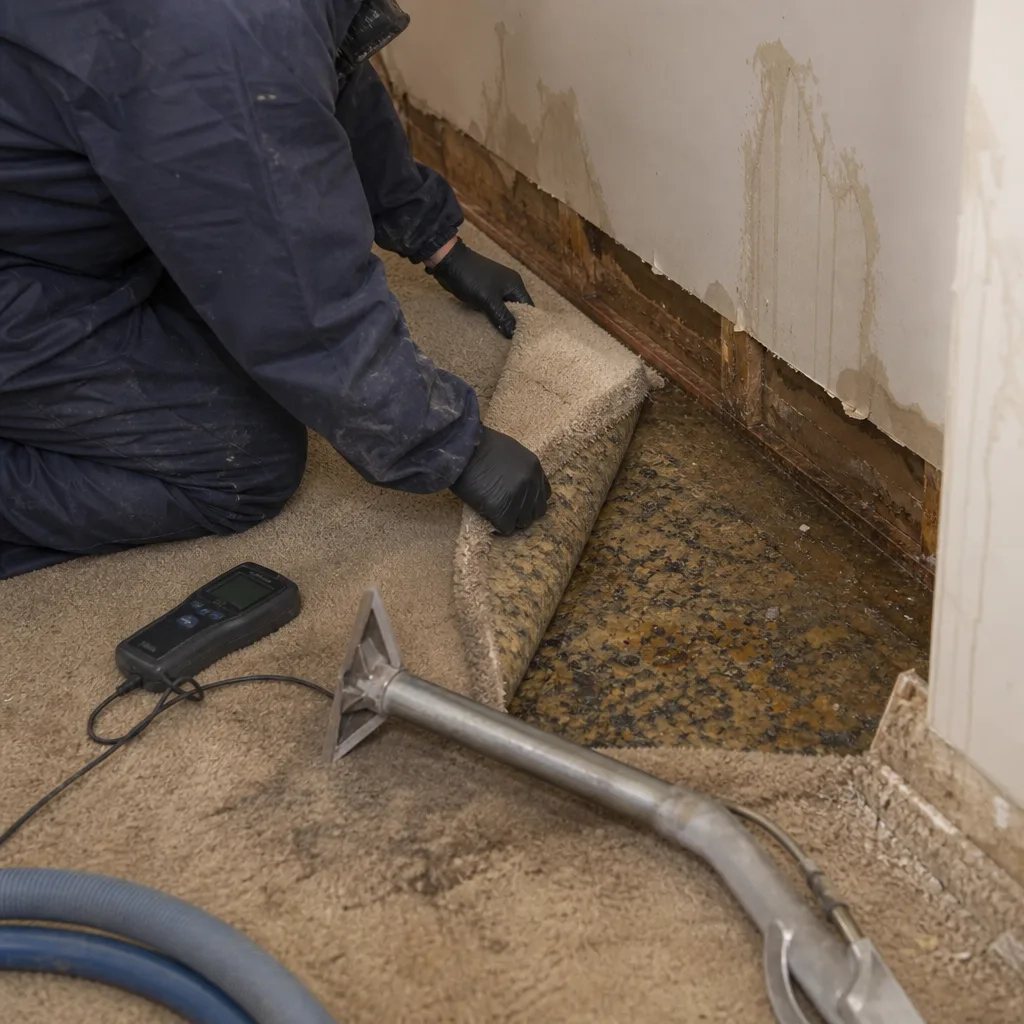
Fire claims succeed or fail on documentation quality, and most disputes arise from scopes that lack photographic evidence or moisture data. Our process begins documenting from the first hour: every affected room, every damaged item, every moisture reading in wall cavities where suppression water collected. We produce industry-standard estimates in Xactimate format, the same software your adjuster uses, and we communicate directly with your carrier’s representative to resolve line-item questions before they become denials.
Our Fire & Smoke Damage Restoration team has handled claims with every major carrier serving Orange County. We know which adjusters require independent mold testing, which carriers cap contents cleaning at specific percentages, and how to document Santa Ana’s unique asbestos-testing delays so your Additional Living Expense coverage extends appropriately.
What We Provide Your Insurer
- Thorough documentation of the loss with date-stamped photos
- Photos of all damage, room by room, with directional indicators
- Moisture readings and drying logs from Phoenix and Dri-Eaz equipment
- A detailed, line-item scope of work with material specifications
- Direct coordination with your carrier’s adjuster and desk examiner
Built for Santa Ana’s Loss Calendar
Santa Ana’s fire damage calendar runs on three distinct rhythms. Fall and winter bring Santa Ana wind events that drive regional wildfire smoke and ember cast into the city from canyon and chaparral fires; we see elevated calls for exterior soot cleaning, attic smoke infiltration, and odor remediation even when no local structure burned. These winds also dry vegetation and increase structure-fire risk in older buildings with outdated electrical systems.
Spring and summer shift the pattern toward kitchen and electrical fires in the city’s aging rental stock, where deferred maintenance meets high occupancy. Window-unit and wall-mounted air conditioners, running continuously through humid months, overload circuits never designed for modern loads. The marine layer that rolls in nightly keeps humidity elevated in poorly ventilated buildings, so fire suppression water lingers longer than in drier inland climates, accelerating mold colonization behind walls that fire has already compromised.
Year-round, Santa Ana’s extreme density means single-unit fires routinely become multi-unit losses. A cooking fire in a Logan fourplex, a space heater incident in a Midtown duplex, an overloaded outlet in a Washington Square bungalow converted to apartments: in each case, our crews arrive prepared to assess lateral and vertical migration before the visible damage tells the full story.
Fire & Smoke Damage Restoration Across Santa Ana’s Neighborhoods
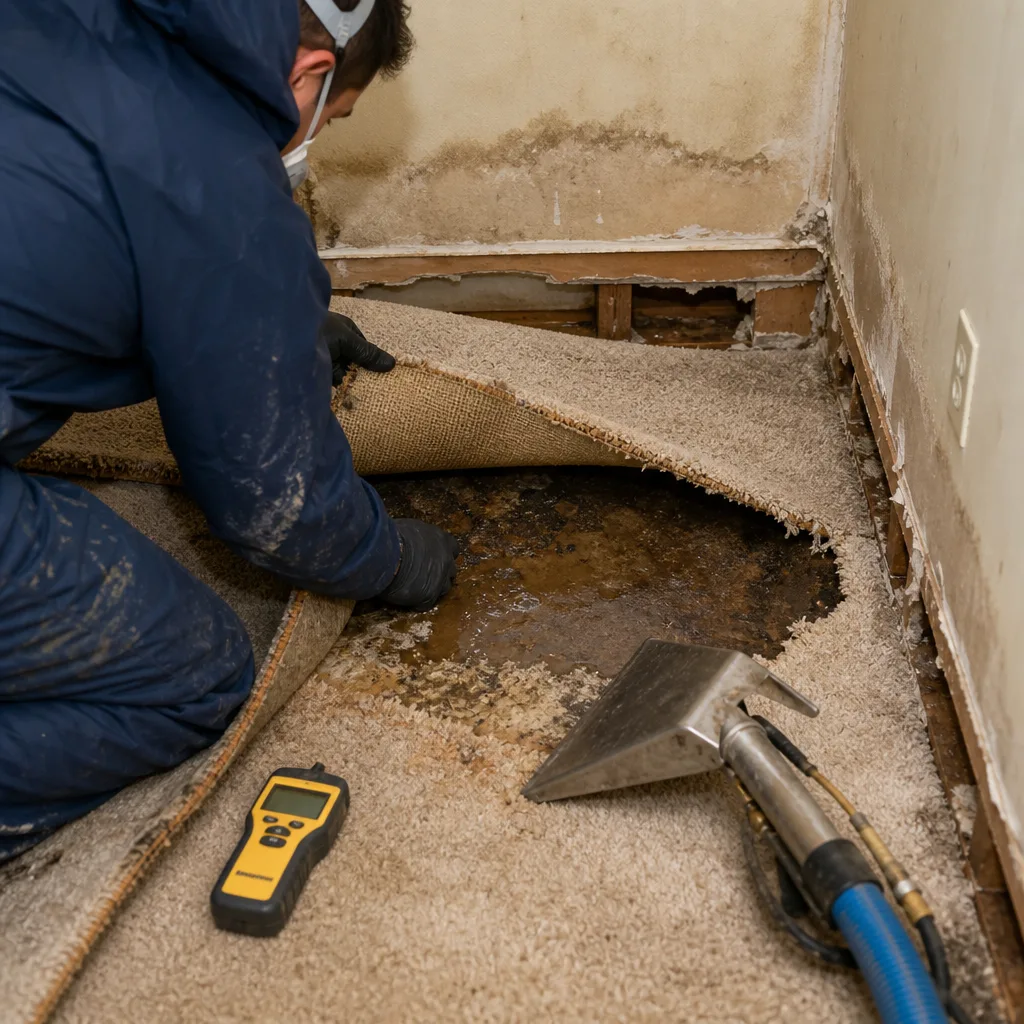
In Logan, the concentration of 1960s stucco apartment blocks means we arrive with asbestos testing kits on every call. A recent kitchen fire on a street near Logan Park required full containment across four units after thermal imaging revealed smoke migration through a shared wall cavity; the original call came from one tenant who smelled smoke from a neighboring unit’s cooking fire that had self-extinguished before spreading visibly.
Midtown’s mix of converted single-family homes and small multifamily buildings presents unique access challenges. Narrow driveways, shared utility meters, and minimal setbacks between structures mean our board-up crews work in tight quarters while coordinating with multiple property owners. In Midtown, we responded to a kitchen fire in a 1968 stucco fourplex; while setting containment and running air movers, our tech found the fire had ignited behind a wall-mounted AC unit where years of marine-layer condensation had already rotted the framing. We performed a full pack-out, applied antimicrobial treatment, and rebuilt with moisture-resistant materials. The scope of work grew to include the entire wall cavity, and our drying logs documented every moisture reading.
Floral Park’s historic 1920s-1940s bungalows contain balloon framing that channels smoke straight from basement to attic. These homes also feature original plaster and lath, which holds soot differently than modern drywall and requires specialized cleaning chemistry. The neighborhood’s mature tree canopy, beautiful until embers land in gutters full of dry leaves, creates ignition risks that inland neighborhoods rarely face.
Washington Square’s dense rental conversions and aging electrical infrastructure produce small electrical fires that smolder in wall cavities before detection. By the time smoke alarms trigger, the damage has spread through multiple rooms, and the knob-and-tube wiring that still serves some buildings complicates both assessment and rebuild phases.
Specialized Fire & Smoke Damage Restoration Services We Offer in Santa Ana
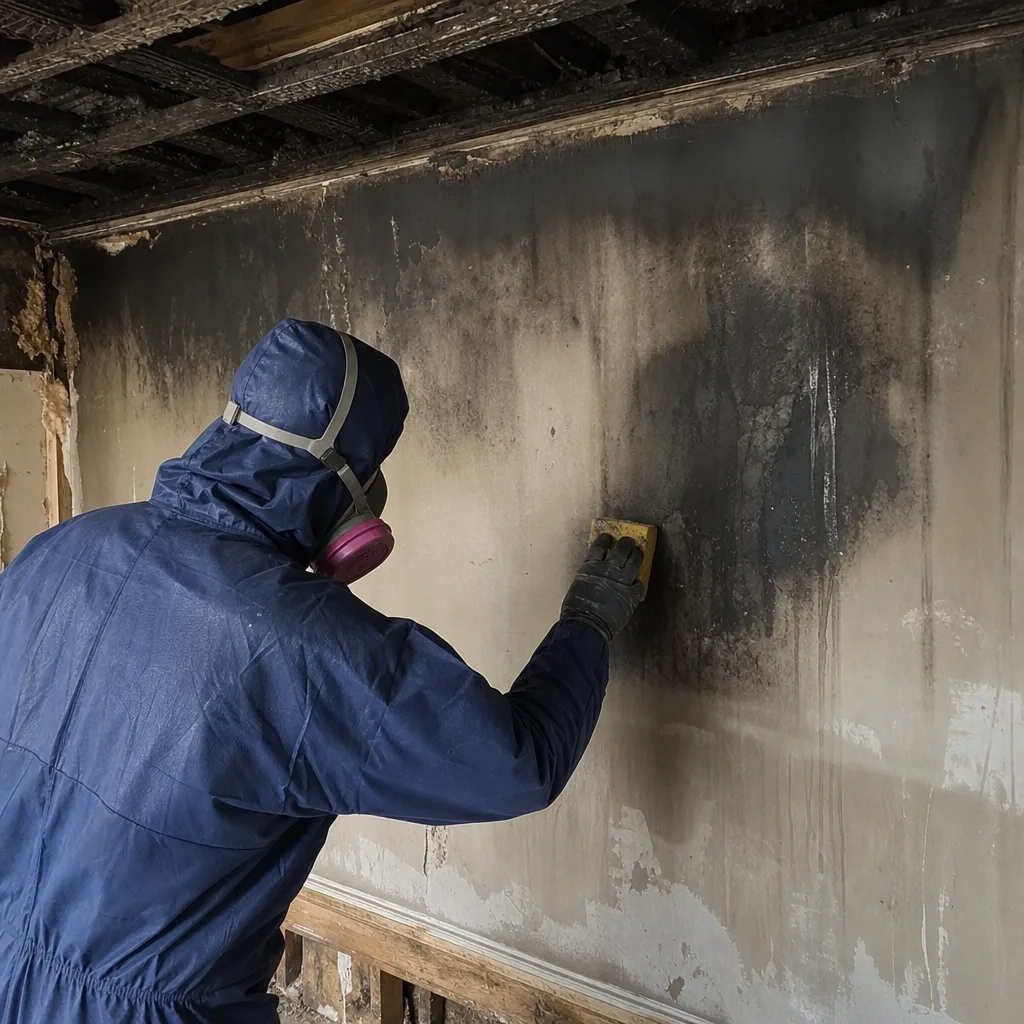
Fire Damage Cleanup
We remove all combustion residue, from loose dry soot to adhered wet smoke, using HEPA vacuums, chemical sponges, and pH-specific detergents matched to the fire source. In Santa Ana’s regulated environment, every cleanup begins with hazard assessment for asbestos and lead, with containment established before disturbance.
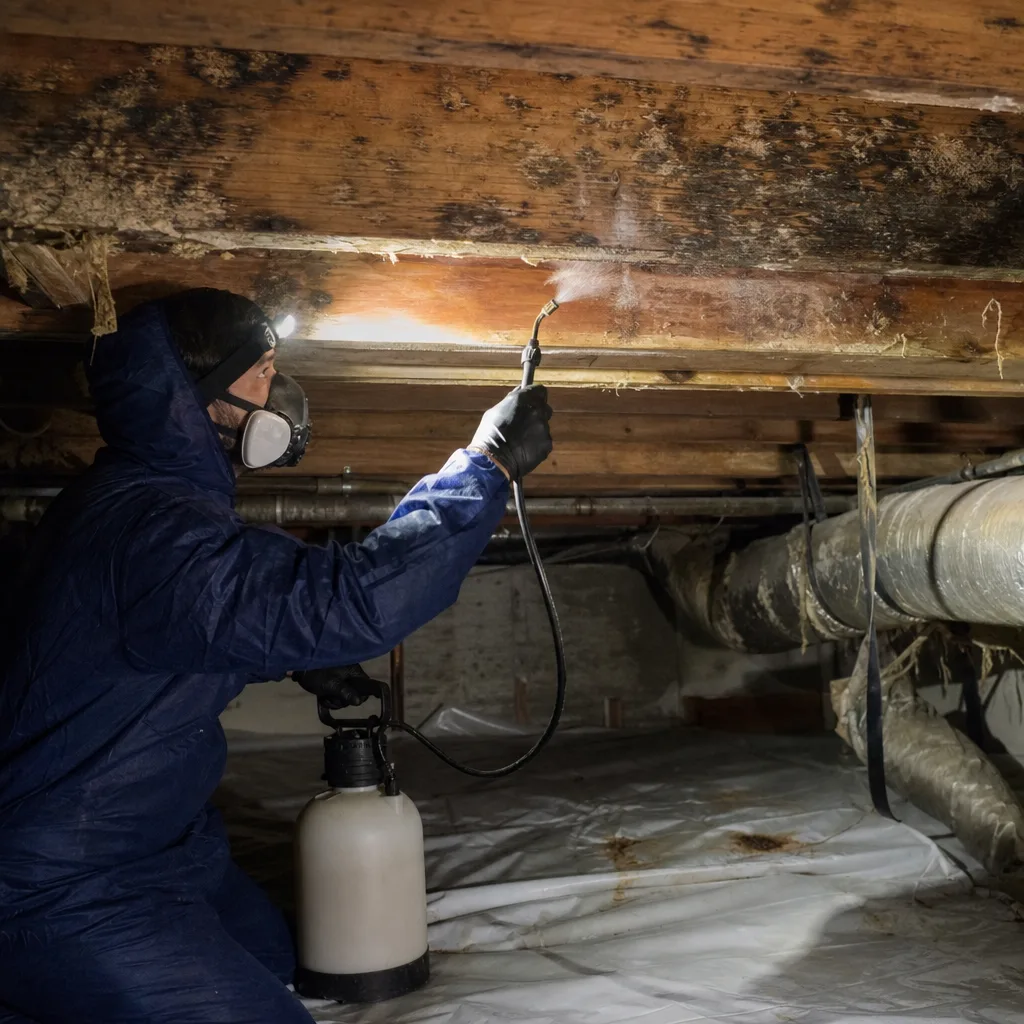
Smoke & Soot Removal
Smoke migrates to cold surfaces and hides in HVAC systems, electrical outlets, and behind baseboards. Our thermal imaging locates these deposits, and our cleaning protocols address each surface type without causing additional damage. For Santa Ana’s stucco exteriors, we also treat smoke staining that can etch the finish permanently if left too long.
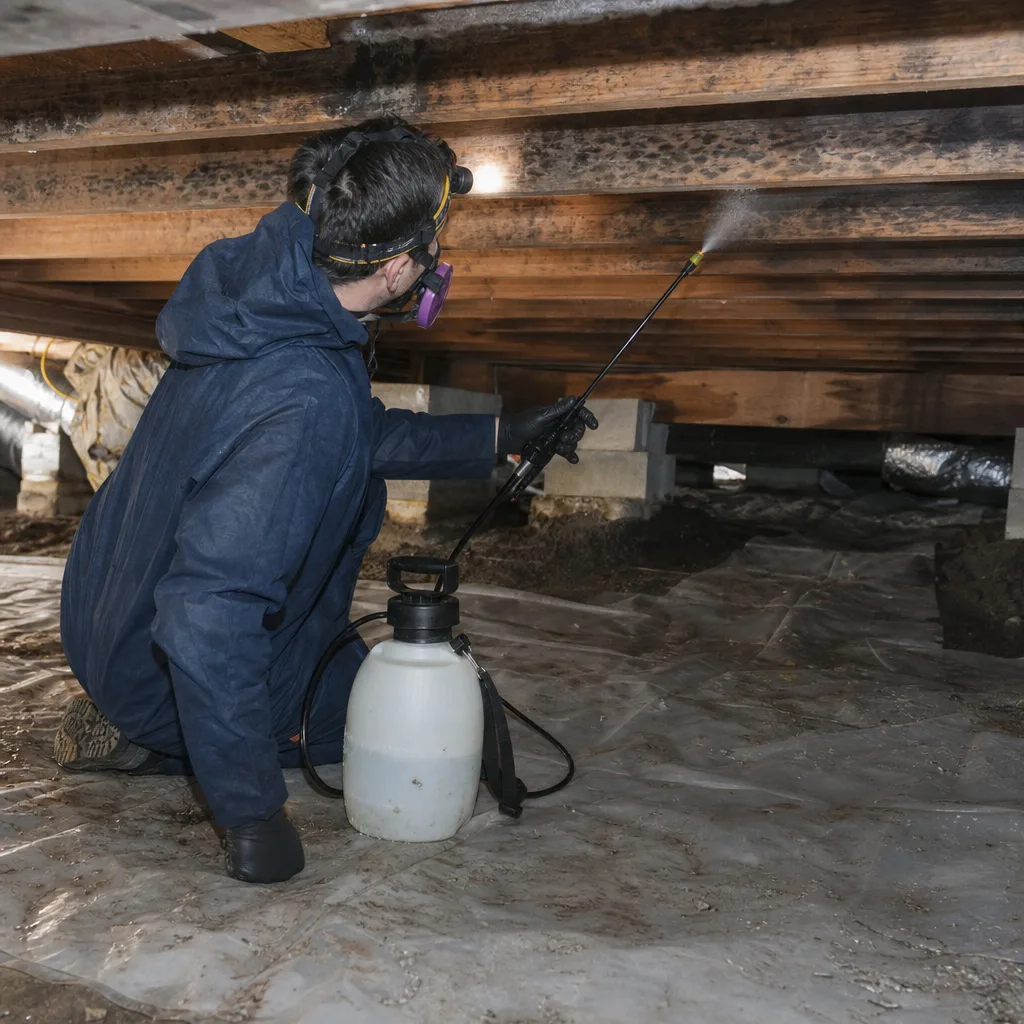
Odor Removal & Deodorization
Santa Ana’s marine-layer humidity reactivates odor compounds that thermal fogging alone cannot permanently neutralize. We sequence treatments: thermal fogging first for penetration, then hydroxyl or ozone generators for molecular breakdown, then encapsulant sealers on structural members that retain odor. Each step is documented with air quality readings.
Contents Cleaning & Pack-Out
Our facility handles electronics restoration, textile cleaning, document recovery, and fine-art treatment. Every item is photographed, inventoried, and tracked through cleaning with barcode documentation your adjuster can audit.
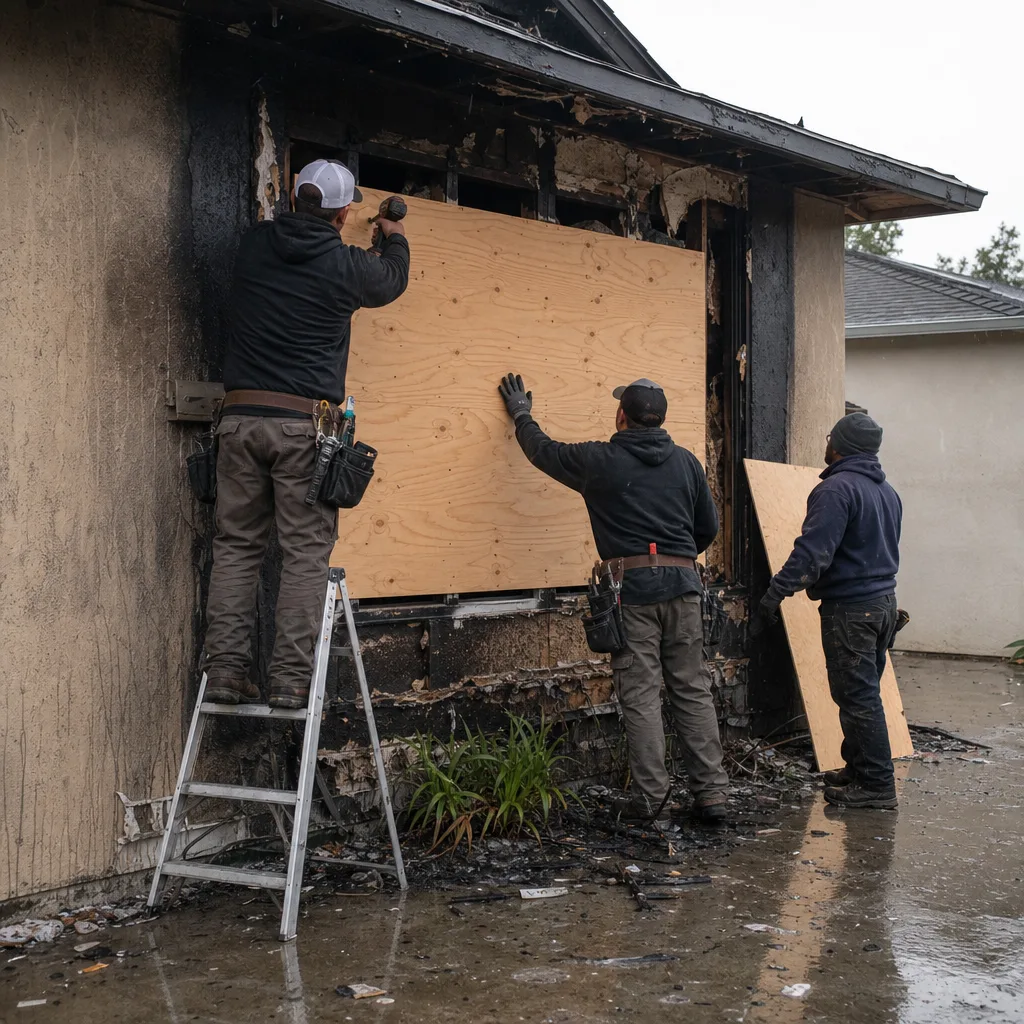
Emergency Board-Up & Tarping
Fire-damaged garage doors are a particular challenge in Santa Ana, where coastal salt air has already corroded springs and opener chains. We board and secure these openings with hardware that accounts for weakened structural members, and we document the pre-existing corrosion that fire damage revealed for your claim.
Structural Fire Repair
From sistering fire-damaged joists to full room rebuilds, our crews work from written scopes with material specifications and completion milestones. In Santa Ana’s older buildings, we routinely encounter framing rot behind wall-mounted AC units where marine-layer condensation has done years of hidden damage, and we rebuild with moisture-resistant materials that prevent recurrence.
What happens when you call
- 1
A real person answersNo phone trees - you reach a local pro.
- 2
You get an upfront price rangeHonest numbers before anyone is dispatched.
- 3
A background-checked tech heads outLicensed & insured, dispatched right away.
- 4
You approve before work beginsNothing starts until you say go.
Fire & Smoke Damage Restoration Costs in Santa Ana, CA
A typical emergency board-up and stabilization in Santa Ana runs $800-$2,400, depending on the number of openings and whether roof tarping is required. Smoke and soot cleaning for a single-family home or apartment unit generally falls between $2,200 and $6,500, with the lower end covering dry soot on hard surfaces and the upper end addressing wet smoke residue throughout multiple rooms. Odor removal and deodorization adds $1,500-$4,000 depending on the treatment sequence required; Santa Ana’s humid climate often necessitates the more intensive multi-phase approach. Contents cleaning and pack-out ranges from $1,200 for limited inventory to $5,000+ for full household relocations. Structural repairs begin around $3,500 for localized drywall and flooring replacement and can exceed $25,000 for rebuilds involving multiple rooms, electrical rewiring, or mold remediation discovered behind walls.
What moves the price: the combustion source (protein fires cost more to deodorize than wood fires), the affected square footage, whether asbestos or lead testing delays the work, and whether hidden mold or structural rot expands the scope. Insurance typically covers direct fire and smoke damage, plus water damage from suppression efforts, under your dwelling and personal property coverages. Our written scope, delivered before work begins, separates insurance-covered items from potential out-of-pocket expenses so there are no surprises. Bring us any competitor’s written estimate and we’ll provide a free second opinion.
We Also Serve Cities Near Santa Ana
Our Fire & Smoke Damage Restoration in Santa Ana crews also respond to properties in Tustin, Orange, Villa Park, and Costa Mesa. Each city presents distinct building ages, density patterns, and regulatory environments, and our scopes account for these local variables.
Serving Santa Ana, CA - Our Local Coverage Area
We’re based in the Santa Ana area and know this community well. Use the map below to see our service coverage - if you’re nearby, we can almost certainly help.
Santa Ana Fire & Smoke Damage Restoration Questions, Answered
Why do fire damage jobs in Santa Ana often require asbestos and lead testing before demolition?
California regulations mandate testing for asbestos and lead in any building constructed before 1978 before disturbing materials that might contain them. Santa Ana holds some of the oldest and most densely occupied housing stock in Orange County, with sprawling clusters of pre-1978 stucco apartment buildings and single-family bungalows throughout neighborhoods like Logan and Midtown. Nearly every restoration tear-out triggers this protocol, a regulatory burden that neighboring newer suburbs like Irvine face far less routinely. Testing adds 24-72 hours to the timeline but protects occupants and workers from hazardous exposure. Call (657) 212-2570 and we’ll explain how we build testing into your scope and insurance documentation.
How does the coastal marine layer affect smoke odor removal in Santa Ana homes?
The marine layer pushes elevated nighttime humidity into Santa Ana’s older, poorly ventilated buildings, reactivating odor compounds that thermal fogging alone cannot permanently neutralize. Smoke odor molecules bind to porous materials like drywall, insulation, and wood framing; when humidity rises, these molecules off-gas again, producing the “ghost smell” homeowners notice weeks after initial cleaning. Our deodorization protocol sequences thermal fogging for penetration, hydroxyl or ozone generators for molecular breakdown, and encapsulant sealers on structural members, with air quality documentation at each phase. Call (657) 212-2570 for an assessment of your specific odor situation.
Can a kitchen fire in a Santa Ana fourplex spread to neighboring units even if the fire was contained?
Yes, and this is one of the most common scenarios we encounter in Santa Ana’s dense 1960s-1970s housing stock. Smoke and heat migrate through shared wall cavities, gaps around plumbing and electrical penetrations, and attic spaces before smoke alarms in adjacent units trigger. By the time neighbors smell smoke, the damage has already spread. We use thermal imaging to map the full migration path and document affected square footage for your adjuster, often discovering damage the property owner did not initially perceive. Call (657) 212-2570 for immediate assessment if you’ve had any fire in a multifamily building.
What should I do if my garage door opener stops working after a fire?
Do not attempt to force the door open or repair the opener yourself. Fire-damaged garage doors in Santa Ana often have additional problems: coastal salt air corrodes springs, hinges, and opener chains years faster than inland, so the fire may have compromised hardware that was already weakened. A failed spring or cable under tension can cause serious injury. Our crews assess garage-door systems as part of emergency board-up, documenting pre-existing corrosion for your claim and arranging safe temporary security. Call (657) 212-2570 and we’ll handle the board-up and coordinate garage-door repair with qualified specialists.
How quickly does mold grow after a fire is extinguished in Santa Ana?
Mold colonization can begin within 24 to 48 hours of water introduction, and Santa Ana’s marine-layer humidity accelerates this timeline significantly. Fire suppression water soaks into wall cavities, insulation, and subflooring; in the city’s aging stucco apartment blocks, wall-mounted AC units have often trapped condensation in these same cavities for years, pre-conditioning the environment for rapid mold growth. We deploy dehumidifiers and air movers immediately upon stabilization, with moisture readings logged daily to document drying progress for your insurer. If mold is discovered, our AMRT-certified technicians contain and remediate per IICRC standards. Call (657) 212-2570 for immediate water and mold assessment after any fire.
How fast can your crews get to my Santa Ana property?
We maintain a 45-minute response commitment to Santa Ana addresses, with crews staged inside the local service radius. Our emergency line rings to a live person 24 hours a day, 7 days a week, at (657) 212-2570. Dispatch and scheduling are coordinated from our Los Angeles office, but the crew that arrives at your door knows Santa Ana’s streets, building types, and regulatory requirements. The sooner we start containment and stabilization, the less damage spreads and the lower your total restoration cost.
Will my insurance cover the full cost of fire and smoke restoration?
Most homeowners and renters policies cover direct fire damage, smoke damage, and water damage from suppression efforts under dwelling and personal property coverages. Coverage disputes typically arise over scope questions: whether damaged materials can be cleaned or must be replaced, whether mold remediation is included, and whether code-upgrade requirements apply. Our written scopes use Xactimate pricing and include photo documentation, moisture logs, and line-item justifications that align with carrier standards. We coordinate directly with your adjuster to resolve questions before they become denials. Call (657) 212-2570 for a free inspection and written scope you can submit to your carrier.
What certifications do your technicians hold for fire damage work?
Our lead technicians hold IICRC FSRT (Fire and Smoke Restoration Technician) certification for combustion residue assessment and cleaning, WRT (Water Damage Restoration Technician) for the suppression water that accompanies nearly every fire job, and AMRT (Applied Microbial Remediation Technician) for the mold that follows in Santa Ana’s humid environment. All work is documented to IICRC, RIA, and IFA standards, with daily drying logs and photo records produced on equipment from Dri-Eaz, Phoenix, and XPOWER. Call (657) 212-2570 to verify current certifications and schedule service.
Fire damage in Santa Ana demands a restoration company that understands the city’s unique combination of aging housing stock, dense occupancy, coastal humidity, and strict environmental regulations. Our documentation-first approach, born from a former adjuster’s frustration with denied claims, produces the written scopes, photo records, and moisture logs that turn restoration invoices into payable claims. Every job begins with a written price before work starts, carries our 365-Day Done Right Promise under The Haven Standard, and includes a free second opinion on any competitor’s estimate.
Call (657) 212-2570 now for emergency response, or schedule your free inspection and written scope at your convenience. A live person answers every call, 24 hours a day.
Written by Alicia Brennan, Owner at DryMark Restoration Irvine, serving Santa Ana since 2011.
Fire & Smoke Damage Restoration in Nearby Areas