

Free visual inspection and a written scope of work before any mitigation begins - photos, moisture readings, and drying logs go in your claim file
The scope we write is the scope we bill. Anything new gets shown to you, in writing, before we touch it.
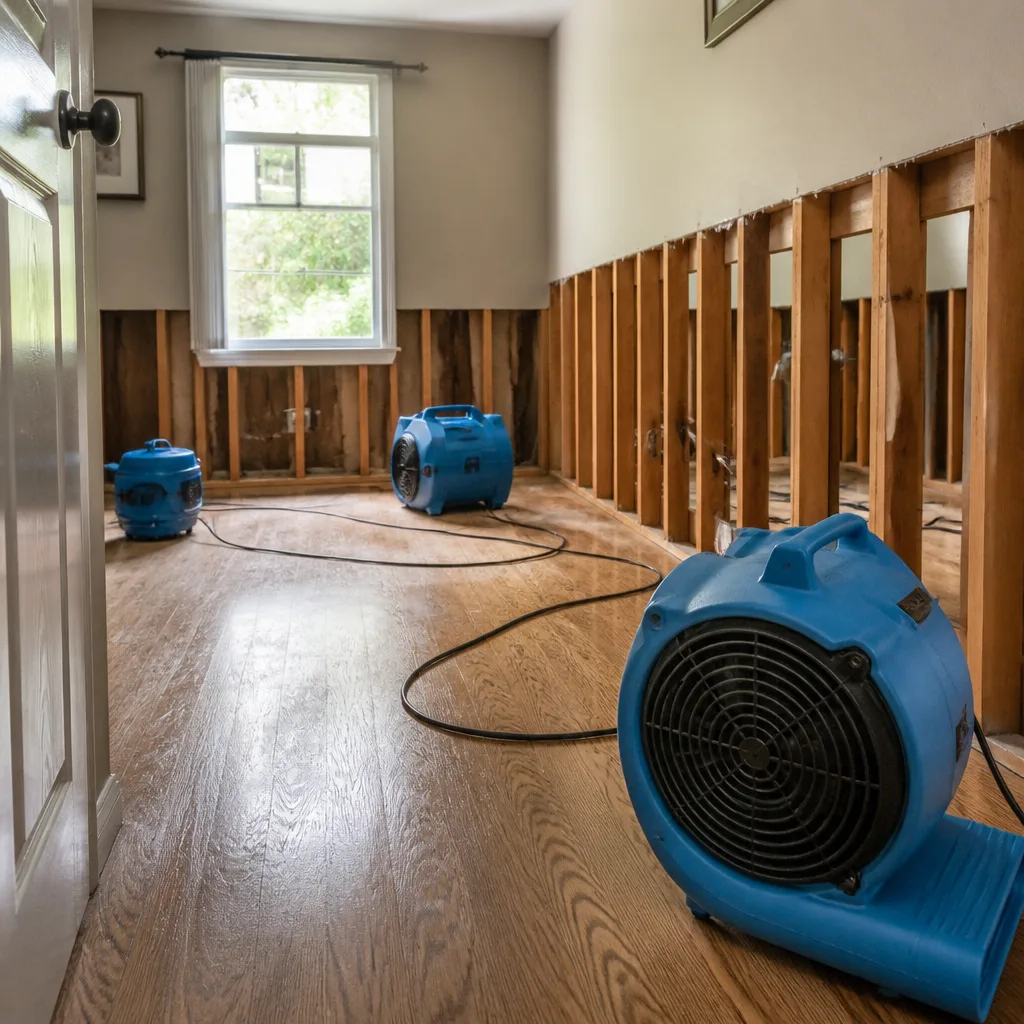
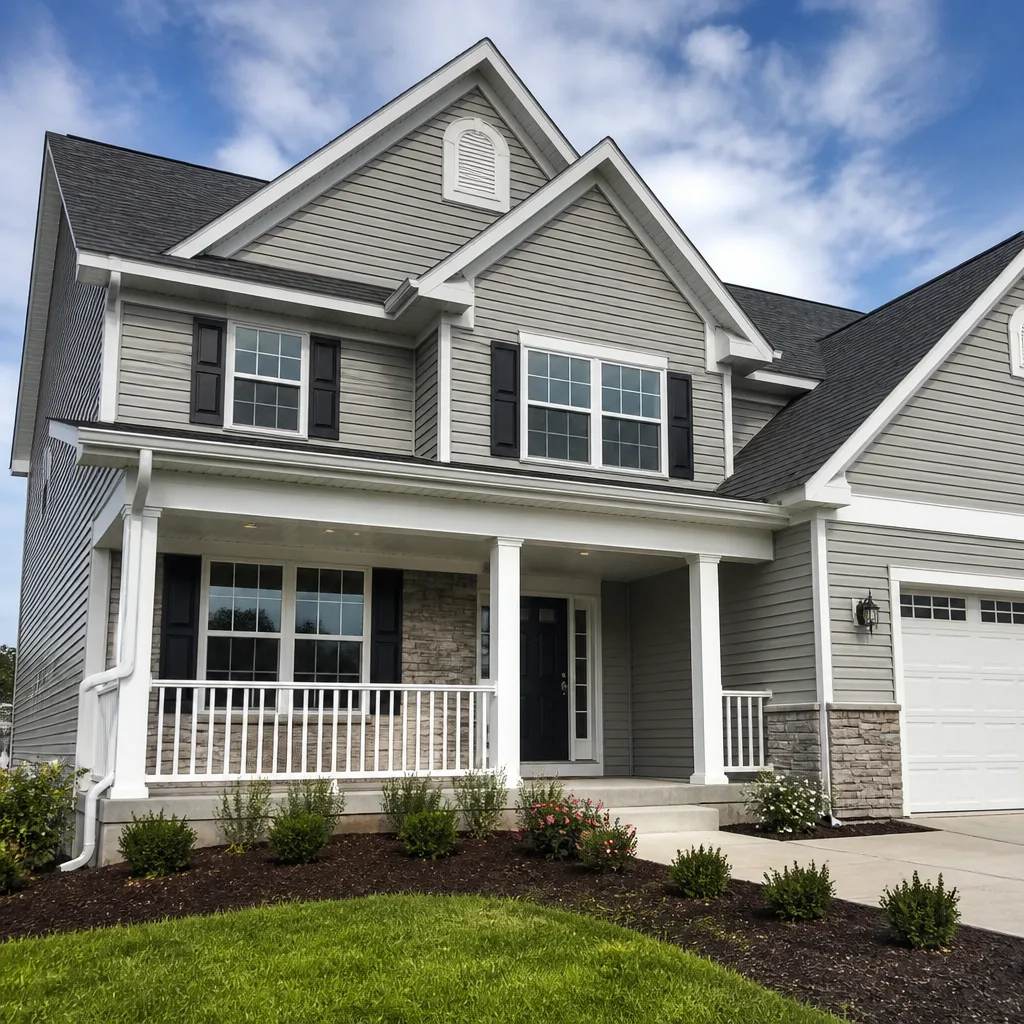
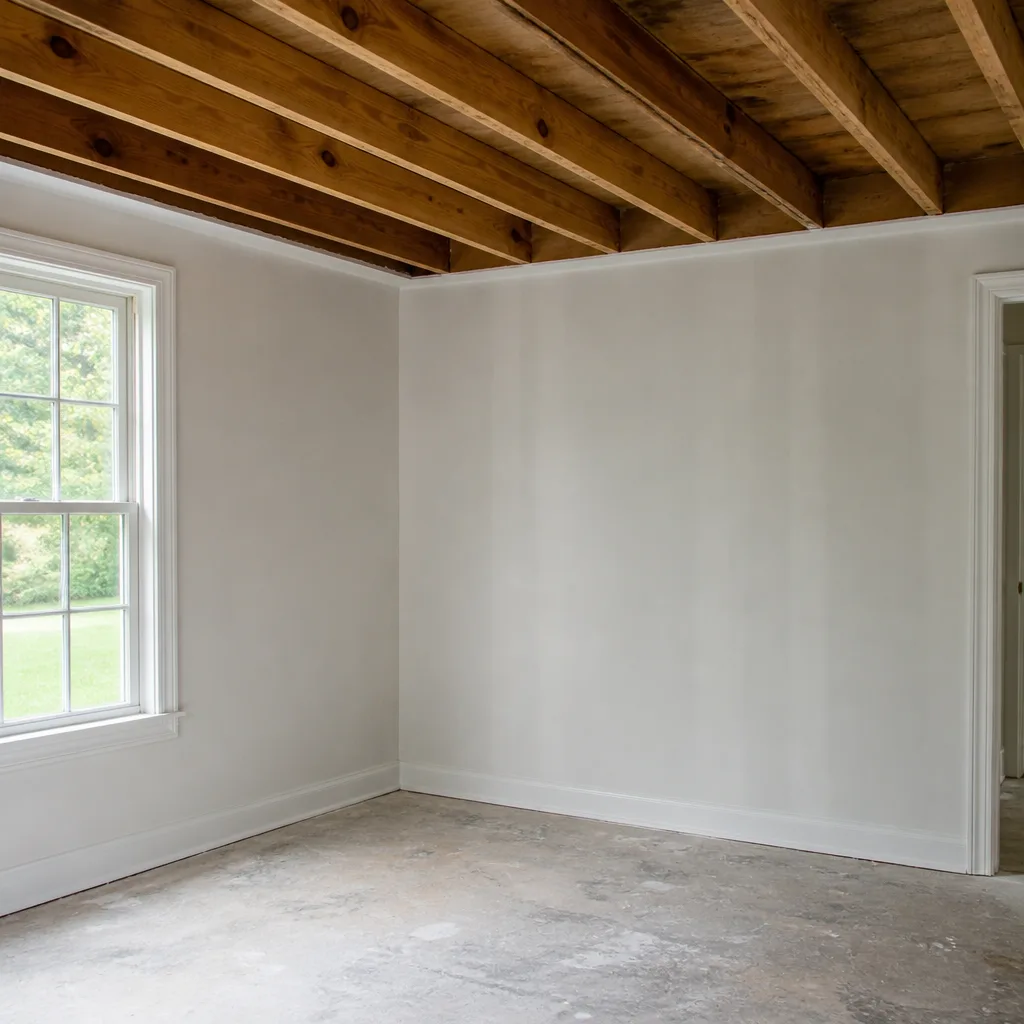
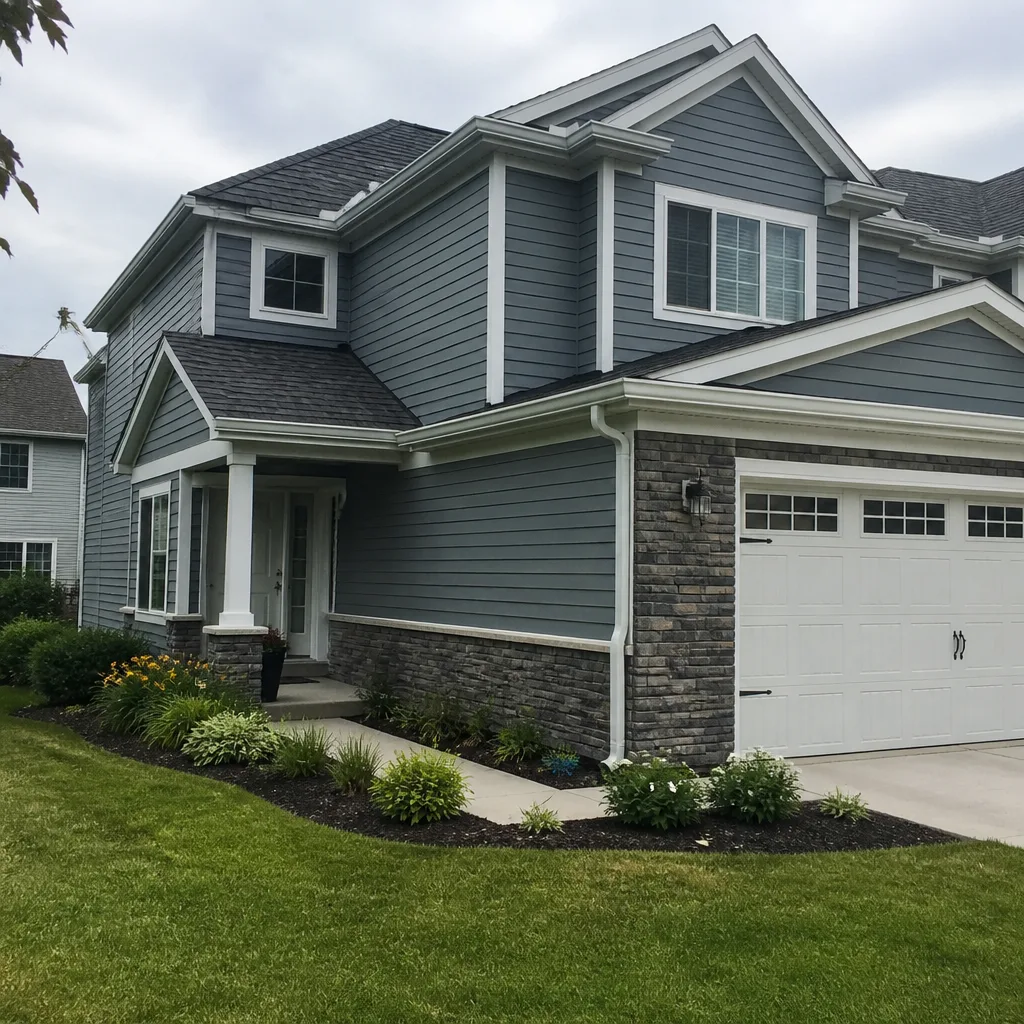
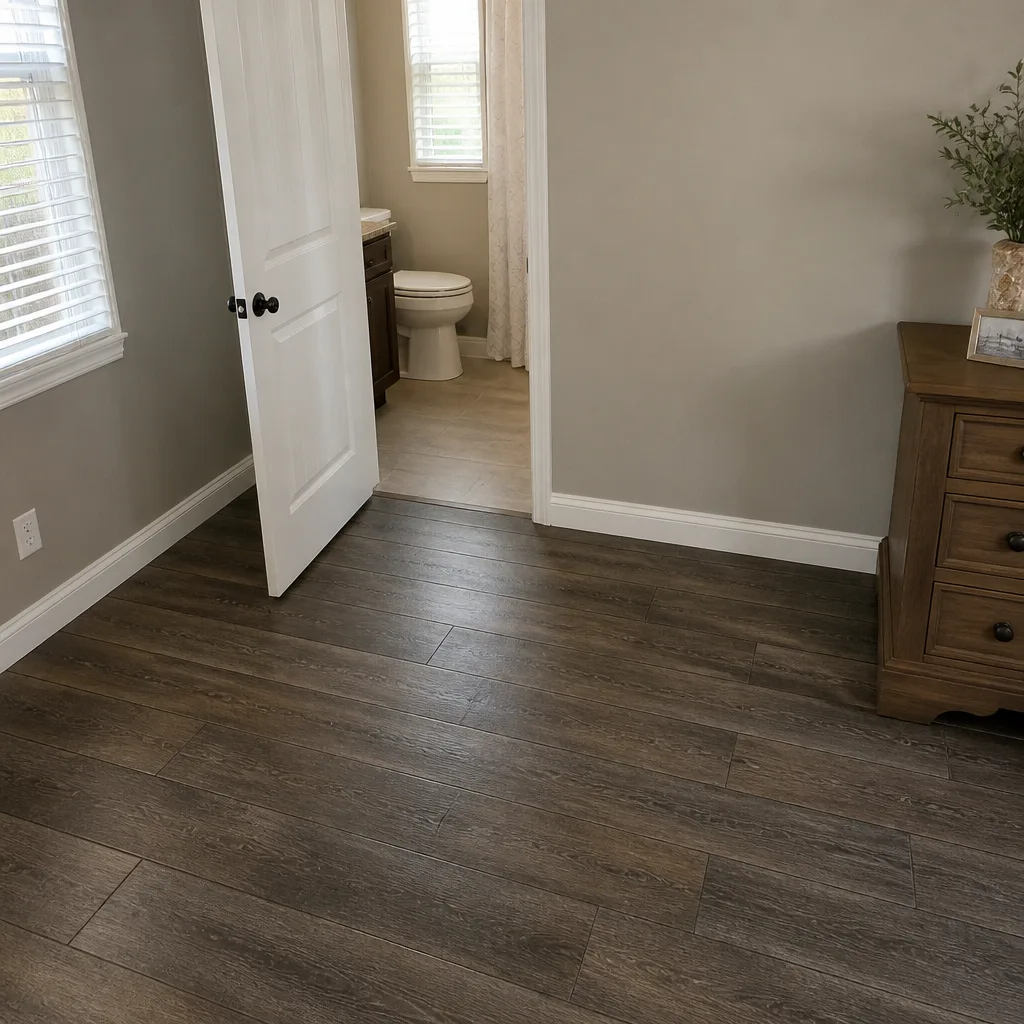

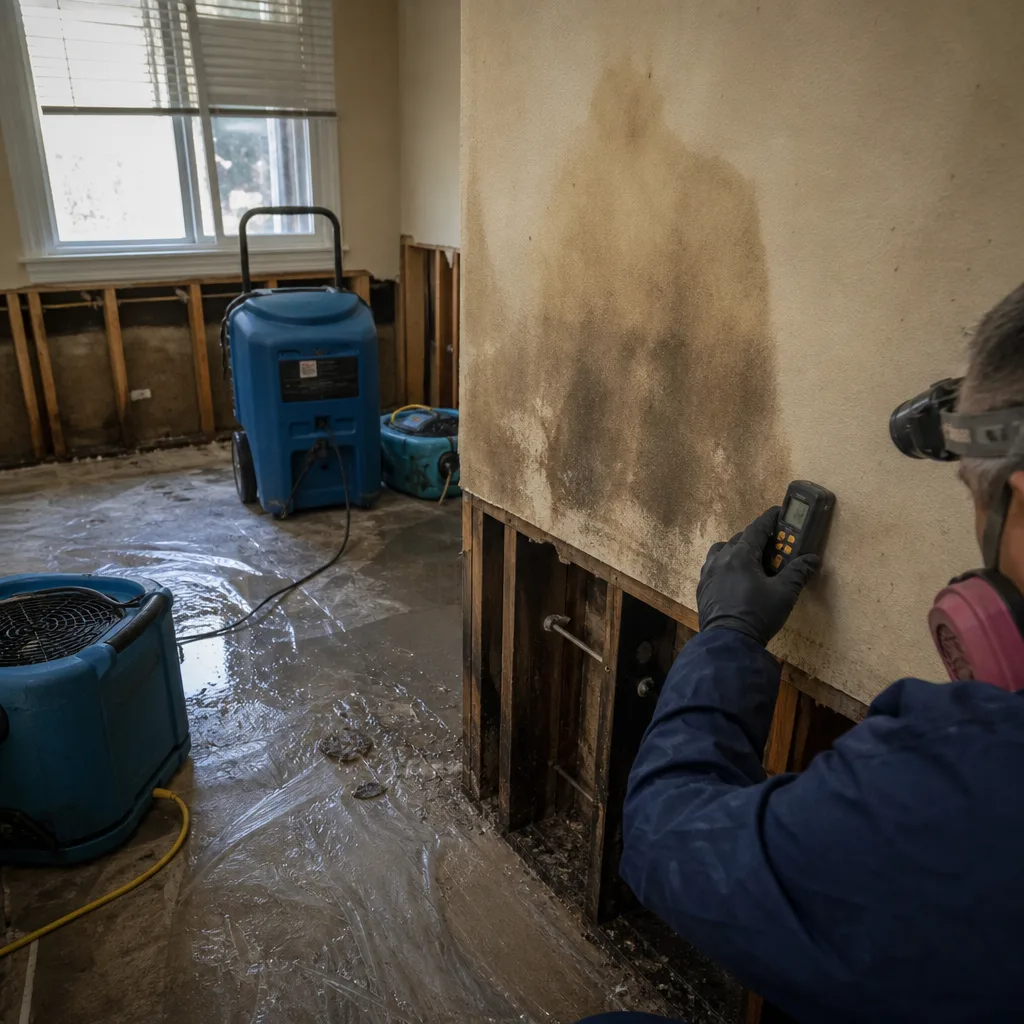 Before
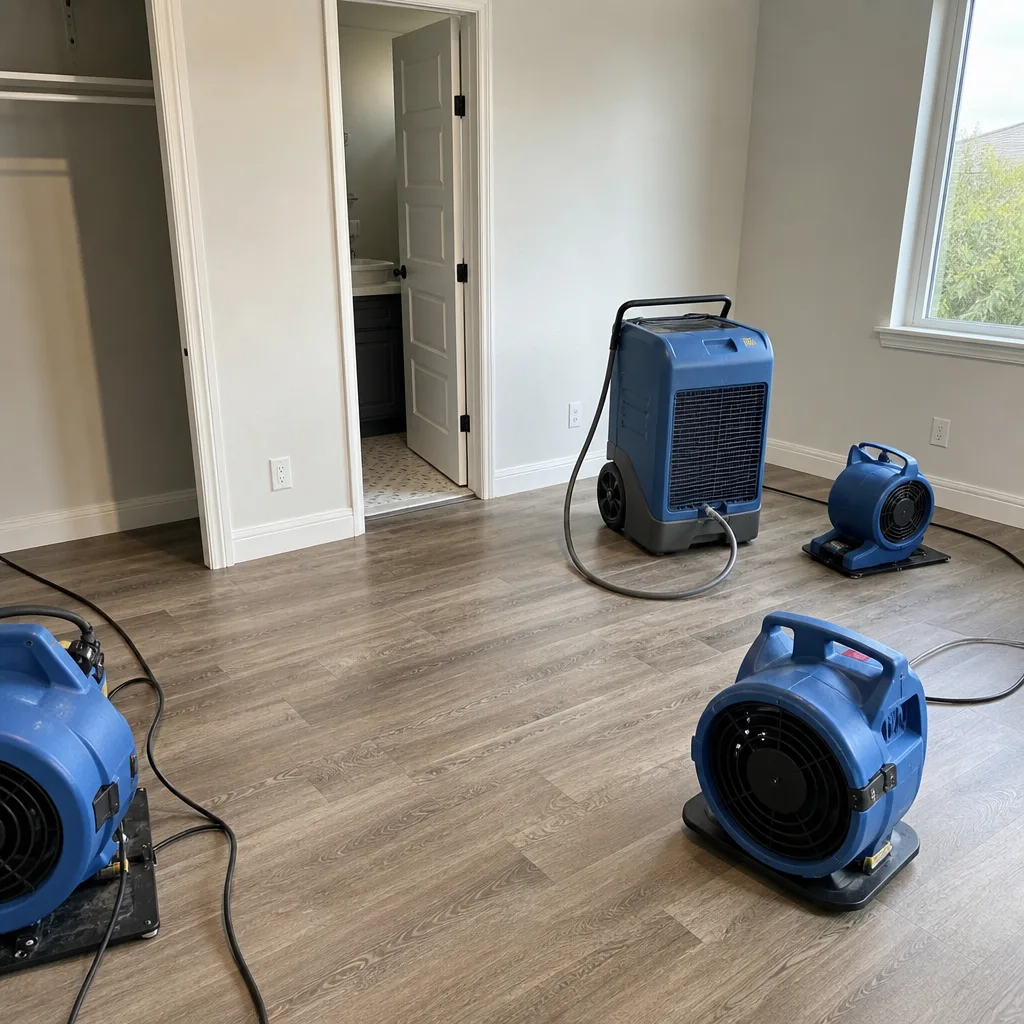 After
After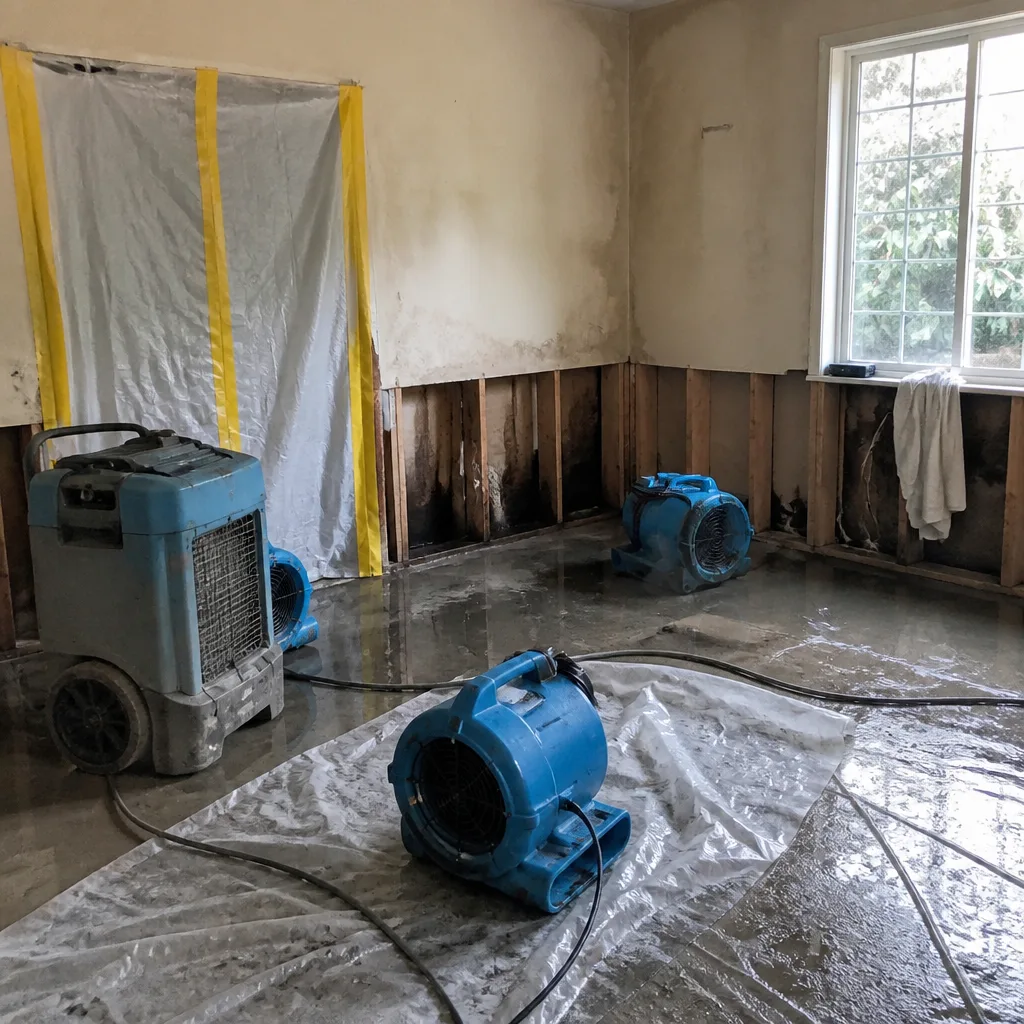 Before
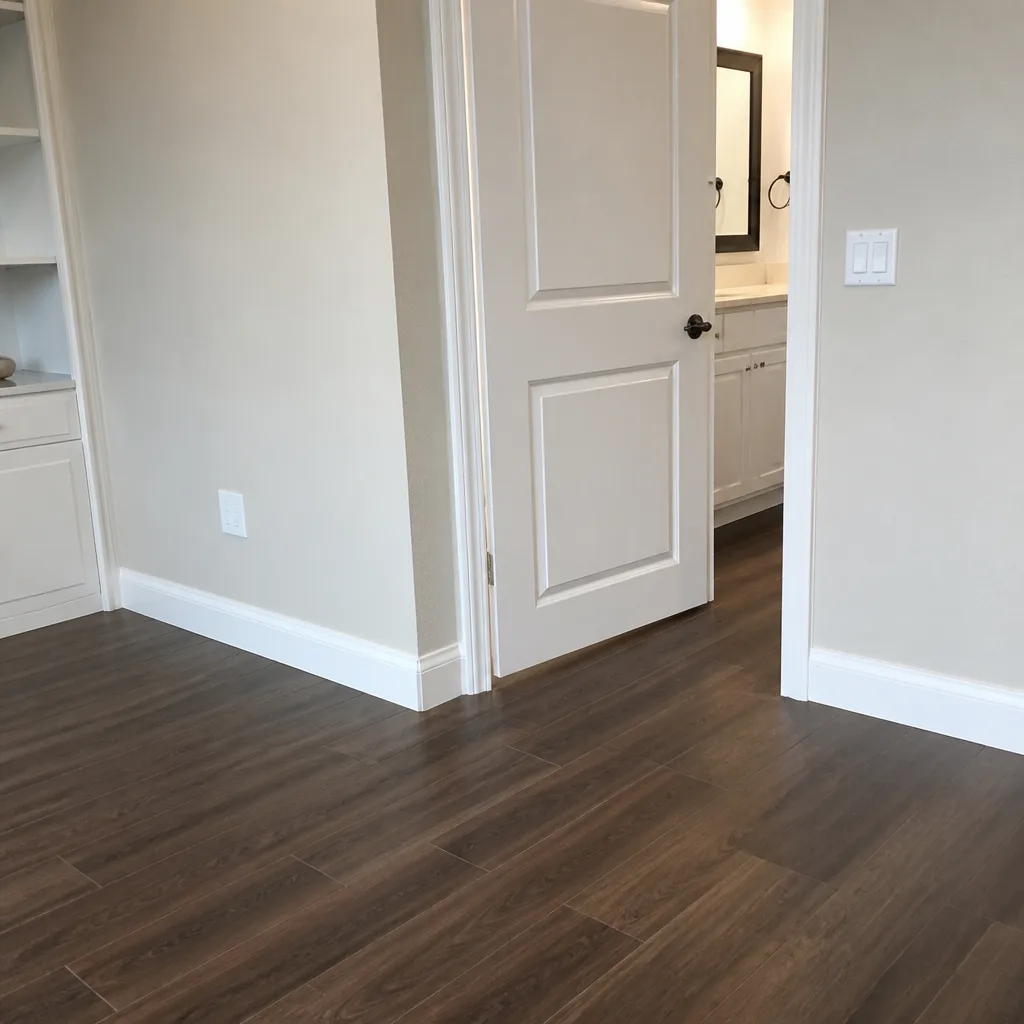 After
After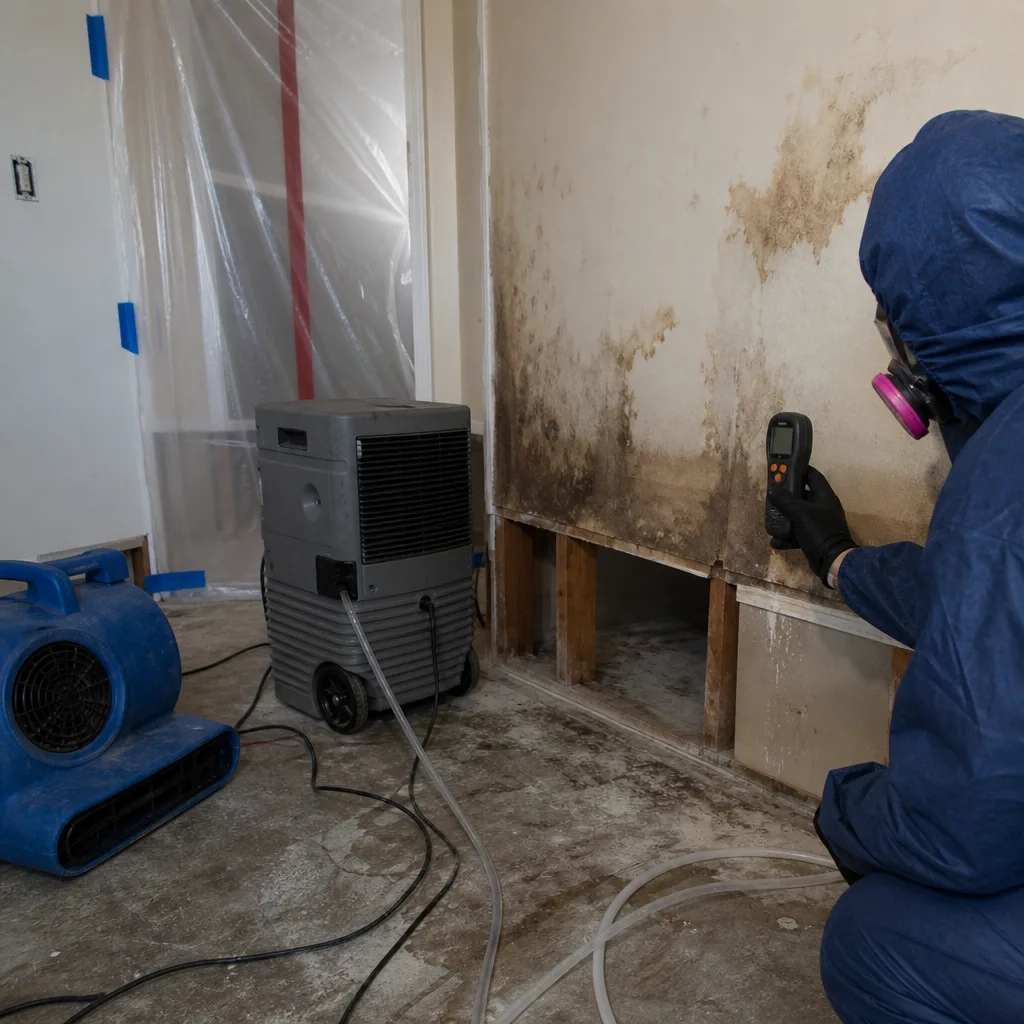 Before
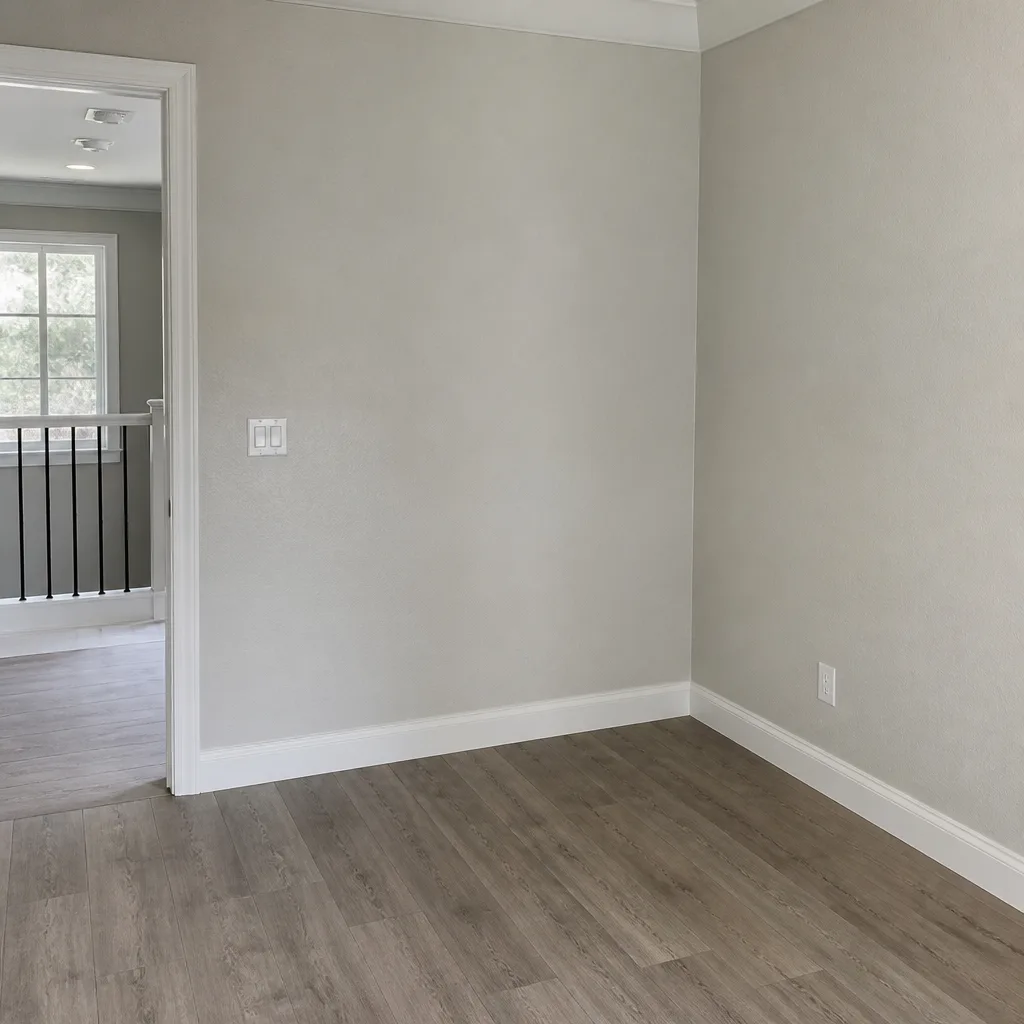 After
After24/7 Emergency Mold Remediation in Fountain Valley
Mold remediation in Fountain Valley typically costs $1,800-$6,500 depending on affected square footage and whether the source is a contained leak or widespread slab moisture intrusion. Most jobs begin with same-day containment and air scrubbing, with full remediation completed in 3-7 days. Call (657) 212-2570 now and a live person will answer, dispatch a crew to your Fountain Valley property, and start documentation for your insurer from the first hour.
Speed matters more here than in inland markets. Fountain Valley’s coastal marine layer keeps indoor relative humidity elevated year-round, and mold can colonize wet drywall within 24-48 hours of water intrusion - not the 72-96 hour window crews use in drier climates. Our Mold Remediation team runs 24-hour live dispatch with no voicemail trees. We arrive with containment materials, HEPA air scrubbers, and moisture mapping equipment to stop spore spread before it crosses into unaffected rooms.
Understanding Mold Remediation Severity in Fountain Valley Properties
We classify mold contamination by affected square footage, material porosity, and whether the source water was Category 1 (clean supply line), Category 2 (gray water with chemical or biological load), or Category 3 (black water with sewage or ground contamination). In Fountain Valley, a slow slab leak on 50-year-old copper lines often degrades from Category 1 to Category 2 or 3 once it has sat under flooring, picked up slab contaminants, and incubated in the dark.
Containment strategy follows IICRC S520 standards: negative air pressure enclosures for areas over 10 square feet, HEPA filtration at 99.97% efficiency for particles 0.3 microns, and clearance testing by third-party laboratory analysis before containment removal. Fountain Valley’s slab-on-grade tract homes - built almost entirely between 1957 and the mid-1970s - present unique challenges: no basements for equipment staging, original drywall often installed without vapor barriers, and copper supply lines corroded by hard Colorado River water that generates pinhole leaks undetected for weeks.
Psychrometric data - temperature, relative humidity, and vapor pressure differential - drives our drying protocol. Vapor pressure differential is simply the force that moves moisture from wet materials to drier air; in Fountain Valley’s high-humidity coastal environment, that differential stays narrow, so we deploy more dehumidification capacity per square foot than inland crews typically carry.
Why Fountain Valley Property Owners Choose DryMark Restoration Irvine
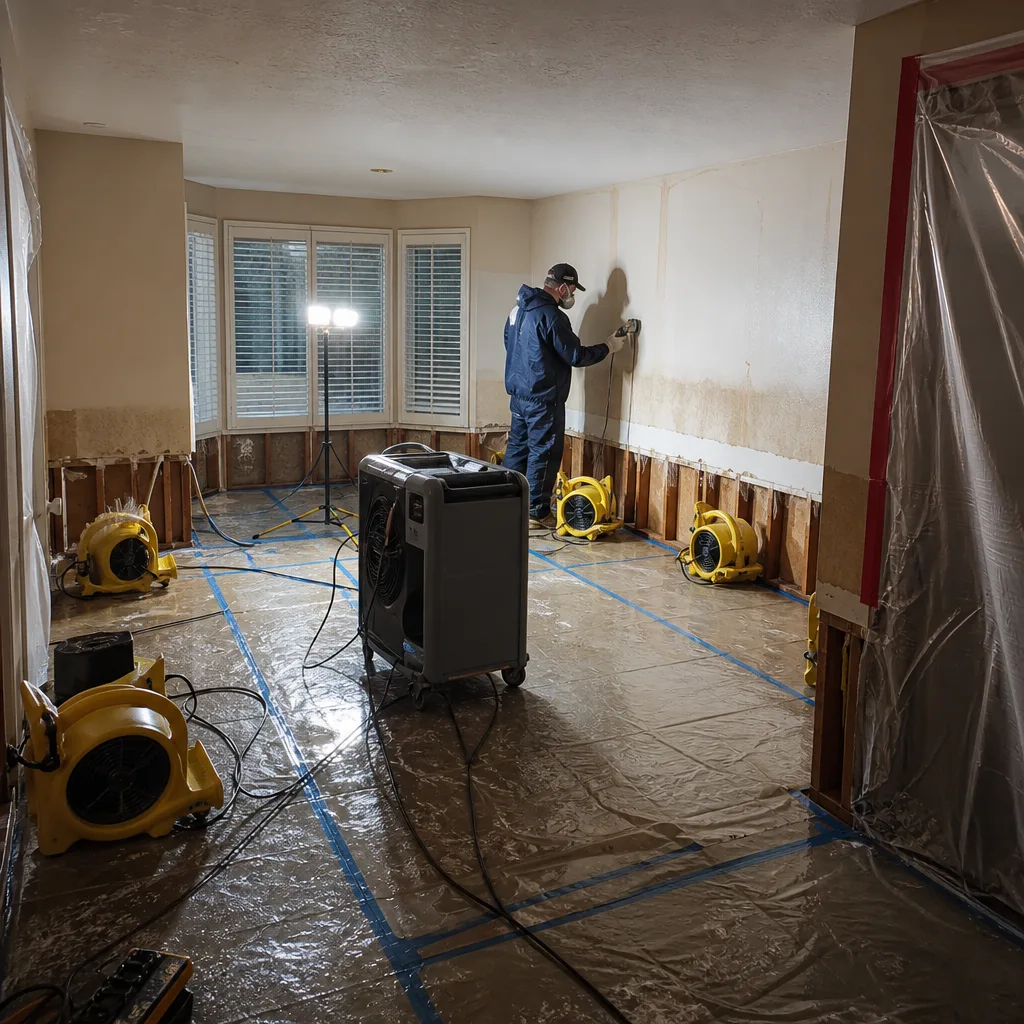
- 45-minute response commitment to Fountain Valley addresses - our nearest crews stage from the Los Angeles metro office with direct routes via the 405 and 22 corridors.
- 24/7 live answer: a real person, never an automated system or next-business-day callback while mold continues sporulating behind your walls.
- IICRC-certified crews holding WRT (Water Damage Restoration Technician), AMRT (Applied Microbial Remediation Technician), and FSRT (Fire & Smoke Restoration Technician) credentials - license numbers provided on request.
- Free visual inspection and moisture mapping before any commitment; you receive a written scope and price before work begins, every time.
- Direct insurance billing with photo-documented estimates that adjusters recognize and pay without dispute.
- One team from containment through reconstruction - no handoffs between remediation and rebuild contractors that fragment accountability.
 Before
 After
AfterOur Mold Remediation Process
1. Inspection & Assessment
We map moisture with thermal imaging cameras and penetrating hygrometers, identify the water source, classify the contamination level, and photograph every affected surface. In Fountain Valley slab homes, we pay particular attention to perimeter walls where hydrostatic pressure pushes ground moisture upward through hairline cracks.
2. Containment & Air Filtration
We erect polyethylene containment barriers with negative air pressure, install HEPA air scrubbers to capture airborne spores, and seal HVAC returns to prevent cross-contamination. Containment size and pressure differential are calculated from the affected square footage and spore count.
3. Source Elimination & Structural Drying
Active leaks are stopped, standing water extracted, and drying equipment deployed: LGR dehumidifiers from Dri-Eaz and Phoenix, axial air movers from XPOWER, and when needed, Injectidry systems for wall-cavity drying. Daily moisture logs track specific humidity and grain depression until materials reach established drying goals.
4. Cleaning & Antimicrobial Treatment
Non-porous materials are HEPA-vacuumed and cleaned with EPA-registered antimicrobial solutions. Porous materials that cannot be restored - saturated drywall, compromised insulation, delaminated subfloor - are removed with controlled demolition and bagged for proper disposal.
5. Moisture-Barrier & Slab Treatment
In Fountain Valley’s high-water-table neighborhoods, we apply secondary moisture-barrier treatments to slab surfaces before flooring reinstallation. Skipping this step is a common callback trigger; groundwater wicks upward through hairline cracks even when surface readings appear dry.
6. Clearance Testing & Restoration
Third-party laboratory clearance sampling confirms airborne spore levels have returned to background. We then rebuild with matching materials, provide the photo record and drying log documentation, and back the work with our 365-Day Done Right Promise under The Haven Standard.
Need Emergency Mold Remediation in Fountain Valley Now?
Crews minutes away, answering live 24 hours a day. The sooner we start, the less it costs.
Working With Your Insurance Company
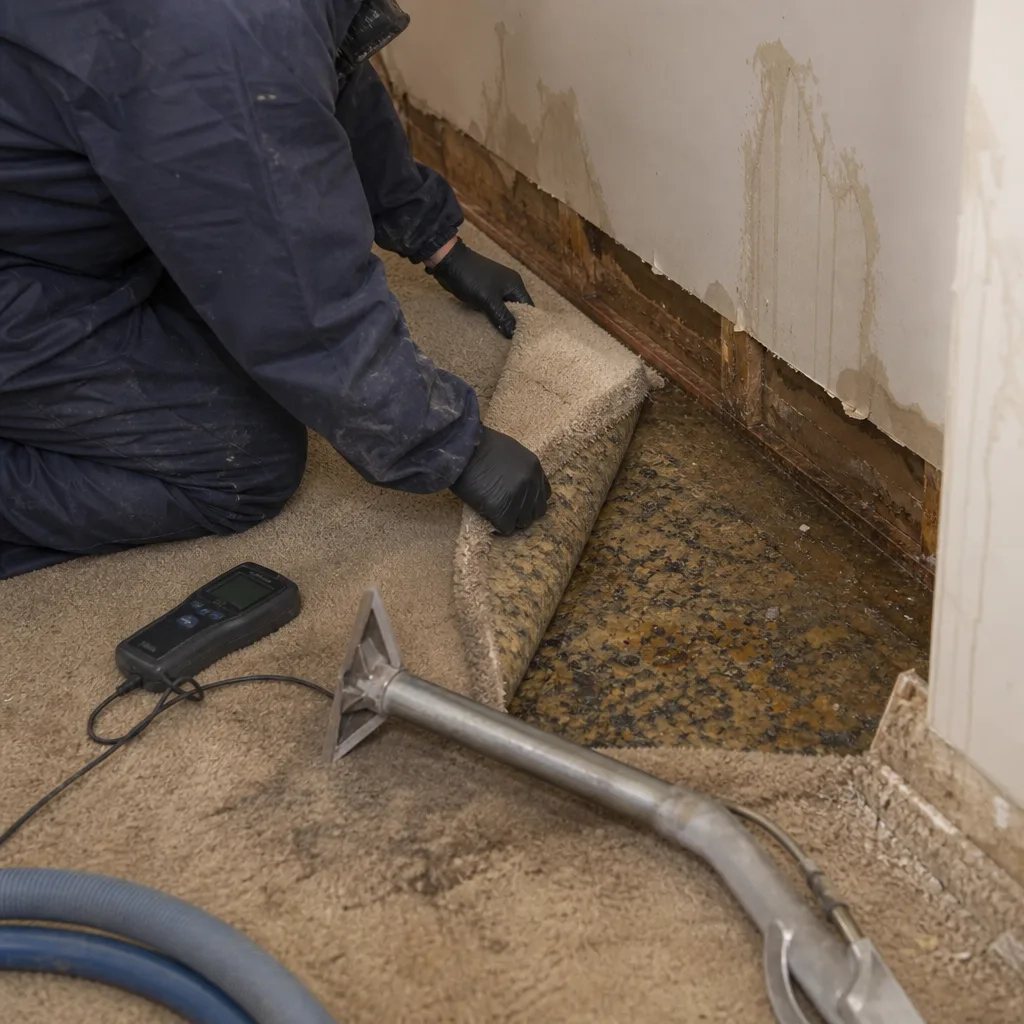
Most mold claims in Fountain Valley originate from covered water losses - burst pipes, slab leaks, or appliance failures - with mold remediation covered as secondary damage when documented promptly. We begin claim documentation from the first hour: photos of the water source, moisture readings showing migration paths, and a line-item scope that separates water mitigation from microbial remediation for adjuster clarity.
Our estimates follow industry-standard pricing databases that major carriers recognize. We coordinate directly with your adjuster, provide supplemental documentation when scope expands, and never ask you to pay upfront and seek reimbursement later. Haven Standard, Clause 1: the written price you receive before work begins is the price you pay, with no scope-creep additions once the crew is inside.
What We Provide Your Insurer
- Thorough documentation of the loss origin and water classification
- Photos of all damage, room by room, with date and time stamps
- Moisture readings and daily drying logs with psychrometric data
- A detailed, line-item scope of work separating mitigation from remediation
- Direct coordination with your carrier’s assigned adjuster
Built for Fountain Valley’s Loss Calendar
January through March brings the heaviest marine layer, with relative humidity spiking above 75% for days at a time. Any active leak during this period accelerates mold growth dramatically; we see more secondary mold calls in these months than in summer despite lower temperatures.
April through June delivers the Santa Ana wind pattern, which dries surface moisture quickly but masks deeper slab saturation. Homeowners assume a leak is resolved when walls feel dry, while moisture meters tell a different story in the substrate.
July through September’s dry heat reduces ambient humidity, but air conditioning use creates cold surfaces where condensation collects - particularly in Fountain Valley’s original 1960s-era homes with poorly insulated ductwork in hot attics. October through December’s returning marine layer completes the cycle, making year-round vigilance necessary for properties with any history of water intrusion.
We responded to a 1964 slab-on-grade ranch near the Santa Ana River corridor where a corroded copper supply line had fed a slow slab leak undetected for weeks; moisture mapping showed elevated readings across two rooms even after structural drying, because groundwater was wicking up through hairline slab cracks. We set containment, ran dehumidification and air movers per IICRC drying logs, applied antimicrobial treatment, and treated the slab with a secondary moisture barrier before the homeowner re-installed flooring - no callback.
Mold Remediation Across Fountain Valley’s Neighborhoods
Westminster Avenue corridor properties, built in the earliest phase of Fountain Valley development, carry original copper supply lines now past 50 years of service life. We see frequent pinhole leaks here that saturate slab perimeters before owners notice musty odors or warped baseboards. The flat, low-lying terrain toward the Santa Ana River means these homes sit closest to the water table; our crews routinely log anomalously high slab moisture even after extended drying.
Brookhurst Street and Ellis Avenue tracts, developed in the 1960s and early 1970s, feature slightly newer construction but identical slab-on-grade foundations. Many have had at least one bathroom or kitchen remodel, often with tile installed directly on slab without adequate moisture barrier. When leaks occur under these floors, demolition scope expands to include the original tile bed.
Properties near Mile Square Regional Park, particularly those on the southern and eastern edges, benefit from slightly better drainage but still face the same hydrostatic pressure. We’ve completed several whole-house remediations here after irrigation system failures saturated exterior walls and wick-fed interior mold colonies.
The newer infill near Warner Avenue and Euclid Street presents fewer original plumbing failures but more HVAC condensation issues - tight construction with oversized cooling systems that short-cycle and fail to dehumidify adequately during marine layer events.
Specialized Mold Remediation Services We Offer in Fountain Valley
Mold Inspection & Testing
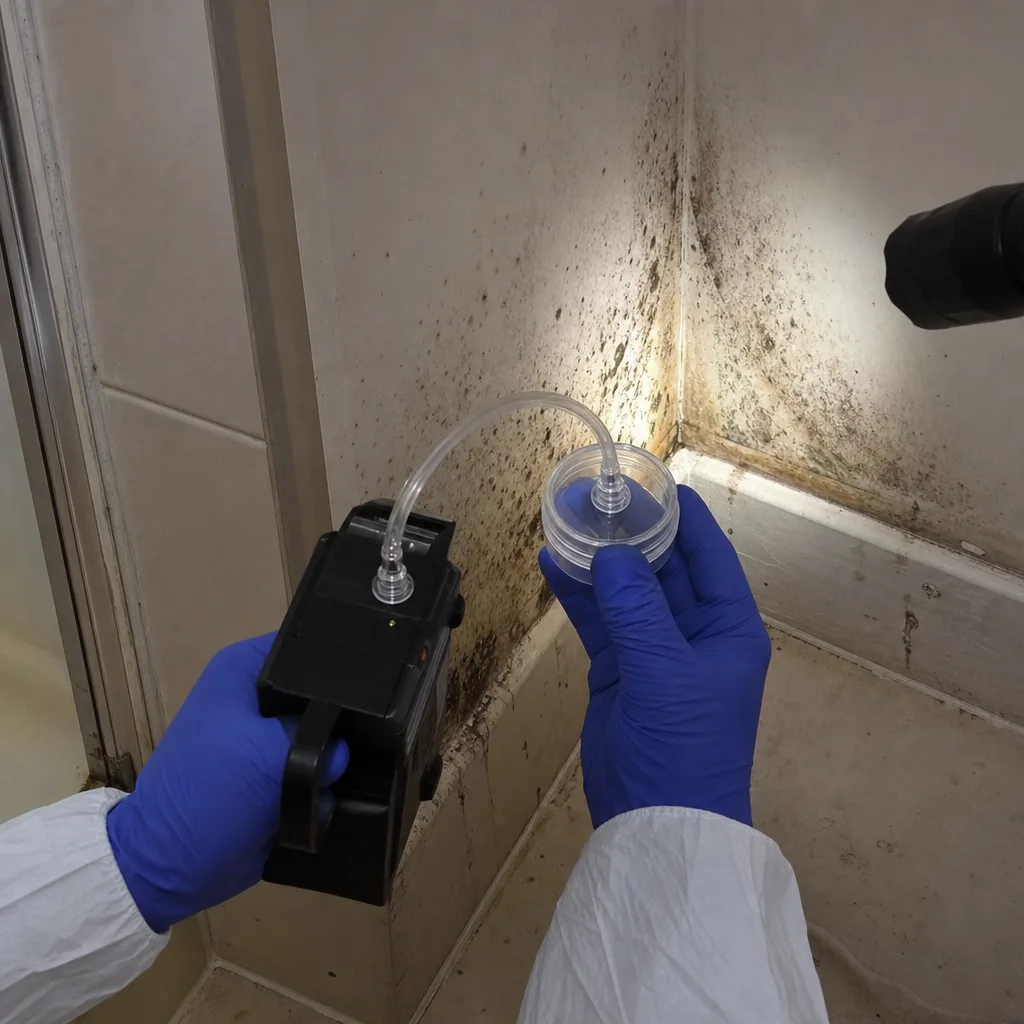
We begin with visual assessment, moisture mapping, and air sampling analyzed by independent laboratories. In Fountain Valley, we specifically test slab perimeter walls and areas beneath plumbing fixtures where copper line corrosion concentrates. A typical inspection runs $350-$650; testing adds $200-$400 per sample depending on analysis type.
Mold Removal
Contained removal of visible colonies following IICRC S520 protocols, with HEPA containment and negative air pressure for areas exceeding 10 square feet. Fountain Valley’s older drywall, often without vapor barrier, requires more aggressive removal than newer construction when saturation has occurred.
Black Mold Remediation
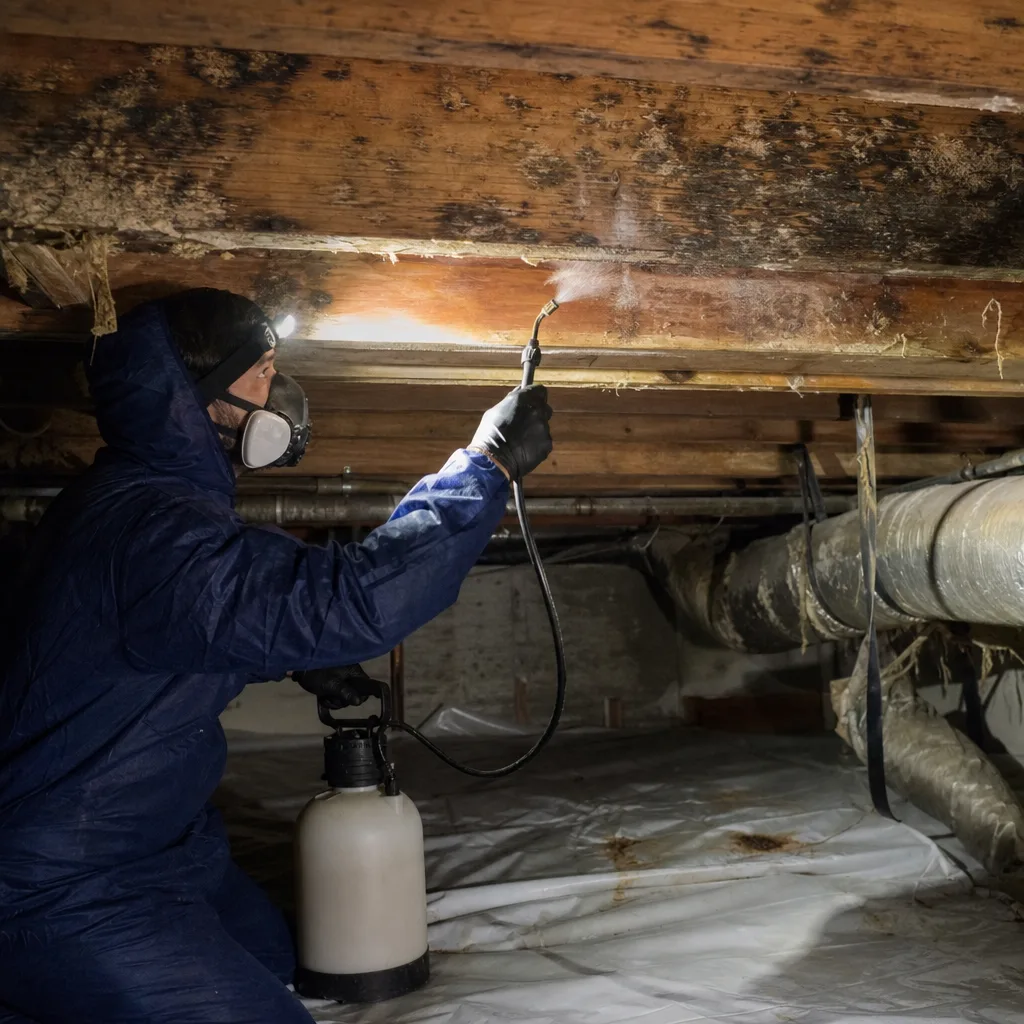
Stachybotrys chartarum and other toxigenic species require enhanced PPE, stricter containment, and specialized disposal. We do not use scare tactics; we document species identification through laboratory analysis and scope remediation precisely to the contamination footprint.
Air Quality Restoration
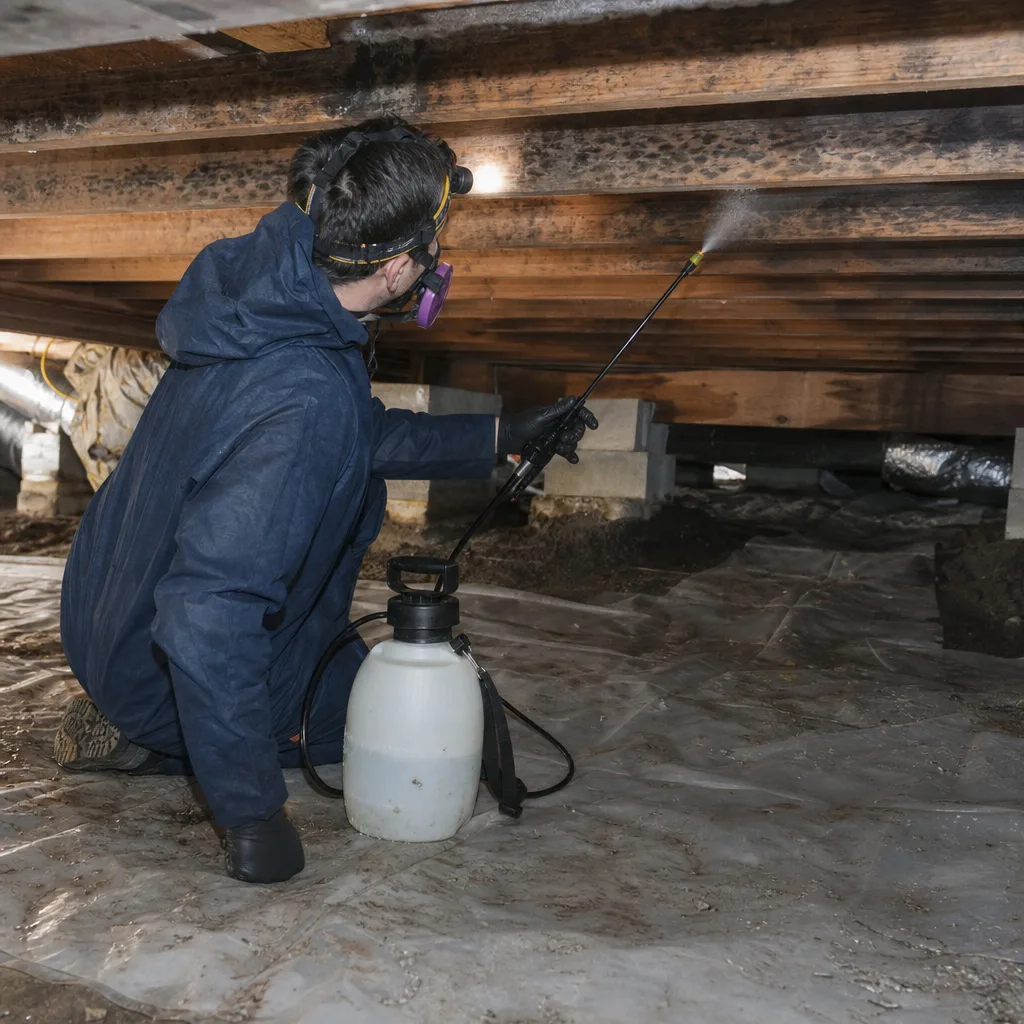
Post-remediation, we deploy HEPA scrubbers and activated carbon filtration to address volatile organic compounds and residual spores. In Fountain Valley’s tight slab homes with limited natural ventilation, this step is critical before occupancy restoration.
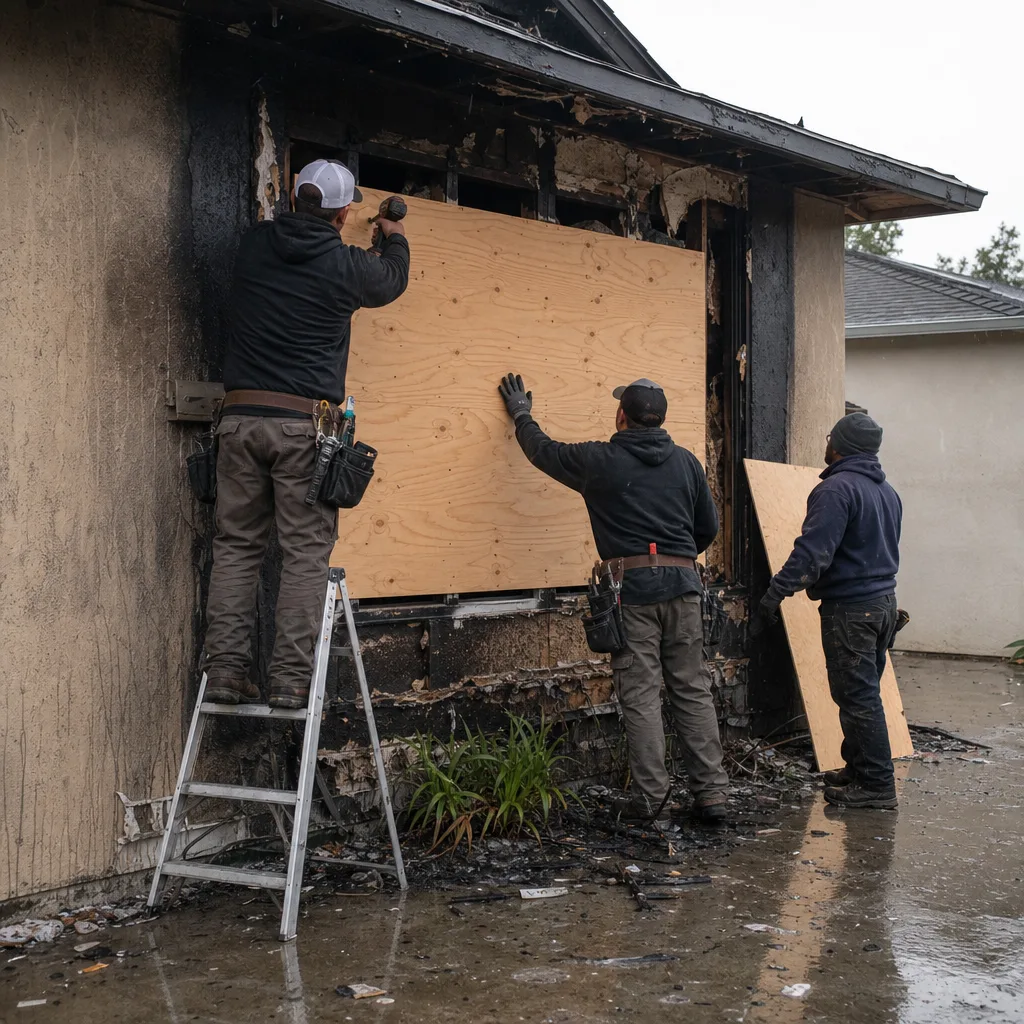
Crawl Space Treatment
While Fountain Valley has virtually no basements, some properties have raised-floor additions or converted garages with accessible crawl spaces. These areas collect marine layer humidity and require dedicated vapor barriers, dehumidification, and periodic inspection.
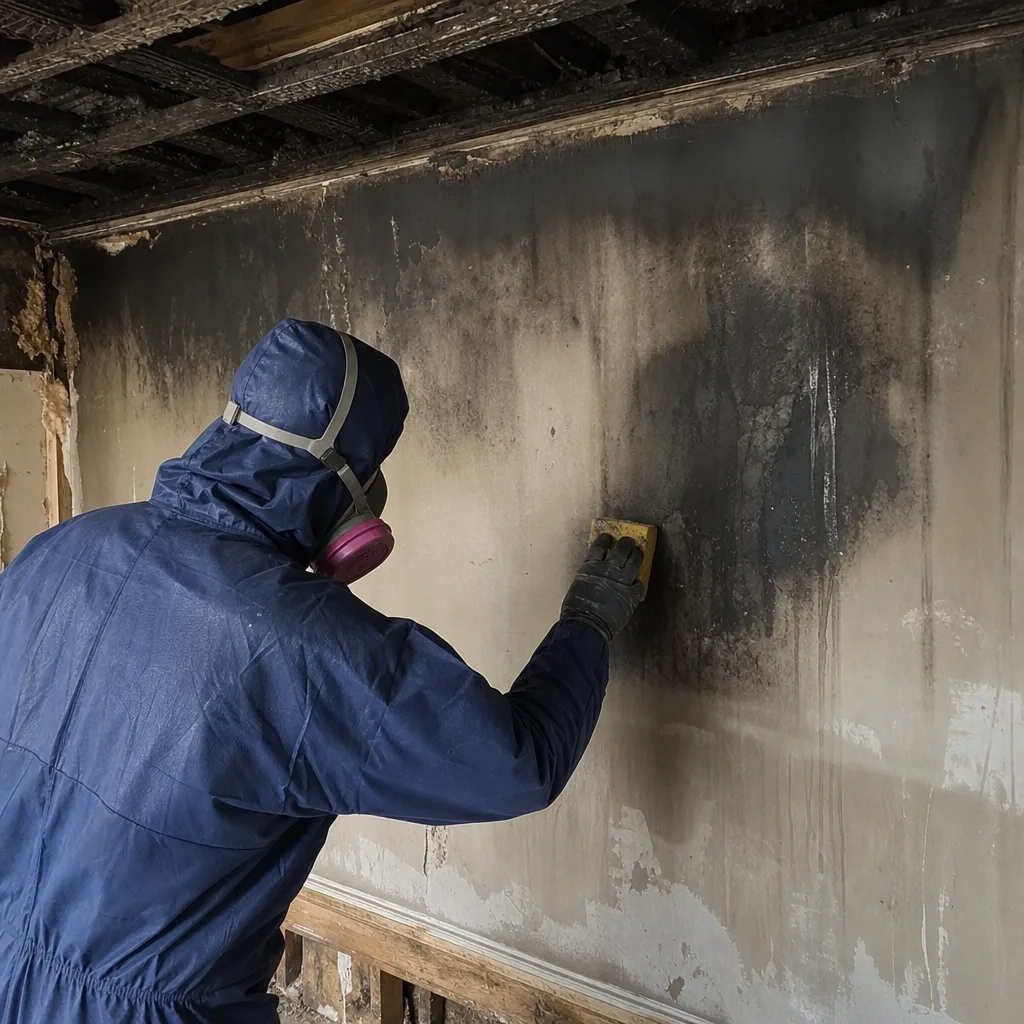
Moisture & Humidity Control
Long-term humidity management for Fountain Valley properties with recurring slab moisture or inadequate ventilation. We specify and install whole-home dehumidification, improved exhaust systems, and slab moisture barriers to prevent recurrence after remediation is complete.
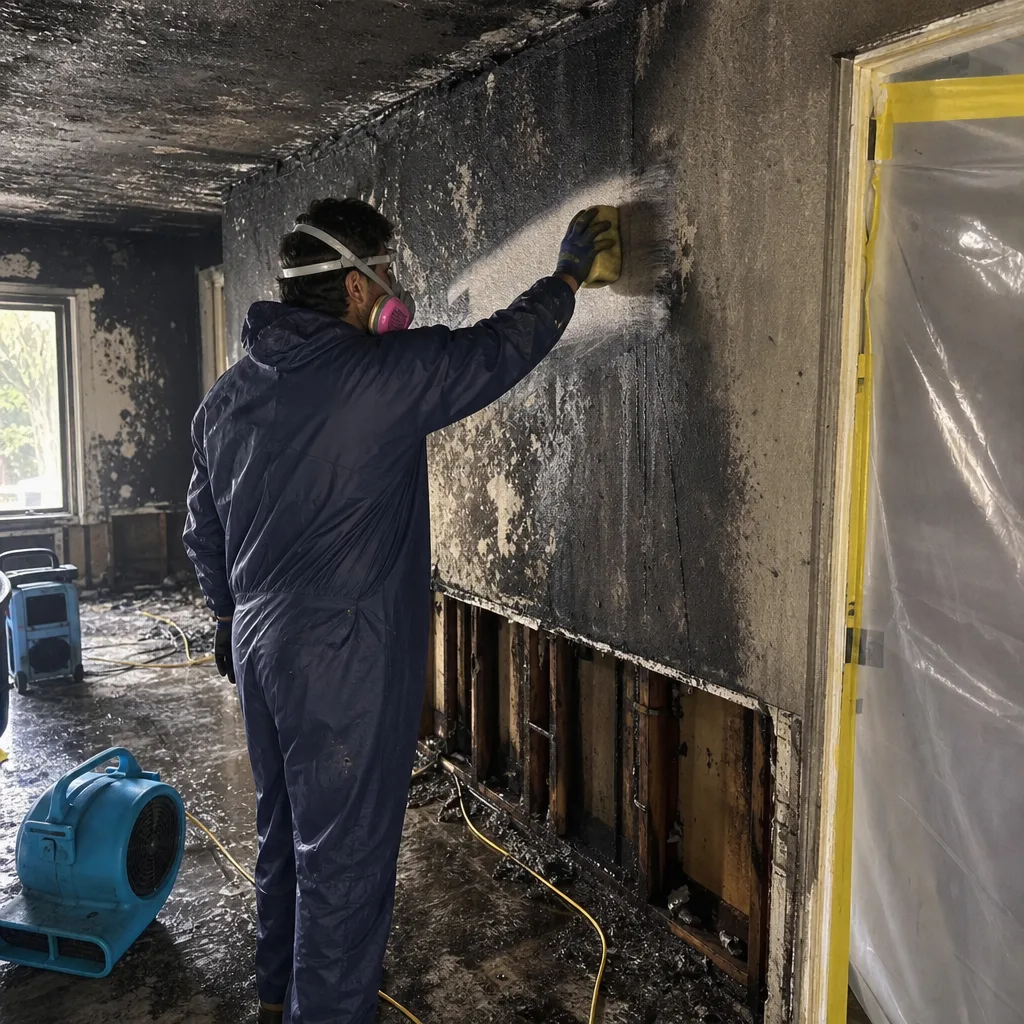
What happens when you call
- 1
A real person answersNo phone trees - you reach a local pro.
- 2
You get an upfront price rangeHonest numbers before anyone is dispatched.
- 3
A background-checked tech heads outLicensed & insured, dispatched right away.
- 4
You approve before work beginsNothing starts until you say go.
Mold Remediation Costs in Fountain Valley, CA
| Service | Typical Range in Fountain Valley |
|---|---|
| Mold inspection & testing | $350-$1,050 |
| Contained mold removal (under 10 sq ft) | $500-$1,200 |
| Room-scale remediation (10-100 sq ft) | $1,800-$4,500 |
| Multi-room or whole-area remediation | $4,500-$8,500 |
| Slab moisture barrier treatment | $800-$2,400 |
| Third-party clearance testing | $300-$600 |
What moves the price: affected square footage, material type (porous drywall vs. non-porous tile), whether the water source was Category 1 or degraded to Category 2/3, and whether slab moisture barrier treatment is required. Insurance typically covers mold remediation when it results from a covered water loss and is reported promptly; slow leaks over months may face coverage limitations. We provide a free visual inspection and written scope before any commitment - Haven Standard, Clause 1.
We Also Serve Cities Near Fountain Valley
Our crews respond throughout central Orange County, including Fountain Valley and neighboring Costa Mesa, Santa Ana, Newport Beach, and Tustin. Dispatch and scheduling are coordinated from our Los Angeles metro office with dedicated routes to each community.
Serving Fountain Valley, CA - Our Local Coverage Area
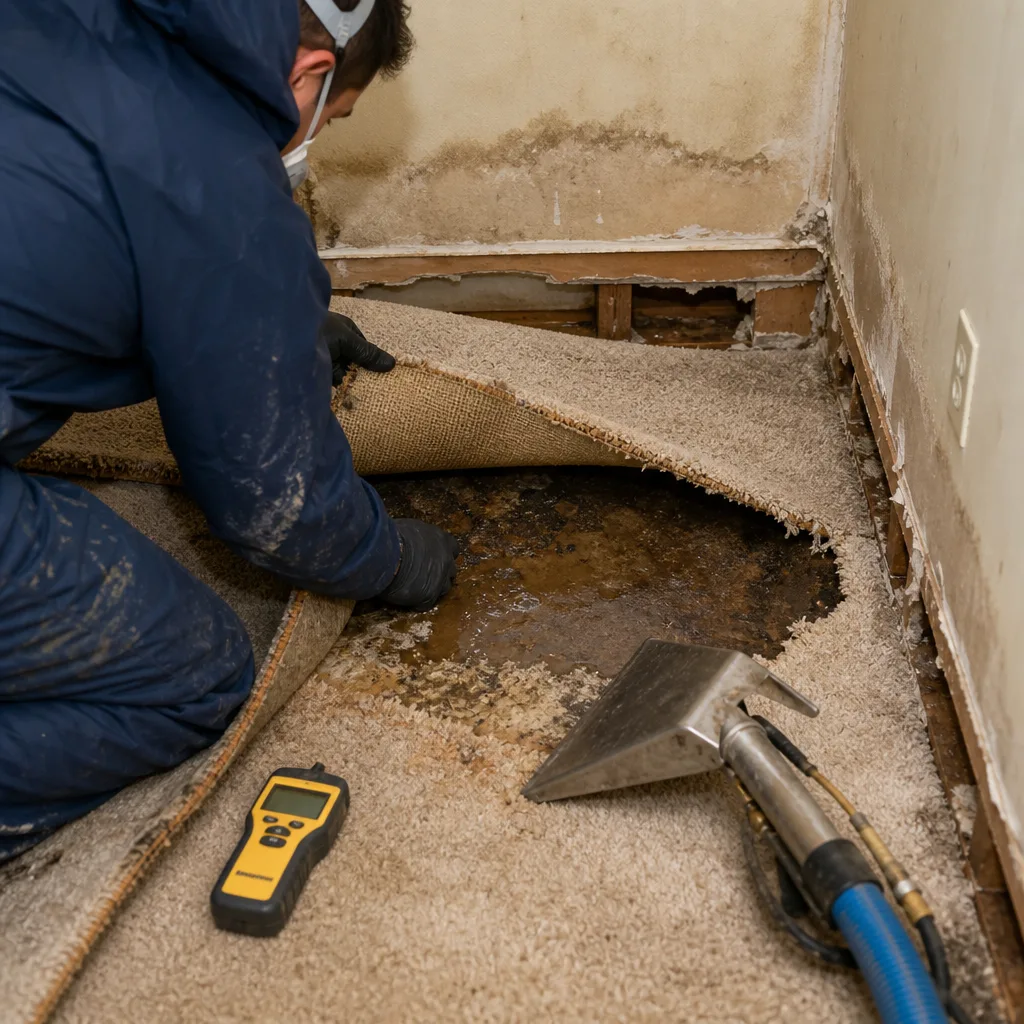
We’re based in the Fountain Valley area and know this community well. Use the map below to see our service coverage - if you’re nearby, we can almost certainly help.
Fountain Valley Mold Remediation Questions, Answered
Why does my Fountain Valley slab still read wet weeks after a water leak was fixed?
Groundwater is wicking upward through hairline slab cracks because Fountain Valley’s water table sits only 2-4 feet below grade in many neighborhoods. Surface drying with air movers removes liquid water from the leak, but hydrostatic pressure continues pushing moisture through the concrete. We treat this with secondary moisture-barrier application before flooring reinstallation. Call (657) 212-2570 for moisture mapping and a written scope.
How fast can mold grow after a slab leak in Fountain Valley?
Mold can colonize wet drywall in 24-48 hours in Fountain Valley, compared to 72-96 hours in drier inland markets. The coastal marine layer keeps indoor relative humidity elevated, accelerating spore germination and growth. This is why we emphasize immediate containment and dehumidification, not just extraction. Call (657) 212-2570 for same-day response.
Does a slow slab leak on 50-year-old copper lines count as Category 1 water?
Not reliably. Once water has sat under flooring, passed through slab contaminants, and incubated in darkness, it typically degrades to Category 2 or 3. Treating it as Category 1 produces an inadequate scope that misses hidden contamination and risks adjuster rejection. We test and classify properly before quoting. Call (657) 212-2570 for classification and a written scope.
Why do you treat the slab for moisture even after structural drying is complete?
Structural drying achieves target moisture content for the materials that were wet, but it does not stop groundwater from wicking upward through slab cracks. Skipping the moisture-barrier step is the most common callback we see in Fountain Valley’s high-water-table neighborhoods - new flooring installed over apparently dry slab, then failing months later from below. Call (657) 212-2570 for proper slab treatment scope.
What equipment do you use for mold remediation and drying on a Fountain Valley slab home?
We deploy LGR dehumidifiers from Dri-Eaz and Phoenix, axial air movers from XPOWER, HEPA air scrubbers at 99.97% efficiency, thermal imaging for moisture mapping, and penetrating hygrometers for substrate readings. For wall cavities and tight spaces, Injectidry systems deliver directed airflow. Equipment is sized to Fountain Valley’s humid coastal environment, with higher dehumidification capacity per square foot than drier markets require. Call (657) 212-2570 for equipment specifications on your property.
Will my insurance cover mold remediation in Fountain Valley?
Insurance covers mold remediation when it results from a sudden, covered water loss - burst pipe, appliance failure, or sudden slab leak - and is reported promptly with proper documentation. Long-term leaks or maintenance-related moisture may face limitations. We document from the first hour with photos, moisture readings, and line-item scopes that adjusters recognize. Call (657) 212-2570 and we’ll review your policy and loss circumstances.
How long does mold remediation take in Fountain Valley?
Most contained removals complete in 1-3 days; room-scale remediation typically runs 3-5 days; multi-room or whole-area projects may take 5-10 days including clearance testing. Fountain Valley’s high humidity can extend drying phases if dehumidification capacity is inadequate - we size equipment aggressively to prevent this. Call (657) 212-2570 for a timeline specific to your property.
Can we stay in our home during mold remediation?
For contained areas under 10 square feet with no HVAC contamination, occupancy is often possible with containment isolation. Larger projects, toxigenic species, or whole-house involvement typically require temporary relocation for safety and to maintain containment integrity. We assess this during inspection and include occupancy recommendations in your written scope. Call (657) 212-2570 for evaluation.
Every job we complete in Fountain Valley is documented with a photo record on every visit, backed by our 365-Day Done Right Promise under The Haven Standard, and priced in writing before work begins - Haven Standard, Clause 1. If you have a competitor’s estimate, we’ll review it at no charge.
Written by Alicia Brennan, Owner at Back to Dry Restoration, serving Fountain Valley since 2011.
Mold Remediation in Nearby Areas