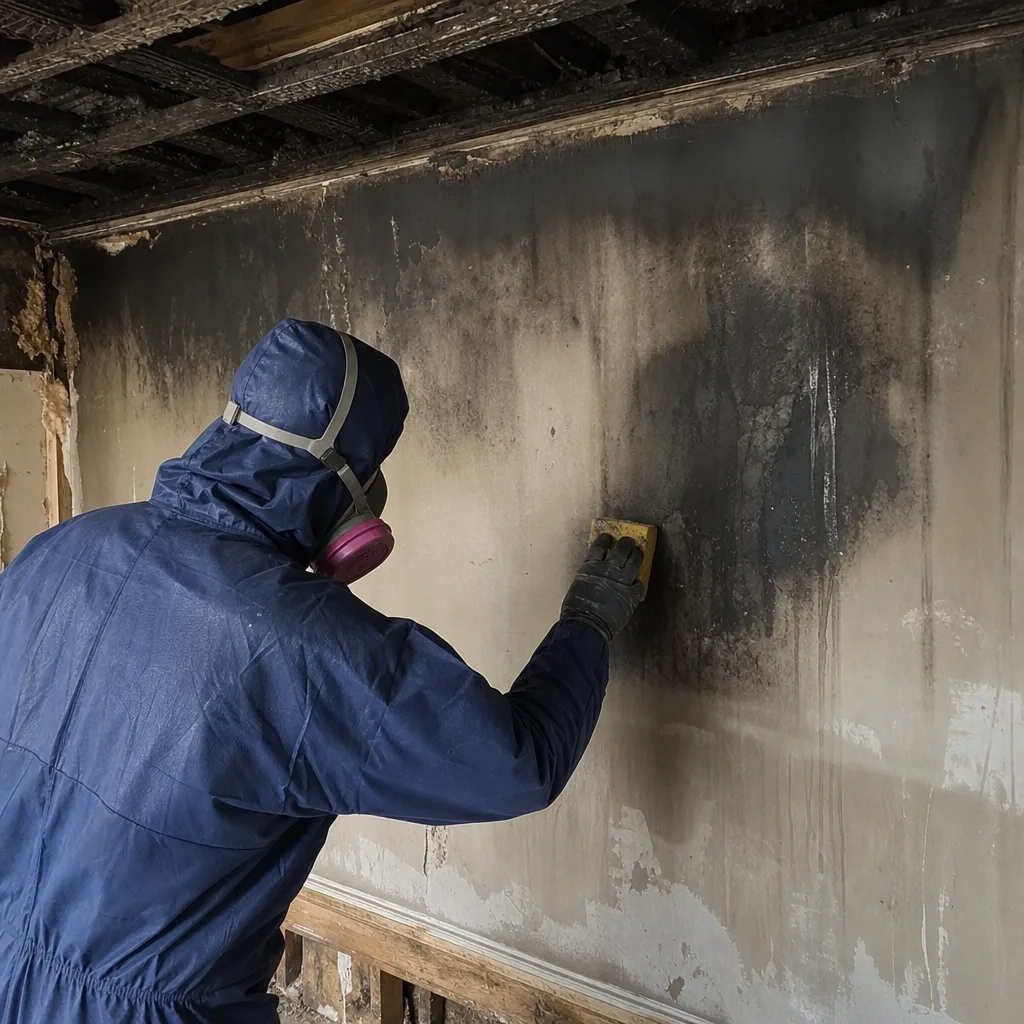
Free visual inspection and a written scope of work before any mitigation begins - photos, moisture readings, and drying logs go in your claim file
The scope we write is the scope we bill. Anything new gets shown to you, in writing, before we touch it.
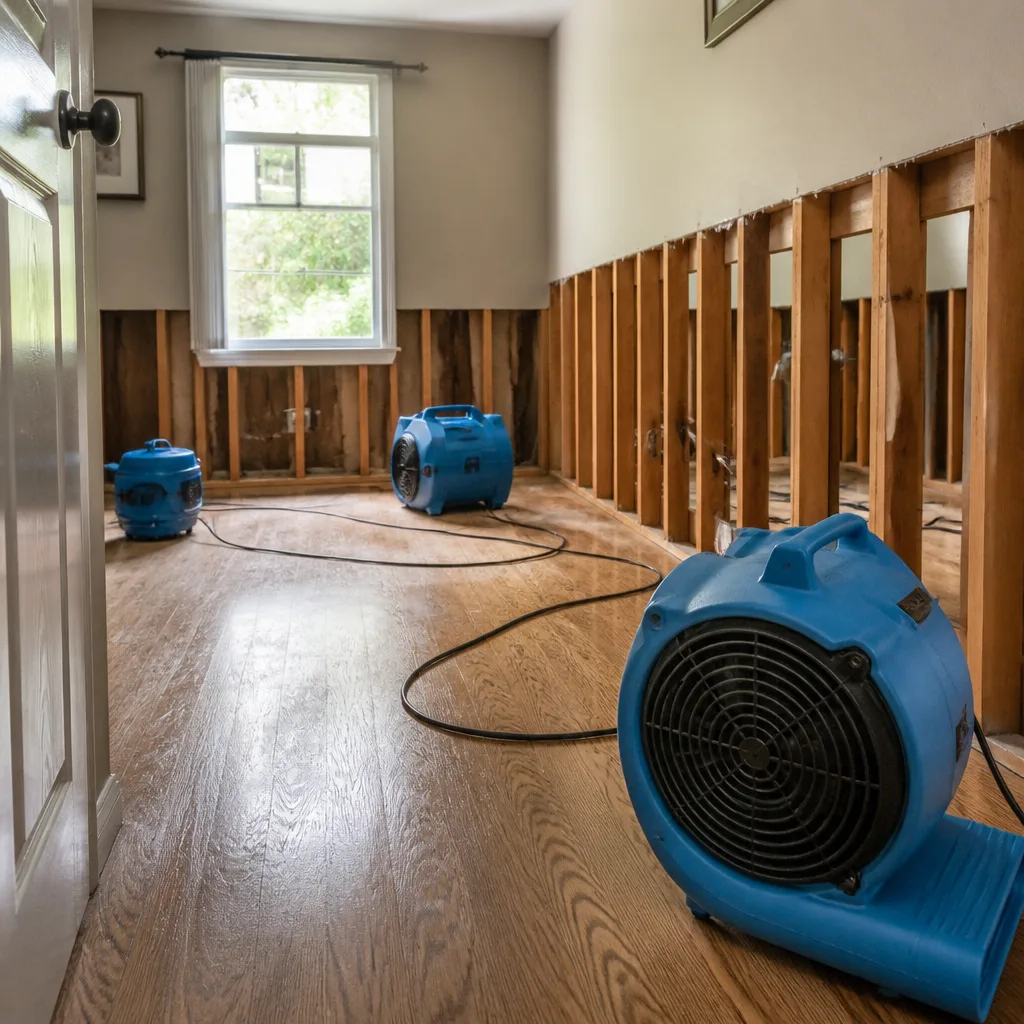
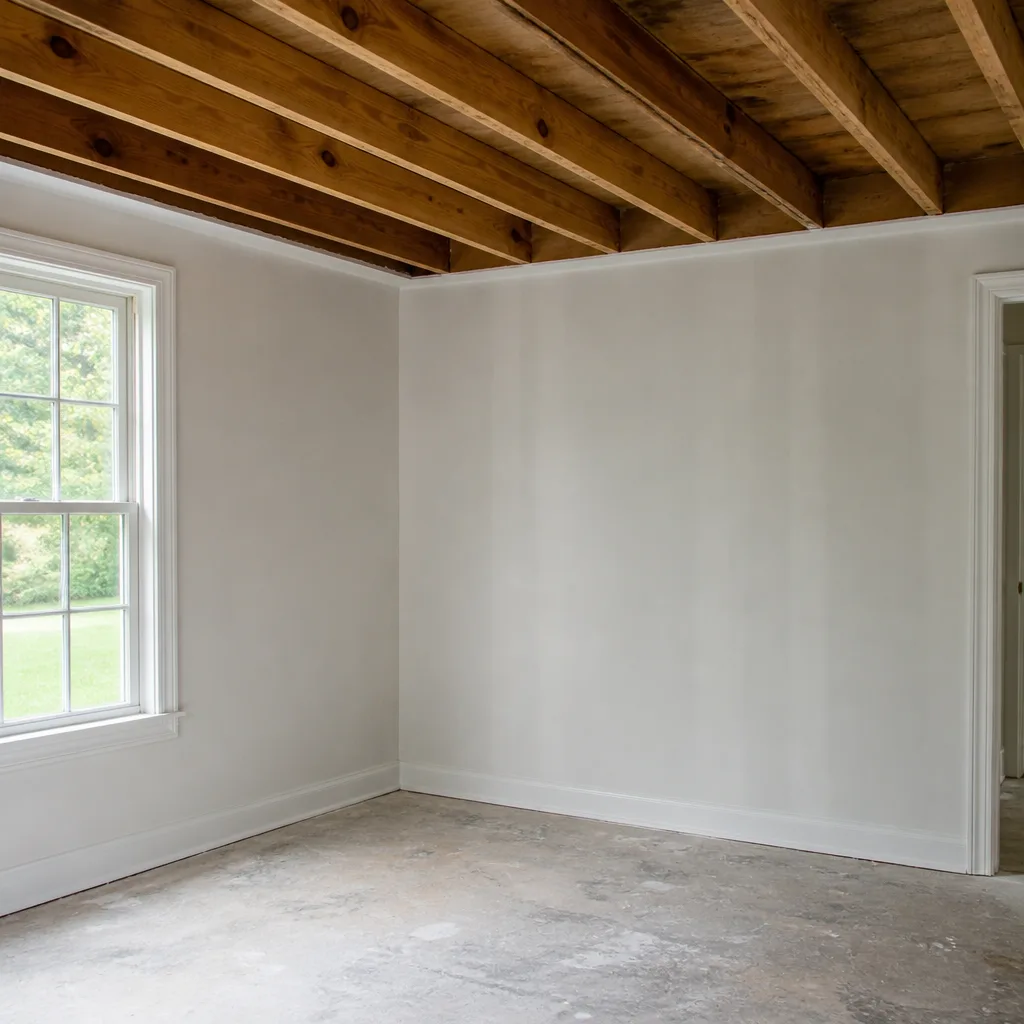
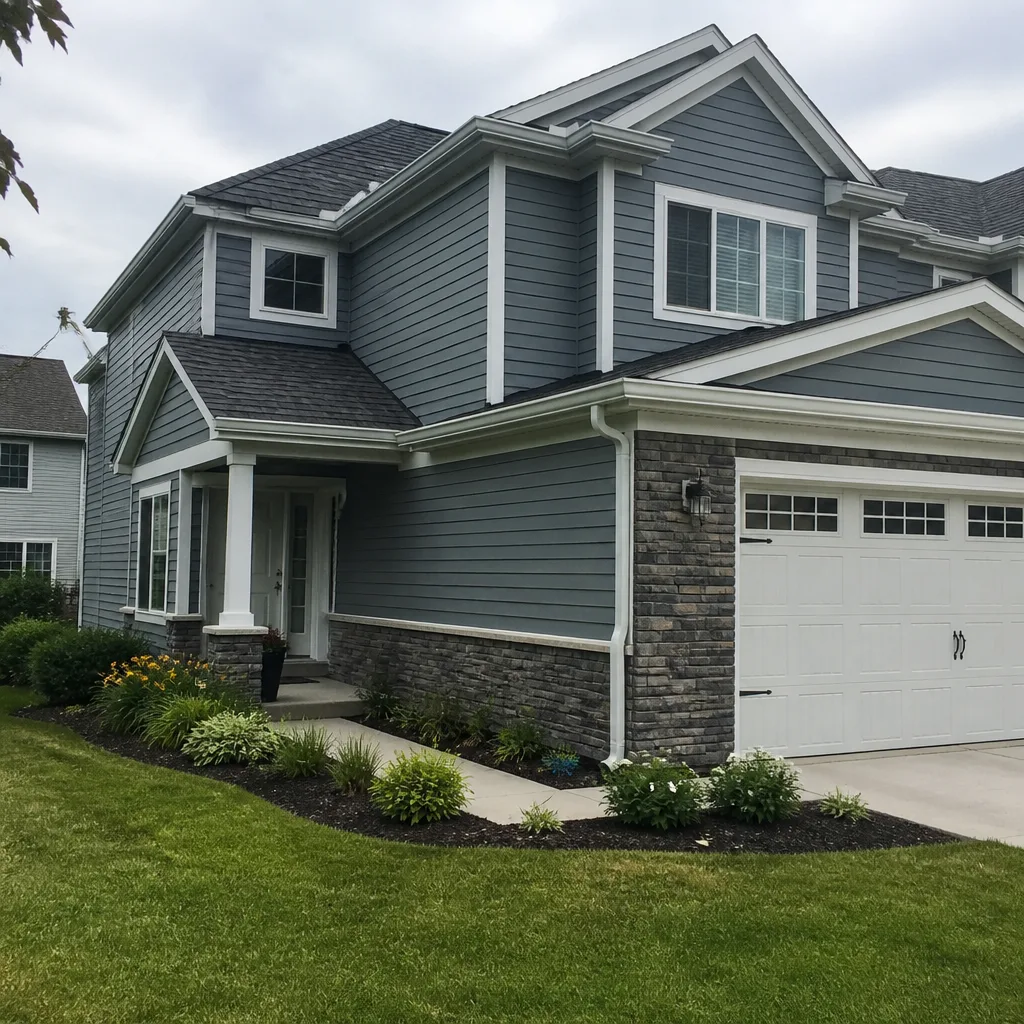
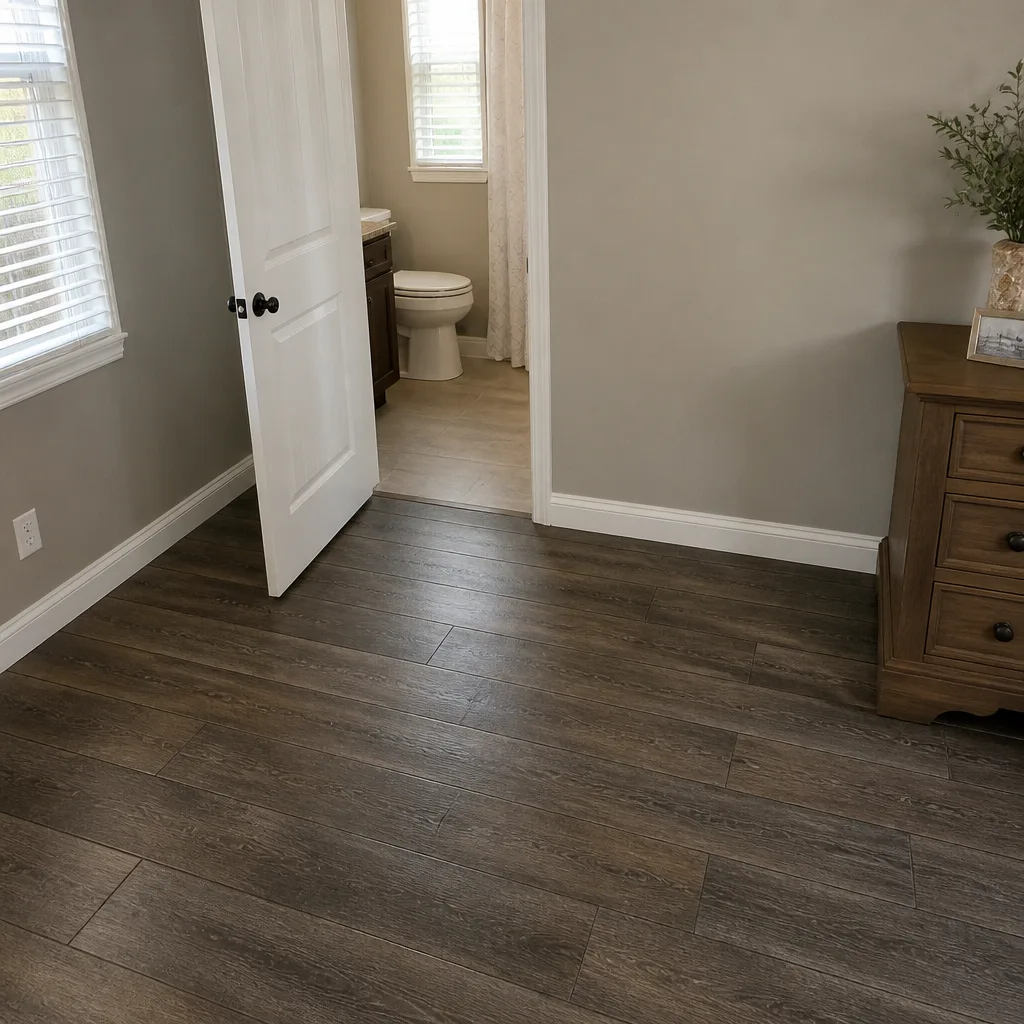

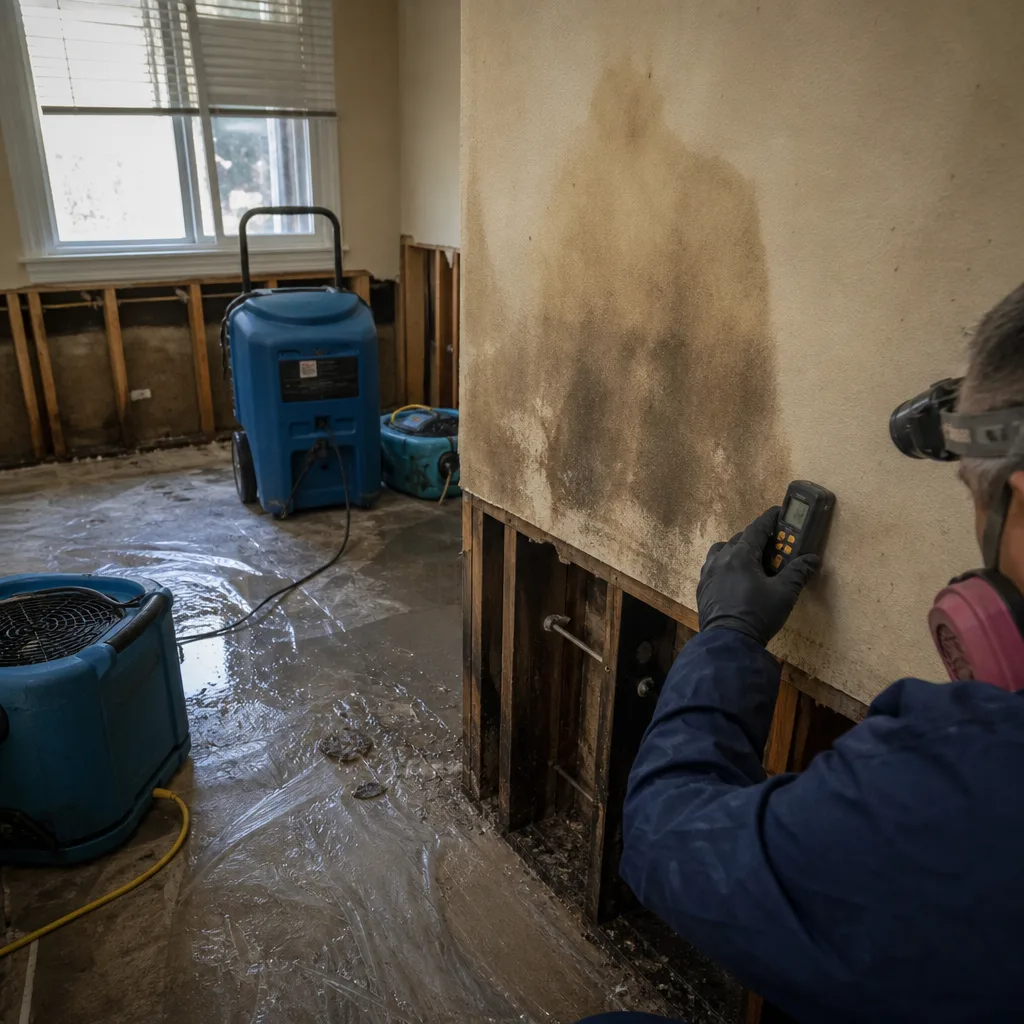 Before
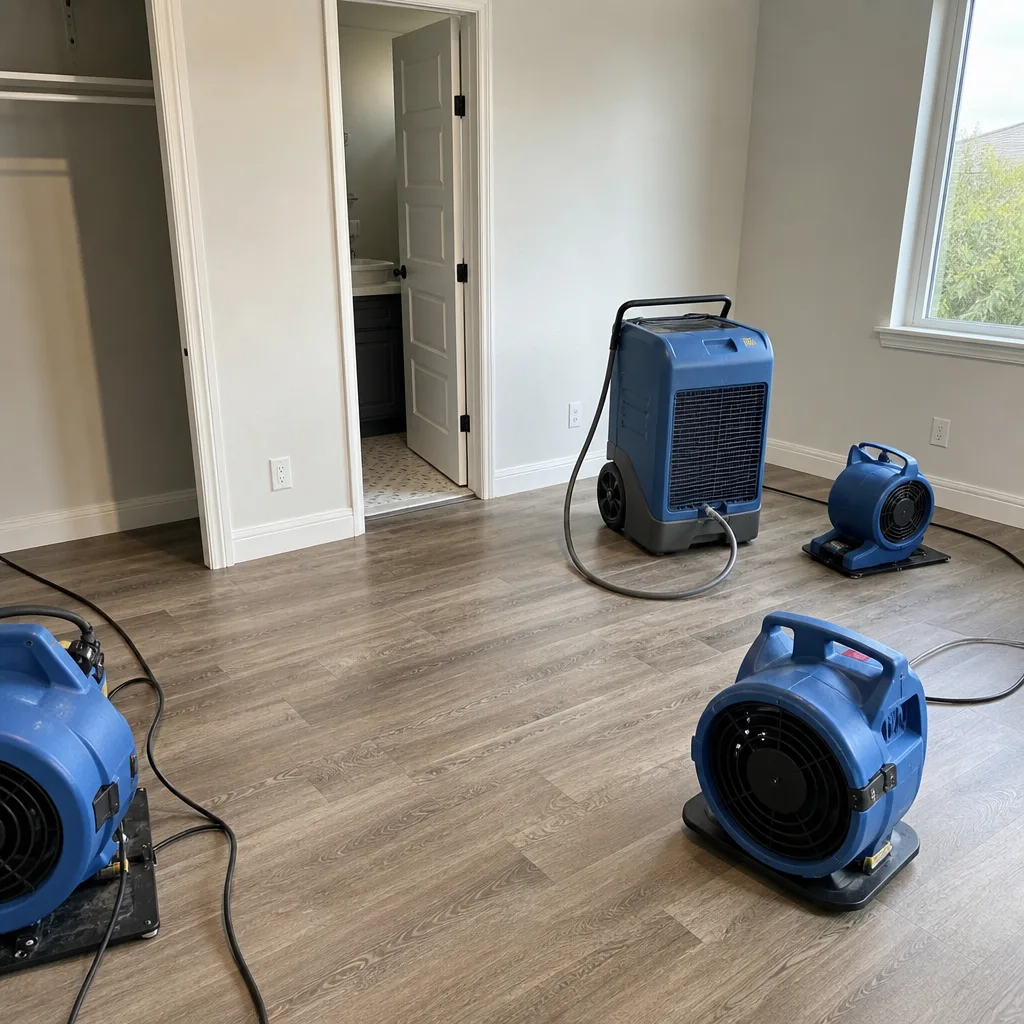 After
After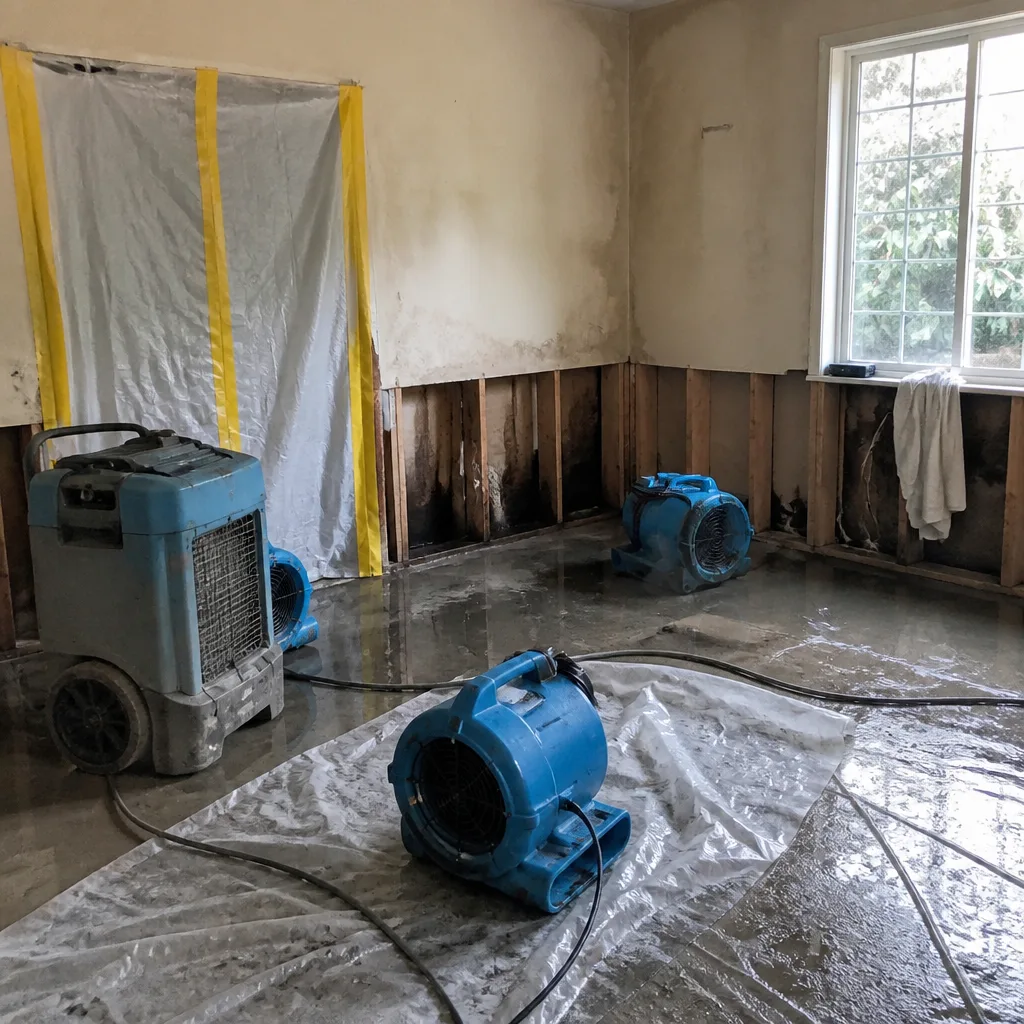 Before
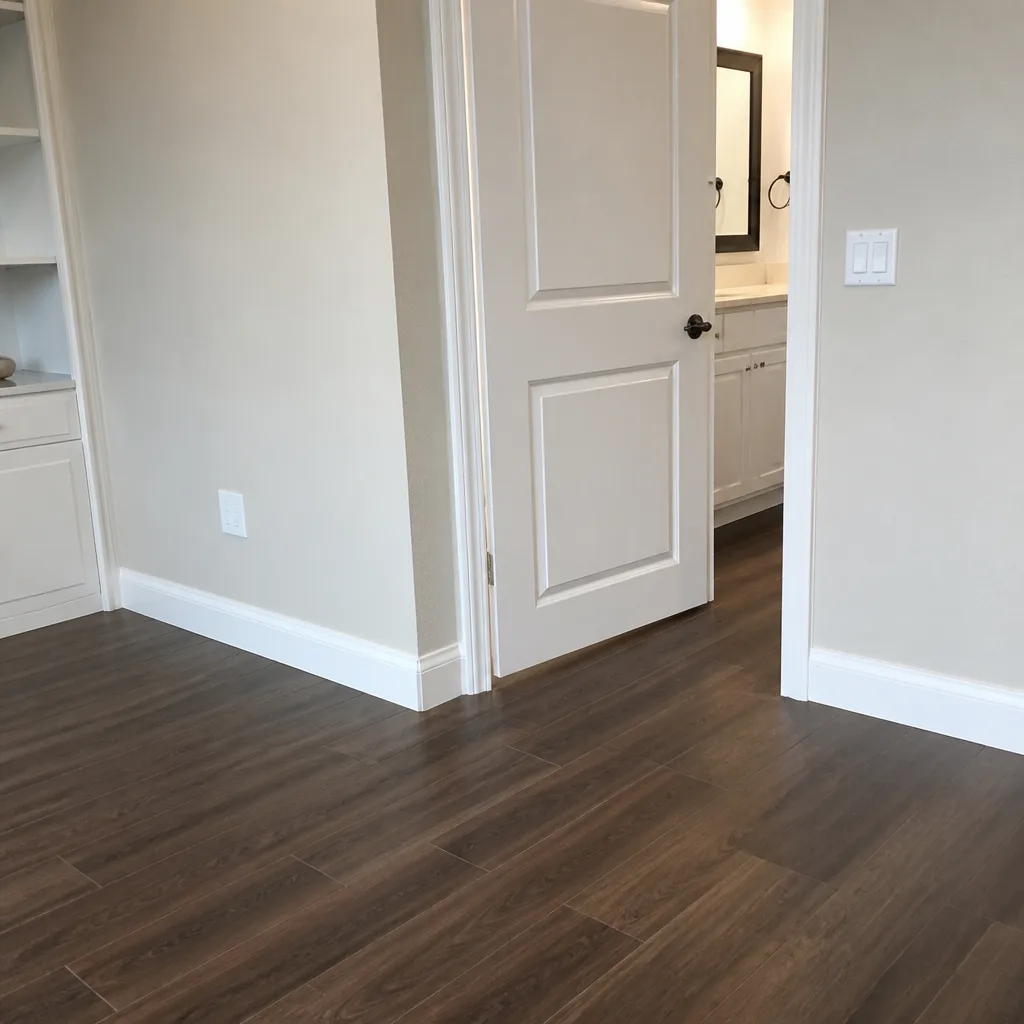 After
After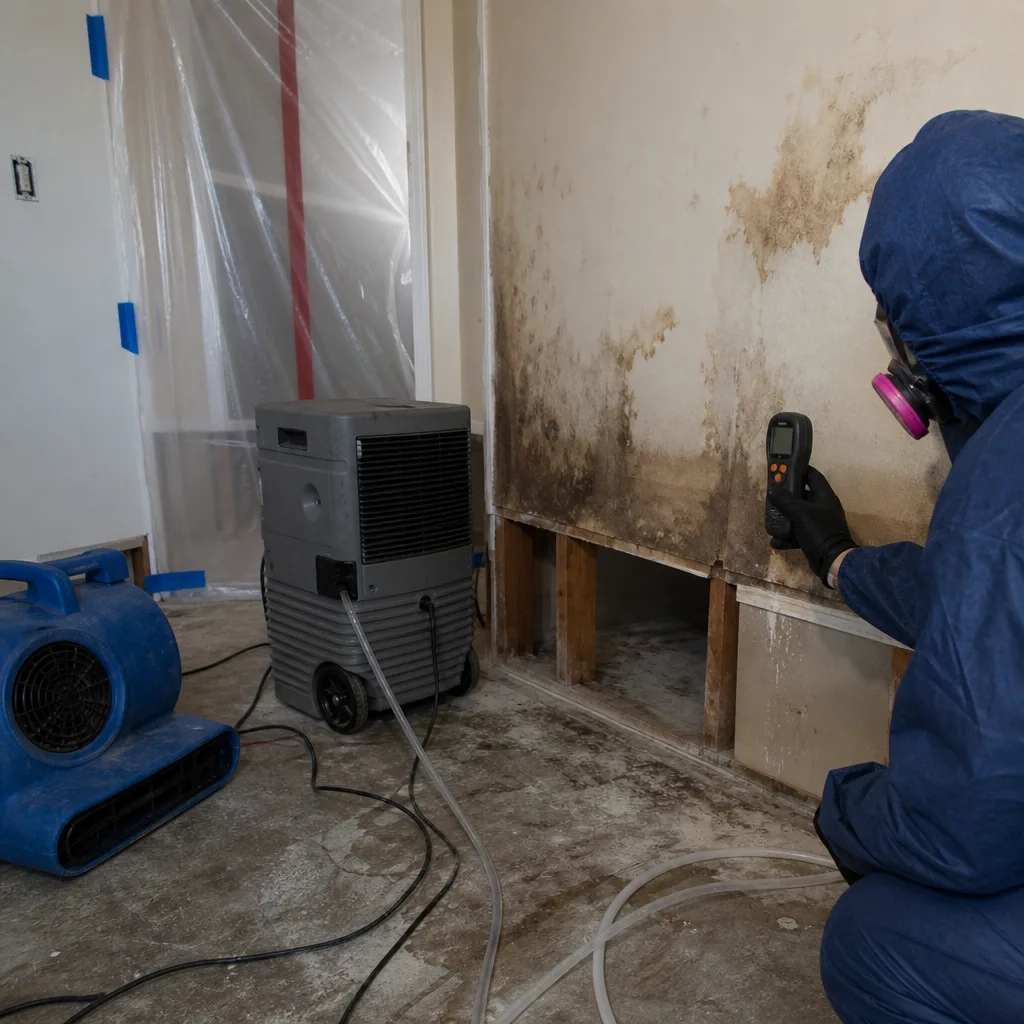 Before
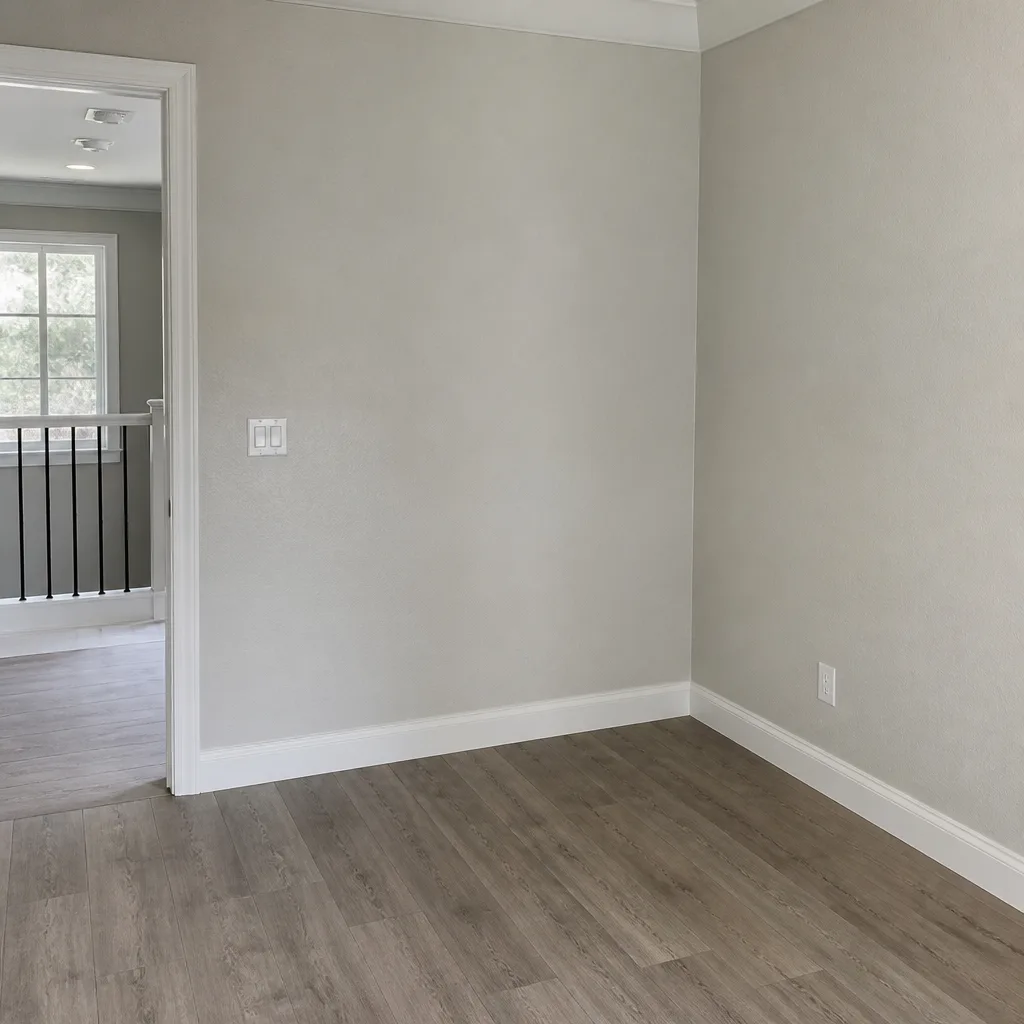 After
After24/7 Emergency Water Damage Restoration in Fountain Valley
Water damage restoration in Fountain Valley typically costs $2,800-$6,500 for a standard residential mitigation and runs $8,500-$18,000 when reconstruction is needed. Most slab-on-grade homes here require 3-5 days of active drying before a secondary moisture barrier can even be considered. Call (657) 212-2570 now - a live person answers every emergency line, 24 hours a day, and crews dispatch to Fountain Valley neighborhoods within 45 minutes. The first hour determines whether you’re looking at extraction and drying or full gutting: water moves fast through 1960s-era slab cracks, and Fountain Valley’s coastal humidity pushes mold growth in 48-72 hours, not the 96 hours you might see inland.
We don’t ask you to “call for a quote.” Haven Standard, Clause 1: a written price before any work starts, every time, with no exceptions. Our technician arrives, documents the loss with photos and moisture readings, and delivers a signed scope before equipment touches your floor.
Understanding Water Damage Restoration Severity in Fountain Valley Properties
Water damage in Fountain Valley falls into three categories that dictate everything from PPE to disposal protocols. Category 1 - clean water from a burst supply line - degrades to Category 2 within 24-48 hours in this climate. Category 2, gray water from appliance overflows, carries enough organic load that Fountain Valley’s marine-layer humidity accelerates bacterial amplification. Category 3, black water from sewage backup or ground intrusion, triggers full containment and negative air pressure on every job.
Moisture mapping with thermal imaging reveals what the eye misses: water migrating through slab cracks, wicking up wall cavities, or pooling in the expansion gaps of 1970s-era floating floors. Psychrometric data - temperature, relative humidity, and vapor pressure differential - tells us whether the air in your home can still absorb moisture or if we’ve hit saturation. Tertiary drying, the final phase most competitors skip, targets bound water in dense materials like oak trim or plaster lath that primary air movers can’t reach.
Fountain Valley’s housing stock intensifies every category. Slab-on-grade construction means no basement sump, no subfloor cavity to drain, and 50-year-old copper lines running through concrete that’s cracked and settled. The slab itself becomes both the damage pathway and the drying obstacle.
Why Fountain Valley Property Owners Choose DryMark Restoration Irvine
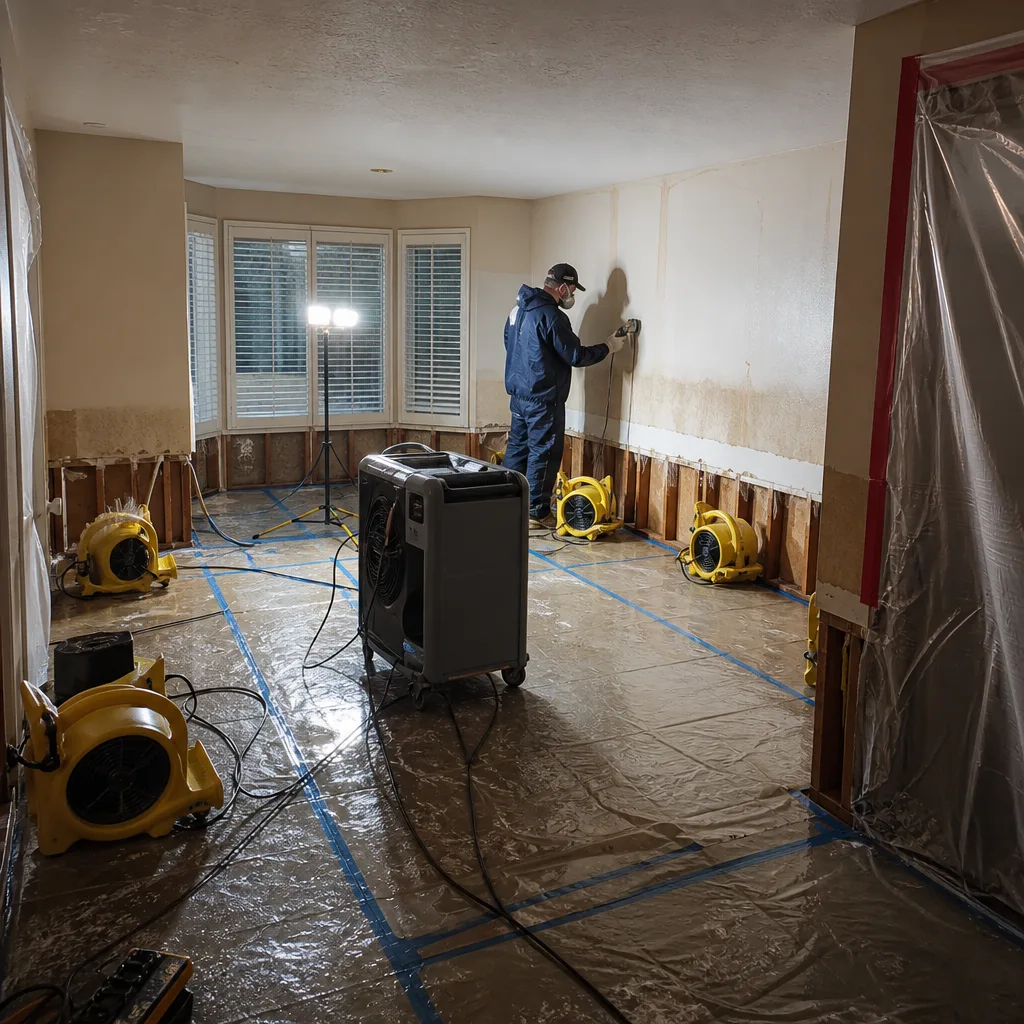
- 45-minute response commitment to Fountain Valley addresses - our dispatch coordinates from the Los Angeles office, but crews are already positioned in Orange County.
- 24/7 live answer: a real person, never an automated system or voicemail tree, picks up every call within three rings.
- IICRC-certified crews holding WRT (Water Damage Restoration Technician) and AMRT (Applied Microbial Remediation Technician) credentials - license numbers provided on request.
- Free visual inspection with documented moisture readings, delivered before any scope or pricing discussion.
- Direct insurance billing with photo-documented estimates formatted to carrier standards - no chasing reimbursements.
- One team from extraction to reconstruction: the same crew that pumps your slab handles your flooring reinstall, so nothing gets lost in handoffs.
 Before
 After
AfterOur Water Damage Restoration Process
1. Inspection & Assessment
We arrive with thermal imaging cameras, non-penetrating moisture meters, and penetrating probes to map the full extent of migration. In Fountain Valley, we pay special attention to slab perimeter readings - the 2-4-foot water table here produces baseline moisture that untrained techs misread as active damage. Every reading is logged with time, location, and equipment serial number.
2. Extraction & Stabilization
Standing water comes out first: truck-mounted extraction for carpet, weighted extraction for pad, and specialized tools for hard surfaces. We deploy containment barriers immediately in Fountain Valley jobs - the marine layer keeps relative humidity high enough that secondary mold colonizes before competitors even set air movers.
3. Drying & Dehumidification
Phoenix and Dri-Eaz LGR dehumidifiers pull vapor from the air; XPOWER and B-Air axial air movers create laminar airflow across wet surfaces. For slab-on-grade homes, we add Injectidry panel systems that deliver heated, dehumidified air directly through the concrete - critical in Fountain Valley, where the water table fights upward drying. Daily moisture logs track progress to IICRC S500 standards.
4. Cleaning & Sanitization
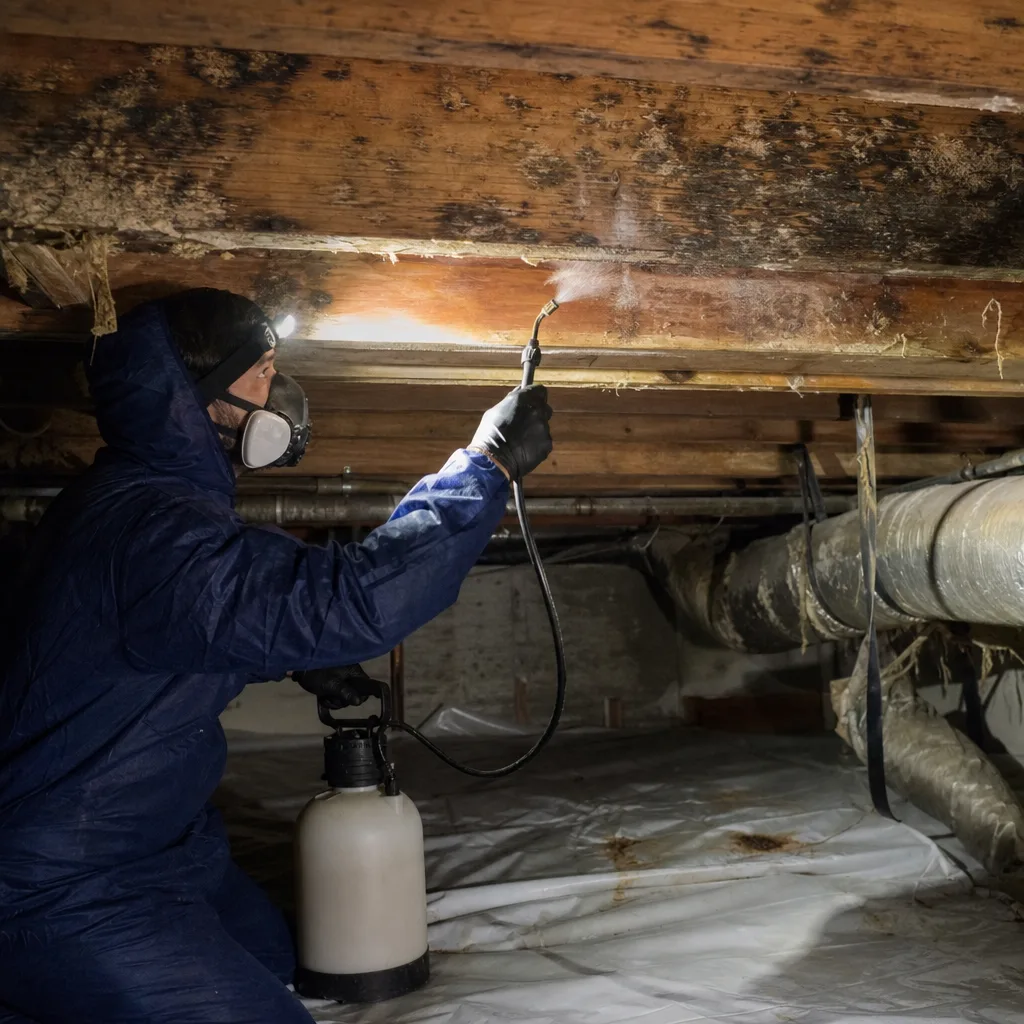
Antimicrobial treatment applied to all affected surfaces, with documentation of product, concentration, and dwell time. In Fountain Valley’s accelerated mold window, we don’t wait for visible growth - we treat preventively on every Category 2 and 3 job, with photo confirmation.
5. Secondary Moisture Barrier Treatment
Here’s where Fountain Valley jobs diverge from standard protocol. Before any flooring reinstall, we test slab moisture emission rates. Readings above 3 pounds per 1,000 square feet per 24 hours - common here due to hydrostatic pressure - trigger a vapor barrier application. Skipping this step is the leading callback cause in local slab homes. We build it into every estimate.
6. Repairs & Restoration
Final moisture readings, photo documentation, and a signed drying log certify pre-loss condition. Flooring goes back down, trim gets reinstalled, and you receive a written 365-Day Done Right Promise under The Haven Standard. If moisture returns, we return - documented, not verbal.
Need Emergency Water Damage Restoration in Fountain Valley Now?
Crews minutes away, answering live 24 hours a day. The sooner we start, the less it costs.
Working With Your Insurance Company
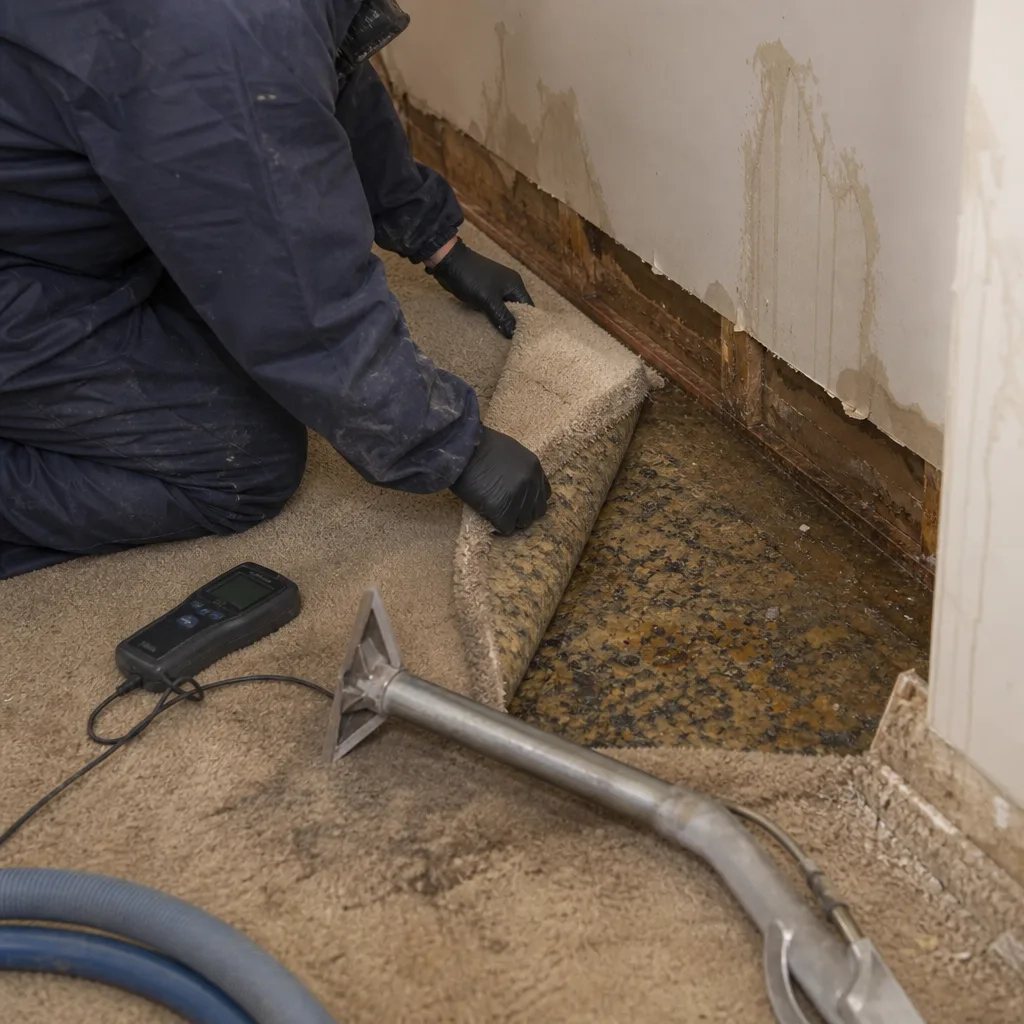
Insurance adjusters in Orange County know our documentation package by format. From the first hour, we photograph every room, every angle, every material classification - not just the obvious damage, but the moisture migration patterns that explain why drywall three feet from the visible stain also needs removal. Our estimates line-item each phase: extraction, equipment, monitoring, antimicrobial, barrier treatment, and reconstruction. No lump sums that carriers dispute.
We speak adjuster fluently: Xactimate pricing, IICRC S500 standards, and the moisture logs that prove drying was achieved before reconstruction started. Direct coordination means your carrier gets our documentation package within 24 hours of job completion, and we handle supplement requests when hidden damage extends the scope.
What We Provide Your Insurer
- Thorough documentation of the loss
- Photos of all damage, room by room
- Moisture readings and drying logs
- A detailed, line-item scope of work
- Direct coordination with your carrier
Built for Fountain Valley’s Loss Calendar
January through March brings the heaviest rain months, with Santa Ana corridor storms pushing wind-driven rain against south- and west-facing doors and windows. The Talbert Ranch and Green Valley tracts see repeated threshold failures in 1960s aluminum sliding doors that were never wind-rated. April’s milder rains lull homeowners into delaying calls - a mistake here, where the marine layer keeps humidity above 70% and mold outpaces drying.
June through October, the marine layer thickens and indoor relative humidity climbs even without active leaks. Air conditioning condensation lines clog on older Fountain Valley systems, producing slow Category 1 leaks that degrade to Category 2 before anyone notices. November’s early Santa Anas dry the air briefly, then December storms return with the year’s most intense rainfall rates.
Slab leaks peak year-round: 50-year-old copper, hard Colorado River water, and concrete that’s done expanding and contracting for five decades. The correlation between slab leak calls and water damage restoration calls in Fountain Valley is nearly one-to-one.
Water Damage Restoration Across Fountain Valley’s Neighborhoods
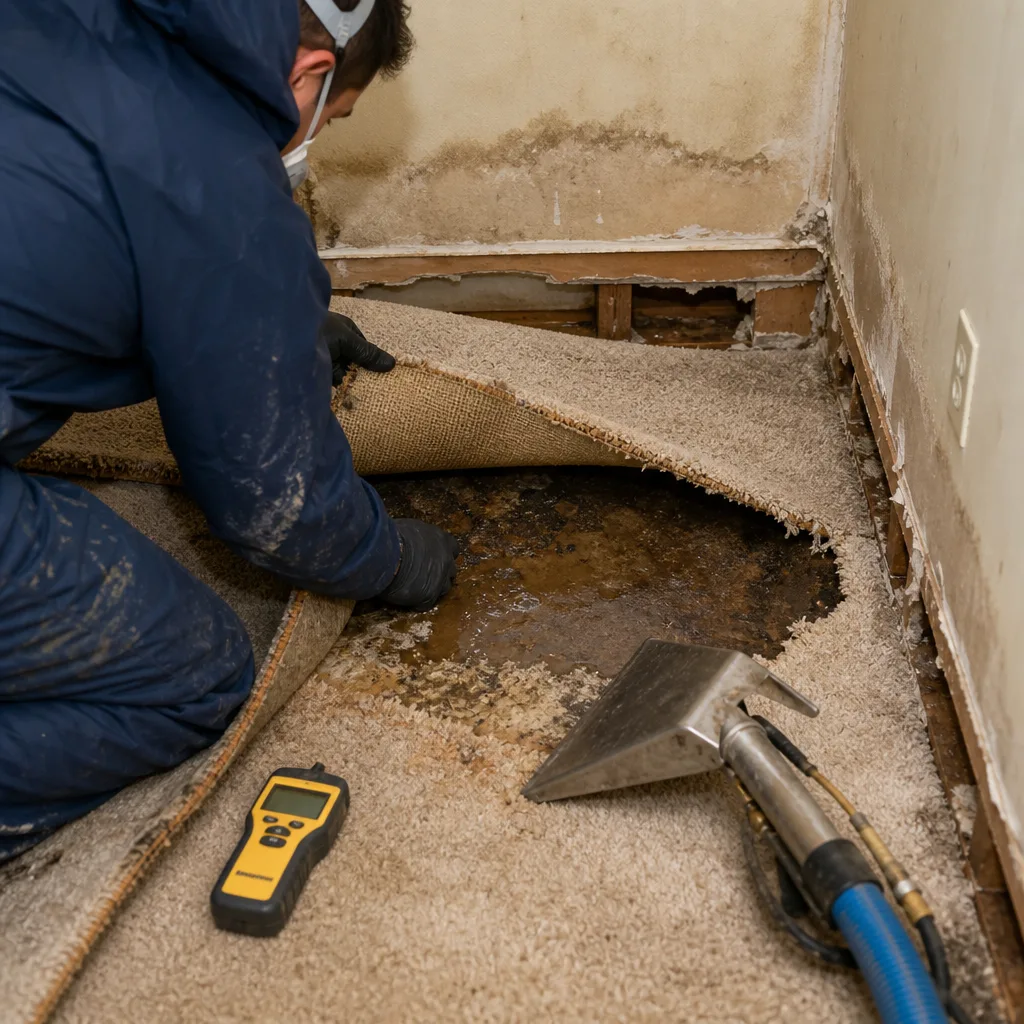
Talbert Ranch, north of Ellis Avenue and east of Brookhurst, is the city’s original 1960s tract - ranch homes on slabs with original copper supply lines and aluminum sliding doors that fail the wind-load test. We ran a mitigation call there where a failing sliding door let wind-driven rain wick under the threshold and into the slab during a Santa Ana corridor storm. Our techs mapped moisture with Injectidry slab-drying panels and Dri-Eaz air movers, logged elevated readings that traced back to the high water table rather than the storm leak, and applied an antimicrobial treatment before the pack-out. We sealed the slab with a moisture barrier, reinstalled the flooring, and closed out a drying log that certified the home to pre-loss condition.
Green Valley, south of Talbert Avenue, built out in the late 1960s and early 1970s with similar slabs but denser landscaping. Mature ficus and magnolia root systems crack perimeter concrete, creating new water intrusion pathways during heavy rain. We see more exterior foundation moisture here than anywhere else in the city.
The neighborhoods along Magnolia Street and Euclid Street corridors, closer to commercial zones, have seen more recent HVAC upgrades - but the original slab and drainage remain. Condensate pump failures in attic-mounted systems produce ceiling collapses that look like roof leaks but trace back to mechanical overflow.
West Fountain Valley, near the Santa Ana River levee, faces the dual threat: high water table from the former floodplain plus the levee’s subsurface drainage influence. Homes here show the most persistent slab moisture readings, and our estimates always include the secondary barrier treatment as standard, not optional.
Specialized Water Damage Restoration Services We Offer in Fountain Valley
Emergency Water Extraction
Truck-mounted extraction systems remove standing water at 30+ gallons per minute. In Fountain Valley’s slab homes, we pair extraction with immediate moisture mapping - the water you see is rarely the water that matters, and slab wicking starts within minutes of intrusion.
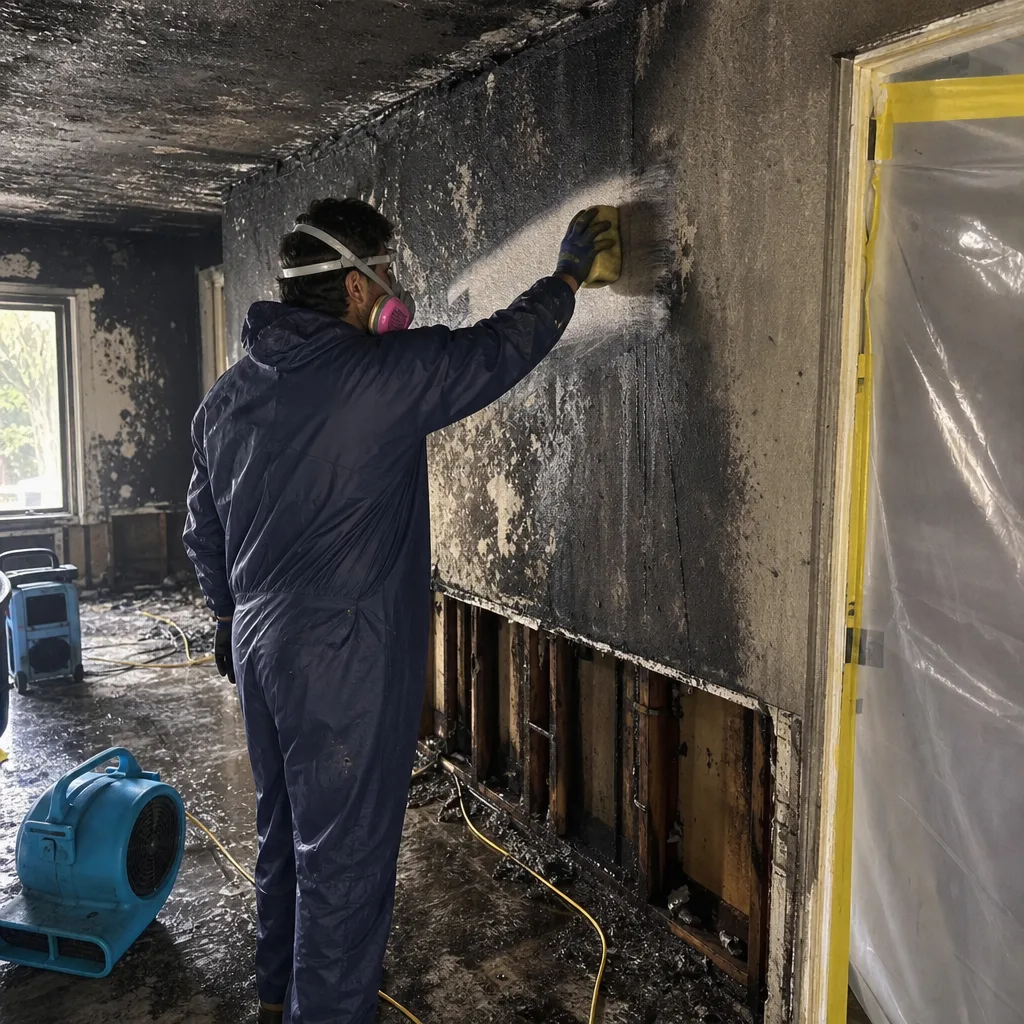
Structural Drying & Dehumidification
The core challenge in Fountain Valley. Phoenix LGR dehumidifiers and Injectidry panel systems combat both active leak moisture and hydrostatic pressure from the 2-4-foot water table. Daily psychrometric readings prove progress to IICRC standards and to your insurer. Tertiary drying targets bound water in original oak trim and plaster lath that primary airflow can’t reach.
Flood Cleanup
Category 3 losses from river corridor overflow or sewage backup require full PPE, negative air containment, and disposal to biohazard protocols. Fountain Valley’s flat grade means flood water spreads fast and recedes slow - we document the full contamination perimeter before any demolition starts.
Burst Pipe Restoration
Slab leaks dominate here: pinhole corrosion in 1960s copper, pressure spikes from aging regulators, and the thermal expansion of pipes embedded in concrete. We coordinate with licensed plumbers for repair, then handle the mitigation and reconstruction under one scope.
Basement Water Removal
Fountain Valley has virtually no basements - this service applies to the rare daylight walkout or to commercial properties with subgrade parking. Where it applies, sump failure and hydrostatic pressure are the primary drivers.
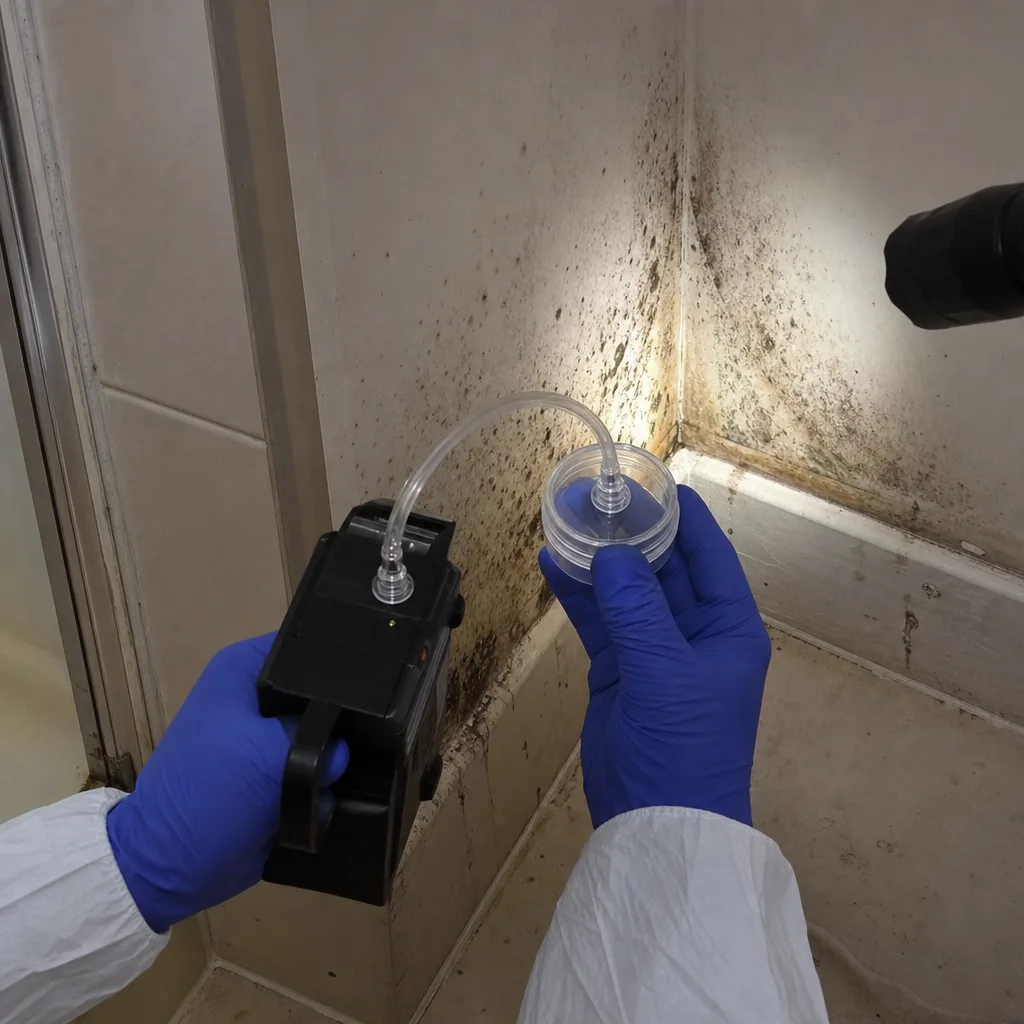
Ceiling & Roof Leak Water Damage
Attic HVAC leaks outnumber true roof leaks in Fountain Valley’s housing stock. Our thermal imaging distinguishes condensation patterns from intrusion paths, so you don’t pay for roof work when the real problem is a clogged condensate line or failed pan.
What happens when you call
- 1
A real person answersNo phone trees - you reach a local pro.
- 2
You get an upfront price rangeHonest numbers before anyone is dispatched.
- 3
A background-checked tech heads outLicensed & insured, dispatched right away.
- 4
You approve before work beginsNothing starts until you say go.
Water Damage Restoration Costs in Fountain Valley, CA
These are actual ranges for Fountain Valley’s market, delivered in writing before work starts:
| Service | Typical Range |
|---|---|
| Emergency extraction and initial stabilization | $850-$1,800 |
| Structural drying (3-5 day standard slab-on-grade) | $2,800-$4,500 |
| Category 3 flood cleanup with containment | $4,200-$7,800 |
| Secondary moisture barrier treatment | $1,200-$2,400 |
| Reconstruction (drywall, flooring, trim) | $5,500-$14,000 |
| Full mitigation + reconstruction, severe slab leak | $12,000-$22,000 |
What moves the price: square footage affected, material classification (tile vs. hardwood vs. carpet), whether the slab requires barrier treatment, and whether mold remediation is needed. Insurance typically covers sudden and accidental water damage; gradual leaks and maintenance issues are usually excluded. We document the loss cause to support your claim. Haven Standard, Clause 1: the written price you receive before work starts is the price you pay. No scope-creep additions once our crew is inside.
Free Second Opinion on any competitor’s written estimate - bring their scope and we’ll review it at no charge.
We Also Serve Cities Near Fountain Valley
Our crews respond throughout central Orange County: Fountain Valley is our core service area, and we maintain 45-minute response to Costa Mesa, Santa Ana, Newport Beach, and Tustin. The same documentation standards, the same Haven Standard guarantees, the same live-answer dispatch.
Serving Fountain Valley, CA - Our Local Coverage Area
We’re based in the Fountain Valley area and know this community well. Use the map below to see our service coverage - if you’re nearby, we can almost certainly help.
Fountain Valley Water Damage Restoration Questions, Answered
Why does my Fountain Valley slab still read wet after days of drying?
It’s usually not residual leak water - it’s hydrostatic pressure from Fountain Valley’s 2-4-foot water table pushing moisture upward through hairline slab cracks. Experienced local crews distinguish this with calcium chloride emission testing and build a secondary vapor barrier into the estimate before flooring reinstall. Call (657) 212-2570 for a moisture assessment - estimates are free.
How fast can mold grow in a Fountain Valley home after wind-driven rain gets under a door?
48-72 hours, significantly faster than drier inland markets. Fountain Valley’s coastal marine layer keeps indoor relative humidity elevated, so containment and antimicrobial treatment should start immediately, not after visible growth appears. Our crews carry AMRT certification and deploy HEPA air scrubbers on every storm-intrusion job. Call (657) 212-2570 - we answer live 24/7.
Does a failing exterior door before a storm cause water damage in Fountain Valley?
Yes, and it’s more common than roof leaks in this city’s 1960s housing stock. Aluminum sliding doors without wind ratings allow pressure differential that forces rain under thresholds and into slab perimeters. The damage often hides under flooring for days before visible swelling appears. We document the failure mode for insurance and seal the threshold as part of reconstruction. Call (657) 212-2570 for inspection.
What category of water is storm intrusion under a Fountain Valley door?
Initially Category 1 if it’s pure rainwater, but it degrades to Category 2 within 24-48 hours as it picks up soil, pollen, and organic material from the slab surface. If the intrusion path includes ground contact or backed-up drainage, it may test as Category 3 from the start. We sample and document category on arrival - this determines PPE, disposal, and antimicrobial protocols. Call (657) 212-2570 for assessment.
What does your Fountain Valley drying log show for a slab-on-grade job?
Daily readings from multiple probe locations, psychrometric data for the affected room, equipment serial numbers and placement maps, and moisture-content percentages for each material class. The log certifies when readings reached IICRC S500 dry standards and documents any secondary barrier treatment applied. You and your insurer receive the complete file. Call (657) 212-2570 to request a sample log format.
Will my insurance cover water damage restoration in Fountain Valley?
Sudden and accidental damage - burst pipes, storm intrusion, appliance failures - is typically covered. Gradual leaks, maintenance issues, and flood from exterior rising water usually require separate flood coverage. We document the loss cause with photos and moisture mapping to support your claim, and we coordinate directly with your adjuster. Haven Standard, Clause 1 means you know your out-of-pocket before any work starts. Call (657) 212-2570 with your policy details.
How long does structural drying take in a Fountain Valley slab home?
3-5 days of active drying is standard, but slab-on-grade homes with high water table readings may need 7-10 days before a secondary barrier can be applied. Rushing to reinstall flooring is the leading cause of callbacks in this market. Our daily logs prove when true dryness is achieved, not just when equipment gets picked up. Call (657) 212-2570 for a realistic timeline on your specific loss.
Can we stay in our home during water damage restoration?
Sometimes, for limited Category 1 losses in isolated areas. For Category 2 or 3, or when containment and air scrubbers are deployed, temporary relocation is usually recommended - especially in Fountain Valley’s smaller 1960s floor plans where equipment noise and dehumidifier heat make living conditions impractical. We discuss this in your written scope before work begins. Call (657) 212-2570 to review your situation.
Back to Dry Restoration, led by Alicia Brennan, has operated under The Haven Standard since 2011. Our Water Damage Restoration team serves Fountain Valley with the documentation-first approach that turns restoration invoices into payable insurance claims - written price before work starts, photo record on every visit, and the 365-Day Done Right Promise on every job.
Written by Alicia Brennan, Owner at Back to Dry Restoration, serving Fountain Valley since 2011.
Water Damage Restoration in Nearby Areas