
Last updated September 23, 2026
Free visual inspection and a written scope of work before any mitigation begins - photos, moisture readings, and drying logs go in your claim file
The scope we write is the scope we bill. Anything new gets shown to you, in writing, before we touch it.
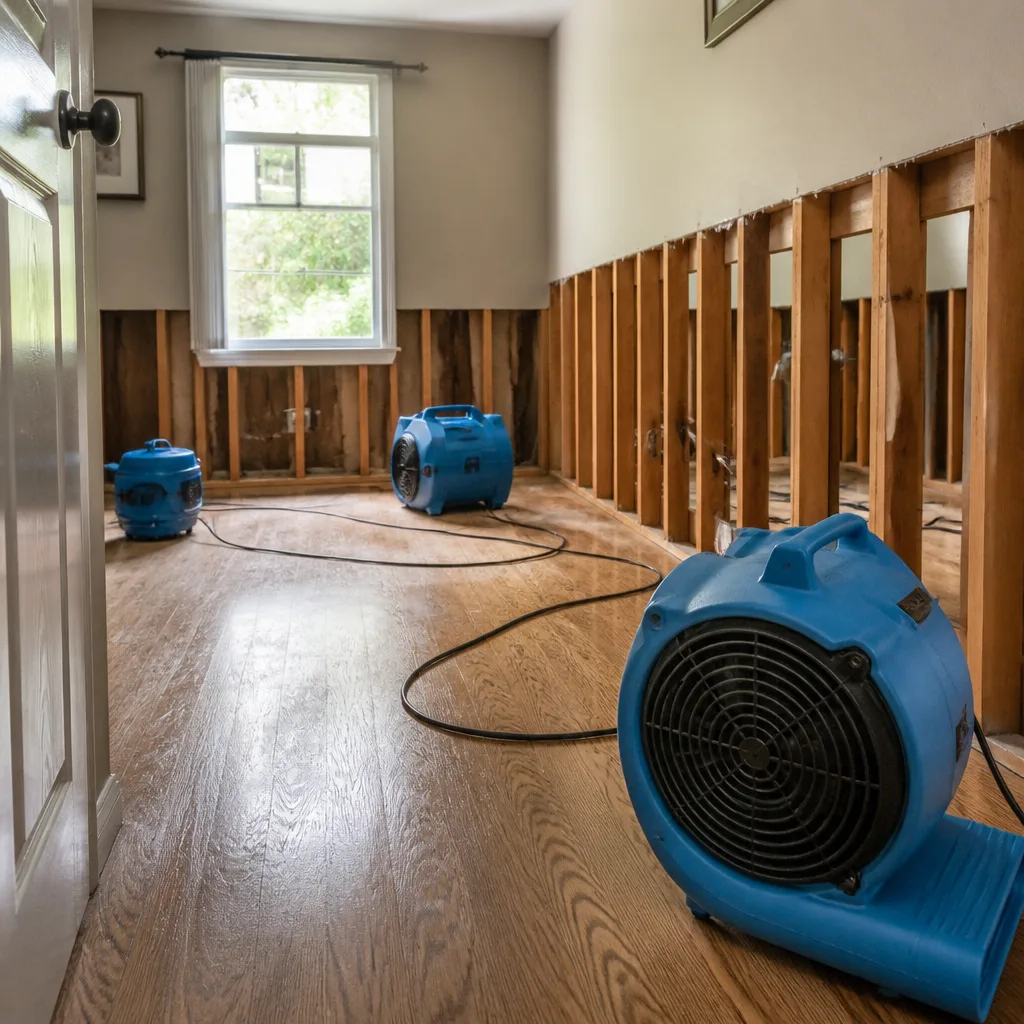
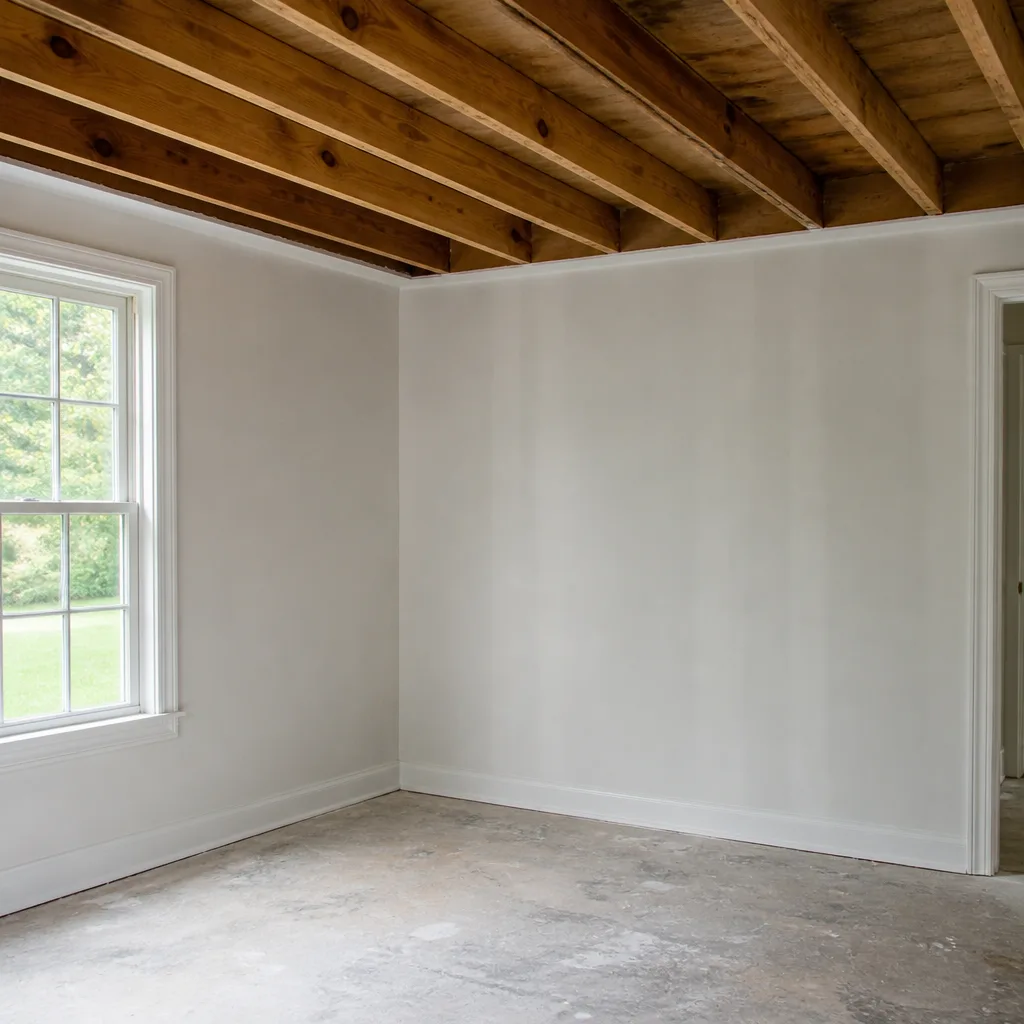
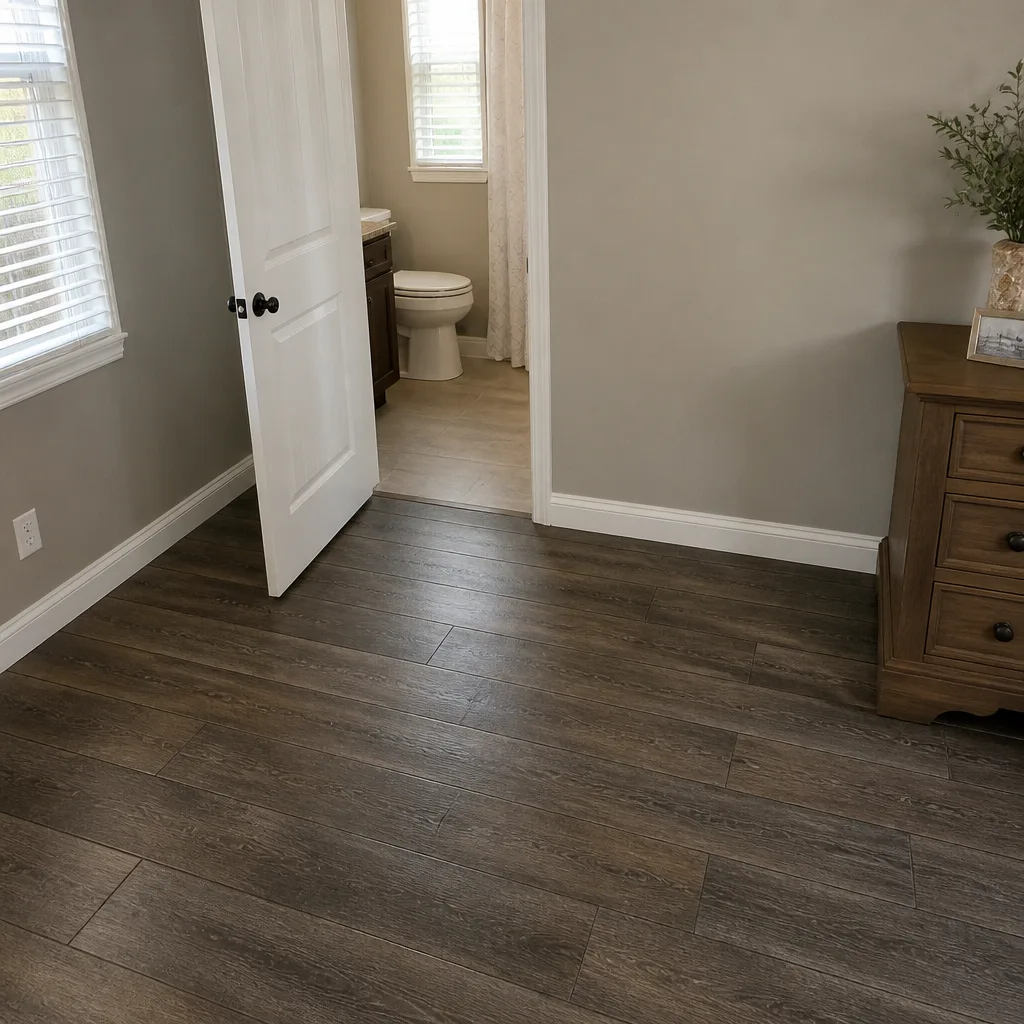

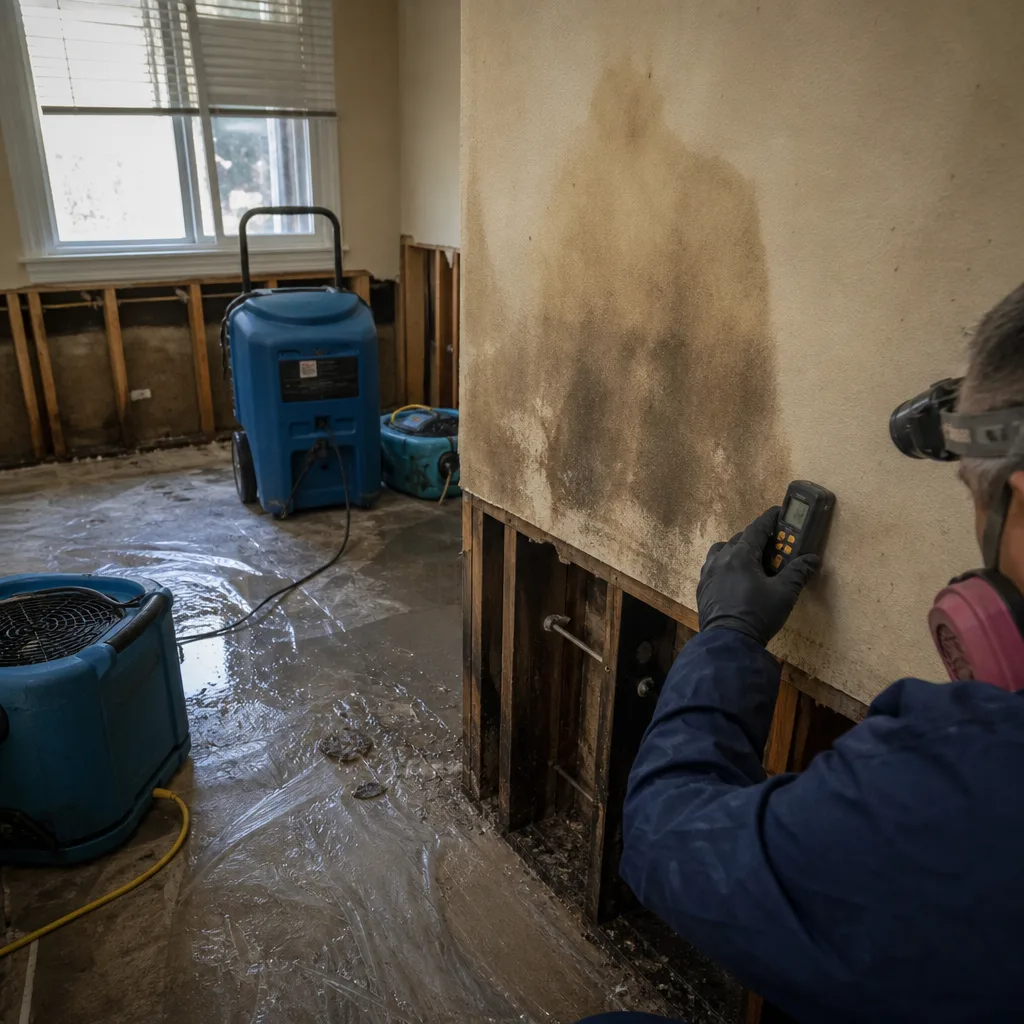 Before
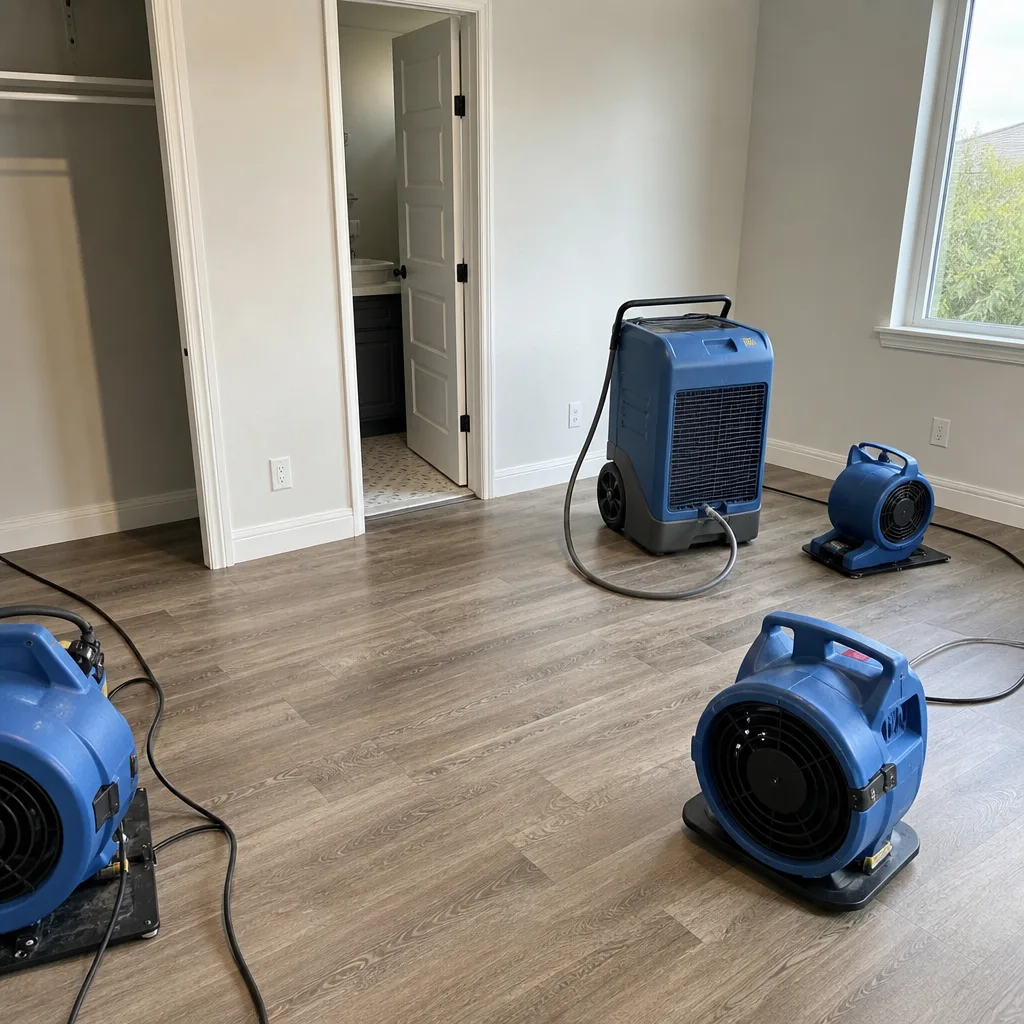 After
After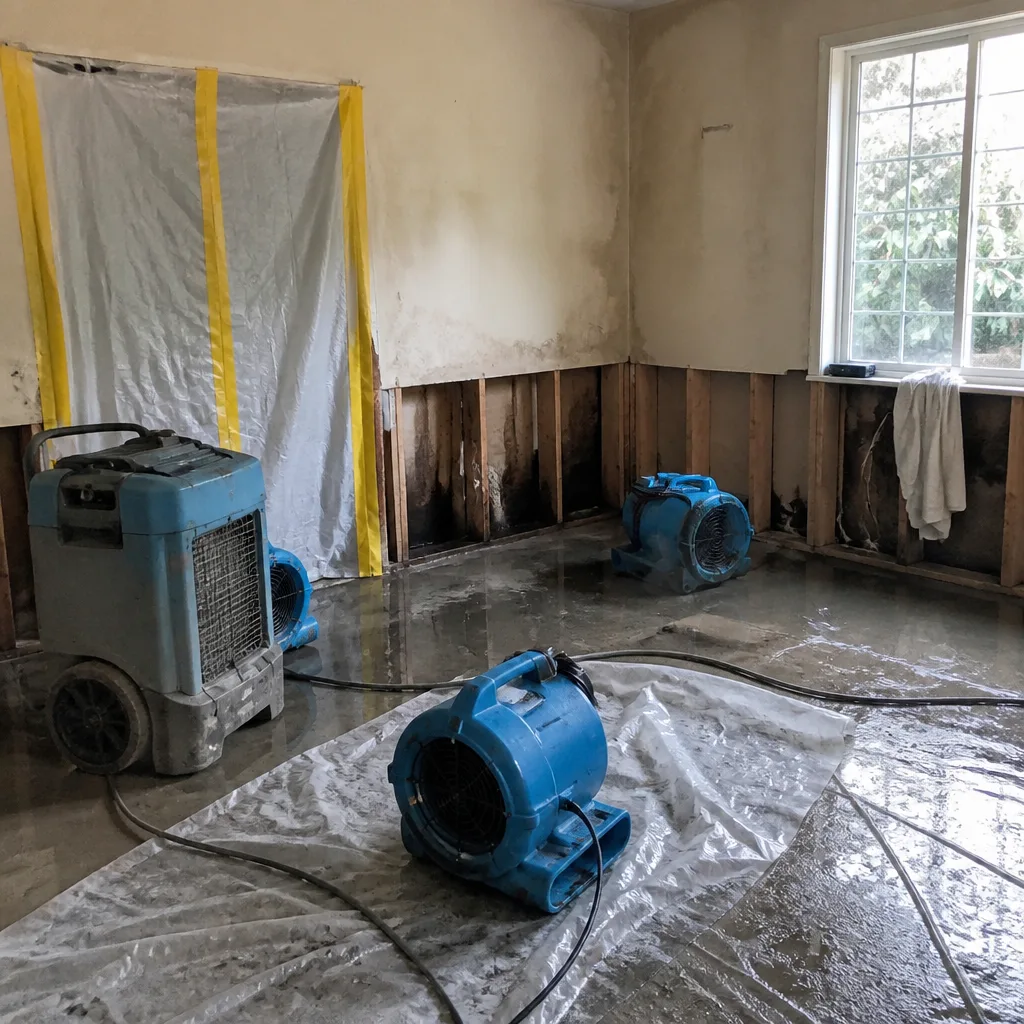 Before
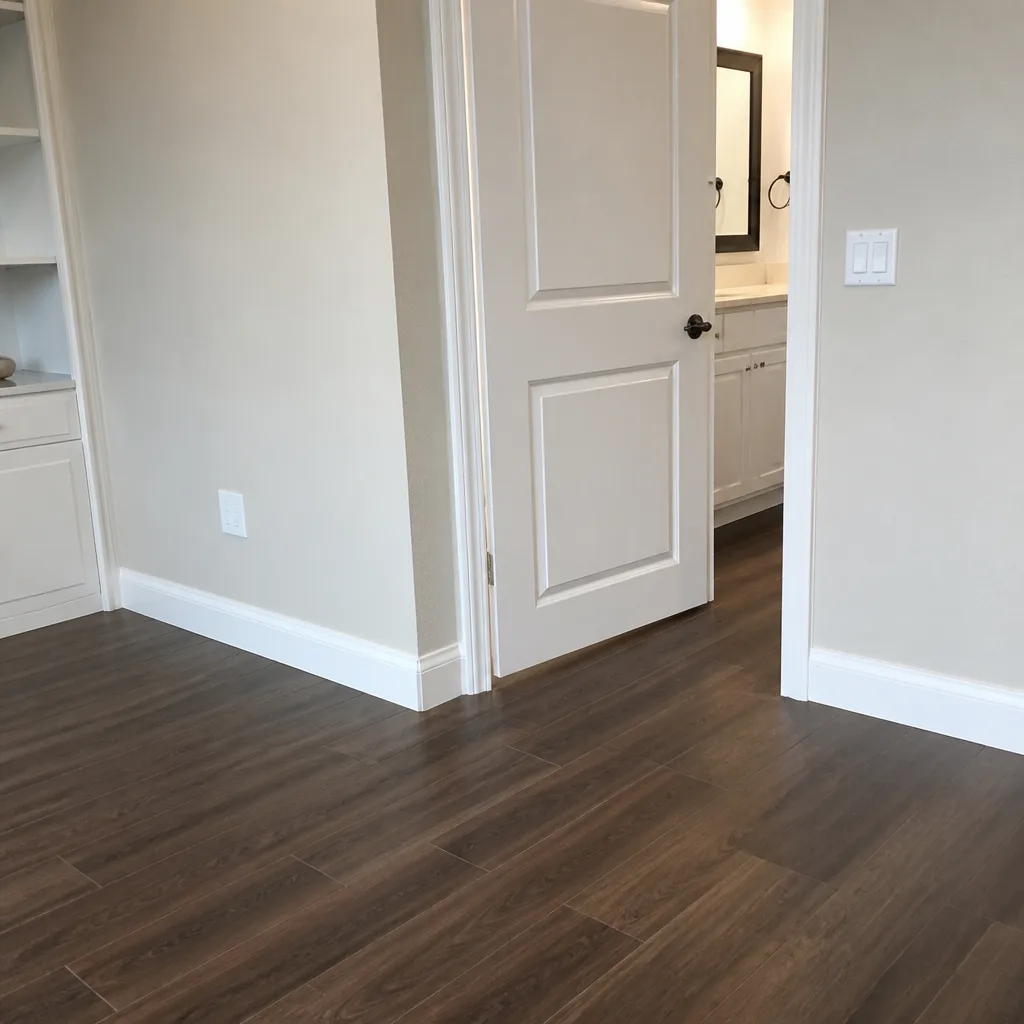 After
After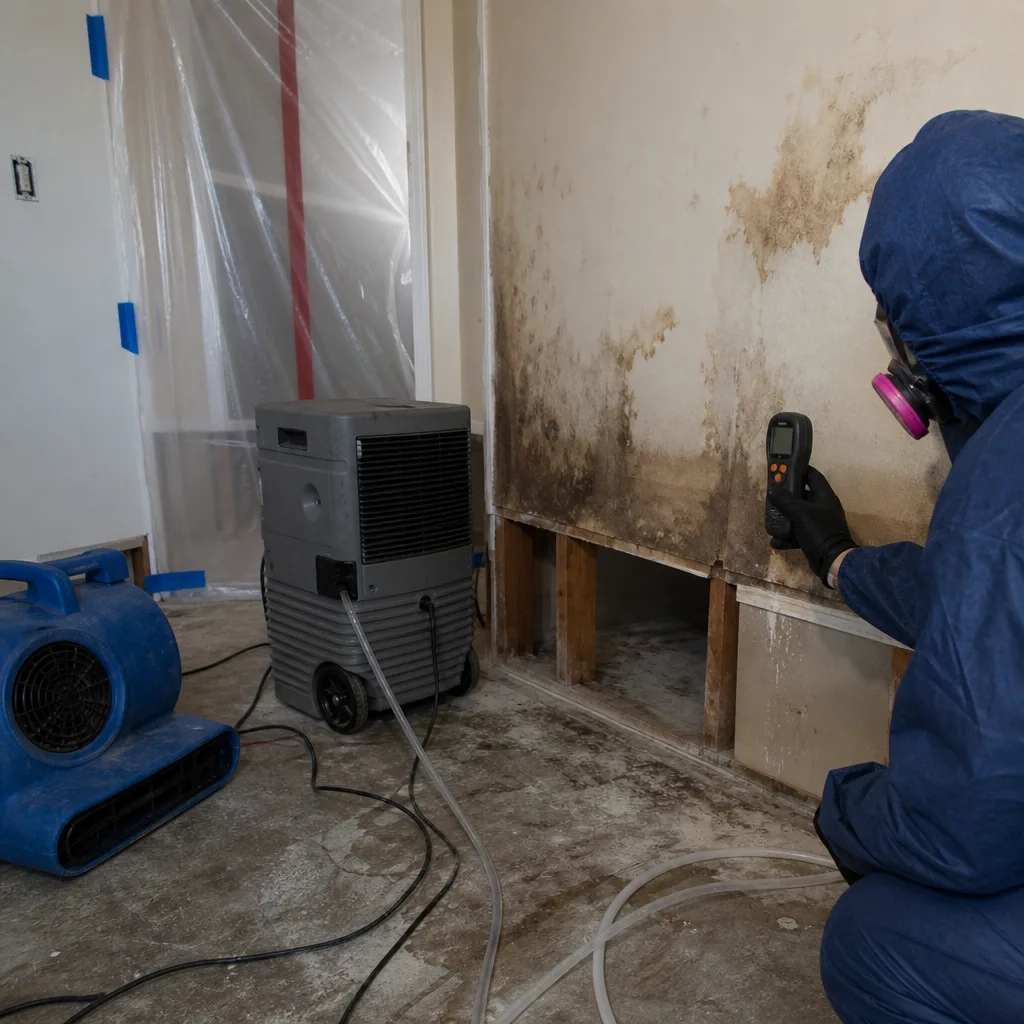 Before
 After
AfterDamage Restoration Warning Signs: A Irvine Homeowner’s Reference Guide
Most damage restoration guides tell you to look for mold spots, warped floors, or water stains. By then, you’re already looking at remediation costs in the thousands, not hundreds. In Irvine’s climate - where morning marine layer keeps relative humidity elevated through June and slab-on-grade construction dominates neighborhoods from Northwood to Woodbridge - the real warning signs arrive 72 to 96 hours before anything visible appears. They’re measurable: a moisture reading, a vapor pressure differential, a specific crack geometry in baseboard paint. This guide shows you what to measure, how to read it, and what to document so that if you need to file a claim, your evidence holds up to adjuster scrutiny - and points you to more guides & resources for deeper coverage.
Quick Answer
The earliest warning signs of water damage in an Irvine home are elevated moisture readings in building materials before visible symptoms appear: wood framing above 16%, drywall above 1%, or concrete slab relative humidity above 75%. These thresholds, combined with indoor relative humidity sustained above 60% for more than 48 hours, predict microbial growth 3-4 days before musty odors or visible mold confirm it. Document readings with dated photos and a $30 hygrometer log - this evidence becomes the foundation of a payable insurance claim if professional intervention becomes necessary. For help choosing that professional, see our guide on How to Hire a Damage Restoration Contractor in Irvine: A Step-by-Step Guide.
Table of Contents
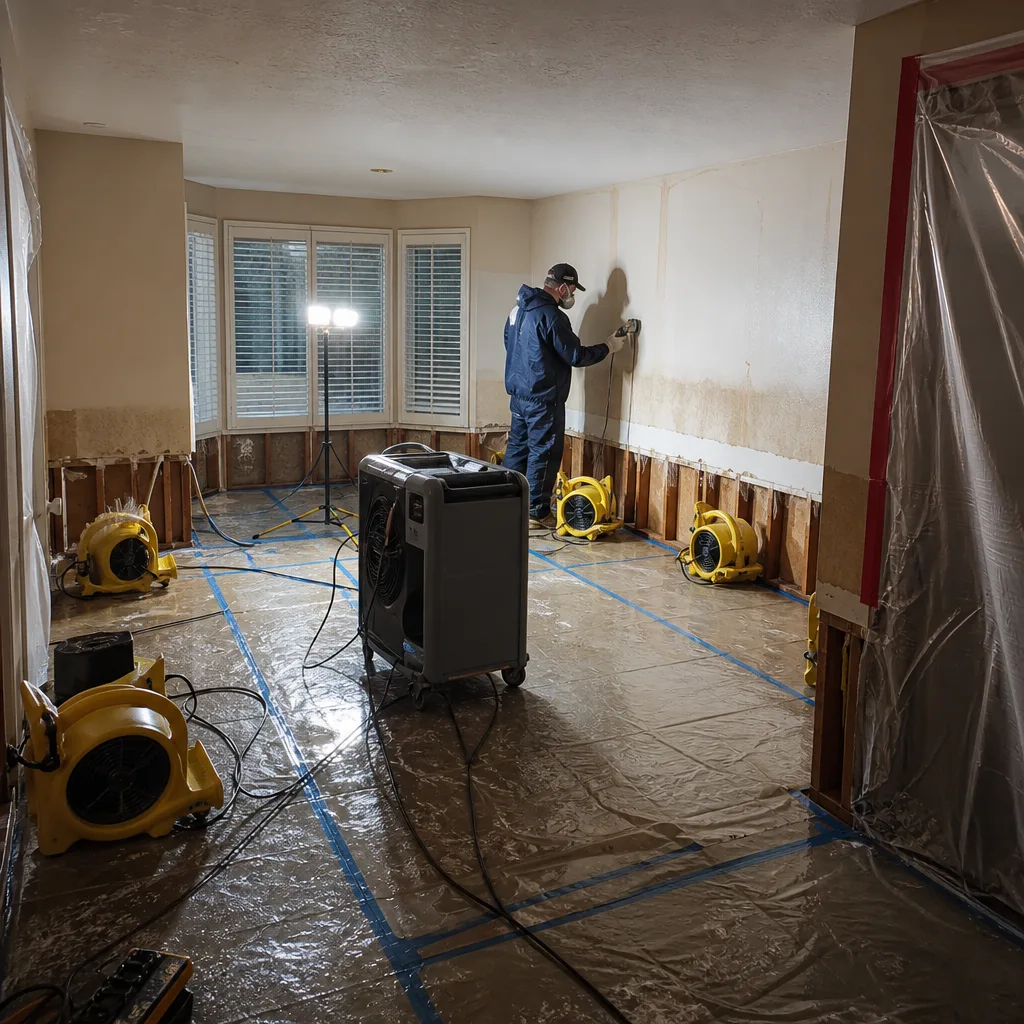
- Moisture Reading Thresholds by Material Type
- Efflorescence on Irvine Stucco: What It Reveals
- Paint and Baseboard Tells in Slab-on-Grade Homes
- Condensation Event vs. Chronic Moisture: The Hygrometer Test
- The Documentation Protocol for Insurance Claims
- Fire and Smoke Damage: Early Indicators Others Miss
- Storm and Sewage: When Speed Changes the Cost Structure
- Common Mistakes to Avoid
- When to Call a Professional
- Frequently Asked Questions
 Before
 After
AfterMoisture Reading Thresholds by Material Type
Every material in your home has a normal equilibrium moisture content and a threshold above which microbial colonization becomes likely. Knowing these numbers lets you act before mold does.
Wood framing: Normal equilibrium moisture content (EMC) for softwood framing in Irvine’s coastal climate ranges from 10% to 14% depending on season. At 16%, wood reaches the fiber saturation point - the threshold where free water becomes available in cell cavities, supporting fungal growth. We’ve measured 18% in Northwood attic framing where a bathroom exhaust vent terminated improperly; the homeowner smelled nothing, saw nothing, but the reading justified a $400 vent correction instead of a $14,000 structural remediation six months later.
Drywall: Drywall is hygroscopic - it pulls moisture from air and adjacent materials. Normal drywall moisture content is 0.5% to 1.0%. Above 1%, paper facing becomes nutritionally available to mold. At 1.5%, visible colonization typically appears within 72 hours at 70°F and 60% relative humidity. In Woodbridge townhomes, where shared wall cavities complicate source identification, we’ve found 1.2% readings in bedroom drywall that traced to a neighbor’s leaking shower pan three units away.
Concrete slab: This is where Irvine homeowners get surprised. Slabs here are typically 4-inch poured concrete over compacted base, with no vapor barrier in pre-1990 construction and inconsistent barrier placement even after. Relative humidity testing per ASTM F2170 requires drilling to 40% of slab depth and inserting a probe. Readings below 75% are generally acceptable for flooring installation. Above 80%, you’re looking at active moisture vapor transmission - the condition that causes adhesive failure, warping, and subfloor mold in “dry” homes. We’ve documented 92% slab RH in a University Park home where the owner had replaced flooring twice, never suspecting the slab.
Key readings to record:
- Wood framing: note species, location, and whether reading is in conditioned or unconditioned space
- Drywall: specify if reading is on paper face, gypsum core, or at a seam - seams wick faster
- Concrete: record ambient temperature and relative humidity at test time; both affect probe accuracy
- Always photograph the meter display with a date stamp, and the exact location where the reading was taken
Pin-type meters penetrate and measure resistance between electrodes; pinless meters use electromagnetic signals and are useful for scanning large areas but less accurate at depth. For suspected cavity moisture, we use thermal imaging to identify temperature differentials, then confirm with a penetrating probe. The $150 pin-type meter a homeowner buys at a hardware store is sufficient for initial screening if used correctly.
Efflorescence on Irvine Stucco: What It Reveals
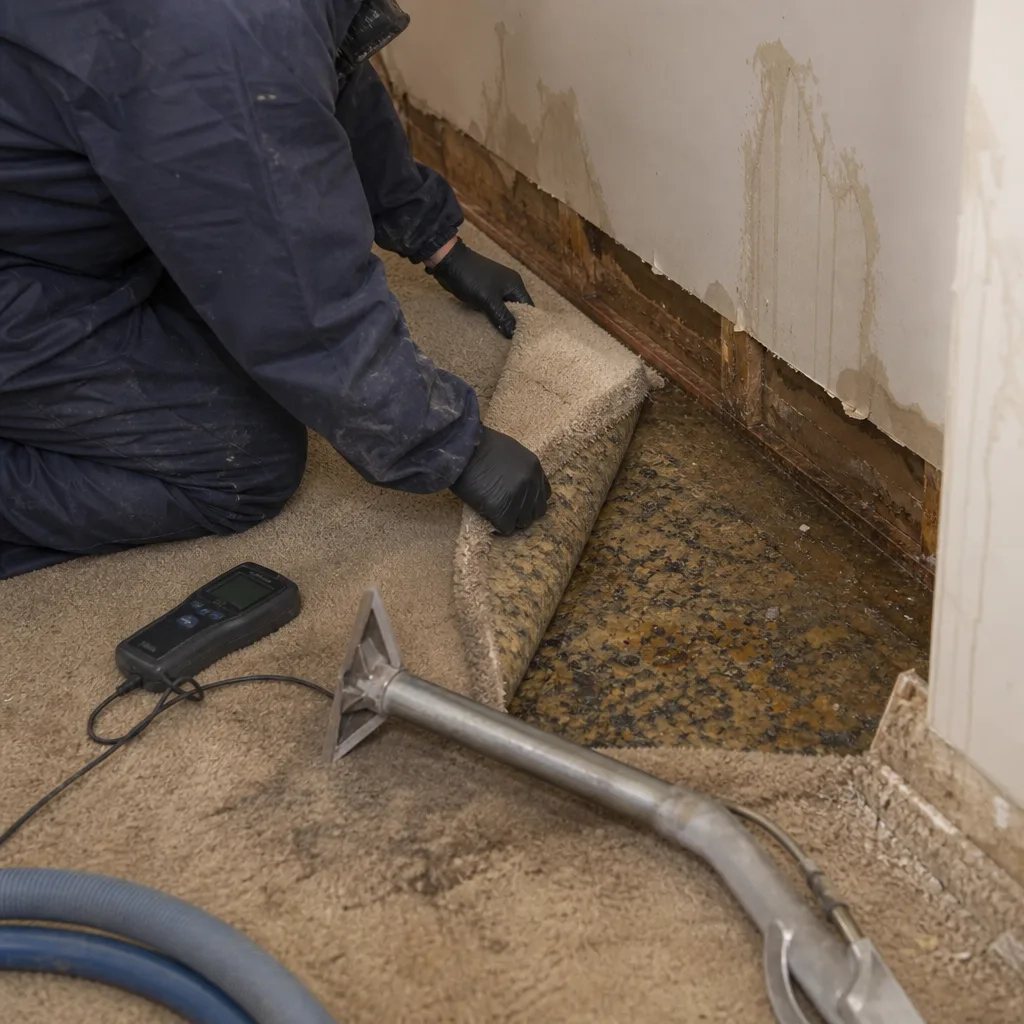
Efflorescence - the white, powdery deposit that appears on stucco surfaces - is not a cosmetic problem. It’s a lagging indicator of bulk water intrusion, and in Irvine’s stucco-heavy housing stock, it tells a specific story about where water has been and where to look inside.
Stucco in Irvine is typically three-coat portland cement plaster, 7/8-inch total thickness, applied over paper-backed lath on wood or steel framing. When water penetrates the exterior - through cracks, failed sealant at windows, or improperly flashed roof-wall intersections - it dissolves soluble salts in the cement matrix. As water evaporates at the surface, those salts crystallize. The efflorescence you see is evidence of water’s complete path through the assembly.
Location matters: Efflorescence at the base of a wall, especially on north-facing elevations that stay shaded through our mild winters, often indicates grade-level moisture wicking upward - a failed weep screed, improper grading, or irrigation overspray against the foundation. In Turtle Rock and Shady Canyon, where hillside drainage concentrates at foundation perimeters, we’ve traced efflorescence to subsurface water flows that saturated stem walls.
Efflorescence around window perimeters signals failed sealant or missing sill pan flashing. In Quail Hill and Laguna Altura, where newer construction used synthetic stucco (EIFS) systems, improper detailing at penetrations created concentrated moisture paths that showed as efflorescence within 18 months of occupancy.
What to do when you see it:
- Photograph the efflorescence with a reference object for scale - a coin, a key - and note compass orientation
- Check interior walls directly opposite: use your palm to feel for temperature differences, then a moisture meter at baseboard height
- Inspect window tracks and sill plates for discoloration or softness
- Document with dated photos; efflorescence patterns change with weather, and a photo series establishes timeline
Removing efflorescence without addressing the water source guarantees recurrence. We’ve documented cases where homeowners pressure-washed the same wall annually for five years, never investigating the failed deck-to-wall flashing that was saturating the cavity behind. The Haven Standard requires identifying and documenting the source before any surface treatment - Clause 1 applies to diagnosis, not just pricing.
Paint and Baseboard Tells in Slab-on-Grade Homes
Irvine’s residential construction is overwhelmingly slab-on-grade. This eliminates basement flooding risk but introduces a different diagnostic challenge: distinguishing slab moisture from structural settling, and recognizing which paint and baseboard patterns indicate each.
Slab moisture patterns: Water vapor migrating through concrete seeks the path of least resistance - typically at slab perimeter, where the thermal break between slab and foundation wall creates condensation potential, or at cold joints where pours met. The paint tells are specific: a horizontal line of blistering or peeling 2-4 inches above the floor, often continuous along exterior walls, indicates capillary moisture wicking up through the slab edge. The line’s height corresponds to the depth of the moisture front. We’ve seen this pattern in Westpark and Rancho San Joaquin homes where irrigation systems maintained saturated soil against foundations year-round.
Baseboard separation in slab moisture cases shows a characteristic geometry: the baseboard pulls away from the wall at the bottom first, creating a wedge-shaped gap that’s wider at the floor and narrower at the top. The drywall behind may feel firm but reads elevated moisture at the bottom edge. This differs from settling damage, where cracks tend to be vertical or diagonal, wider at the top, and associated with door frame misalignment.
Condensation patterns: In winter, when Irvine’s nighttime temperatures drop into the 40s and indoor heating maintains 70°F, slab surfaces can fall below dew point. This produces localized moisture at exterior walls, typically in closets or behind furniture where air circulation is minimal. The paint tell is subtle: a mottled, slightly darker appearance in a band 6-12 inches above the floor, often mistaken for shadowing. A moisture meter confirms - readings spike at the surface but drop to normal within the gypsum core, indicating surface condensation rather than bulk water intrusion.
Settling vs. moisture: a decision framework
- Moisture: horizontal blister line, baseboard separation wedge-shaped (wider at bottom), moisture meter elevated at base only, pattern worse after rain or irrigation
- Settling: diagonal or stair-step cracks in drywall, door frames out of square, cracks wider at top, no moisture elevation, pattern stable or slowly progressive regardless of weather
- Both: common in Irvine’s young alluvial soils, where seasonal moisture changes cause cyclic swelling and shrinking; a structural engineer’s letter may be required for insurance purposes
We’ve written scopes for both conditions. Moisture remediation typically involves source control, localized drying with Injectidry cavity systems, and material replacement. Settling remediation may require foundation work that falls outside standard homeowners coverage. Documenting which condition exists - with photos, moisture readings, and a timeline - determines whether your claim is payable.
Condensation Event vs. Chronic Moisture: The Hygrometer Test
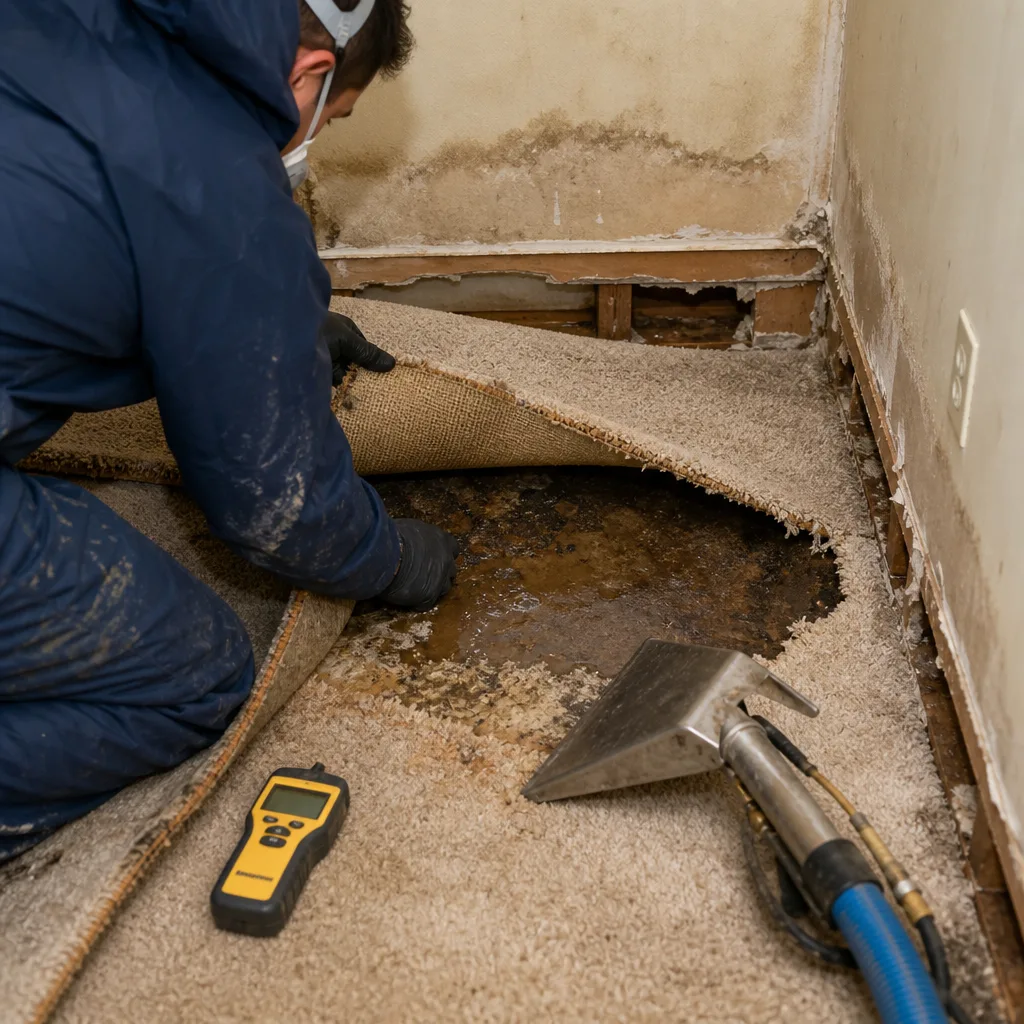
Not every moisture reading demands emergency response. A single condensation event - a window left open during fog, a portable humidifier overfilled, a cooking marathon without exhaust - can produce surface moisture that dries within 24 hours and causes no lasting damage. Chronic moisture, by contrast, sustains conditions for microbial growth. The distinction matters for both your health and your insurance position.
The tool is a $30 digital hygrometer, placed in the affected area and read twice daily for 14 days. This is not excessive - it’s the minimum data set that distinguishes pattern from noise.
Protocol:
- Place the hygrometer at breathing height, 3-5 feet from the floor, away from direct sunlight, HVAC vents, or exterior doors
- Record readings at the same times daily - 7 AM and 7 PM captures the diurnal range
- Log outdoor temperature and conditions from any weather app; Irvine’s marine layer days (typically May through early July) produce different indoor baselines than Santa Ana conditions
- Note any HVAC cycling, window opening, or occupancy changes that might explain spikes
Interpretation: A single event produces a spike that returns to baseline within 24-48 hours. Baseline for Irvine homes in conditioned space should be 40-55% relative humidity. Chronic conditions show sustained elevation above 60%, or a pattern where morning readings consistently exceed evening readings by more than 10% - this indicates moisture is being added to the space faster than the HVAC can remove it.
In a Turtle Ridge home, a homeowner’s two-week log showed 67% morning readings every day, dropping only to 58% by evening. The HVAC was cycling normally. Investigation found a leaking condensate line in the attic, dripping into a wall cavity above the master bedroom. The hygrometer data justified opening the wall before visible damage appeared, containing the repair to a $1,200 fix instead of a $8,000 mold remediation.
Keep the log. If you file a claim, this documentation establishes that you monitored, identified a pattern, and acted prudently - the standard most policies require for coverage of resulting damage. A single moisture reading without context gives an adjuster room to argue the damage was sudden and therefore covered, or gradual and therefore excluded. Fourteen days of data removes that ambiguity.
The Documentation Protocol for Insurance Claims
We’ve reviewed thousands of claims files. The difference between a paid claim and a denied one is rarely the damage itself - it’s the documentation that proves when it started, how it was discovered, and what was done in response. This protocol produces evidence that holds up.
Photograph everything before touching anything. The first photo establishes the baseline condition. Include a date stamp, a reference object for scale, and a wide establishing shot plus a detail. For moisture readings, photograph the meter display, the probe insertion point, and the surrounding context. For odors - which cameras can’t capture - note the location, time of day, weather conditions, and any HVAC status in a contemporaneous written log.
Caption every photo at capture time. Phone metadata captures date and location; it does not capture “moisture reading 18.2% at north wall of guest bedroom, 8 inches above baseboard, taken 6:45 AM after noticing musty odor upon waking.” That caption, written within minutes of the photo, has evidentiary weight that a reconstruction months later cannot match.
Store in two places, immediately. Cloud storage plus local backup. Email the file to yourself - the email server’s timestamp is independent evidence. We’ve seen homeowners lose phones, have cloud accounts locked, or face disputes about when files were created. Redundancy protects against all three.
The written summary: Within 24 hours of discovery, write a one-page narrative: what you noticed, when, what you did, what readings or observations you recorded, and who you contacted. This becomes your sworn statement if litigation follows. Update it as new information emerges - new readings, contractor assessments, insurance communications.
What we provide under The Haven Standard: On every DryMark Restoration Irvine assessment, we produce a photo record with GPS-tagged images, a moisture map with readings by location, and a written scope with line-item pricing before any work begins. This documentation is yours - we deliver it in PDF and cloud link, and we maintain our own archive. If your adjuster questions the scope, we have the evidence to defend it. Water Damage Restoration in Irvine includes this documentation as standard, never as an upsell.
The Free Second Opinion on any competitor’s written estimate exists precisely because we’ve seen scopes that miss affected areas, under-specify drying equipment, or omit necessary steps. Bring us another company’s estimate and we’ll review it against what our documentation would require - at no charge, no obligation.
Fire and Smoke Damage: Early Indicators Others Miss
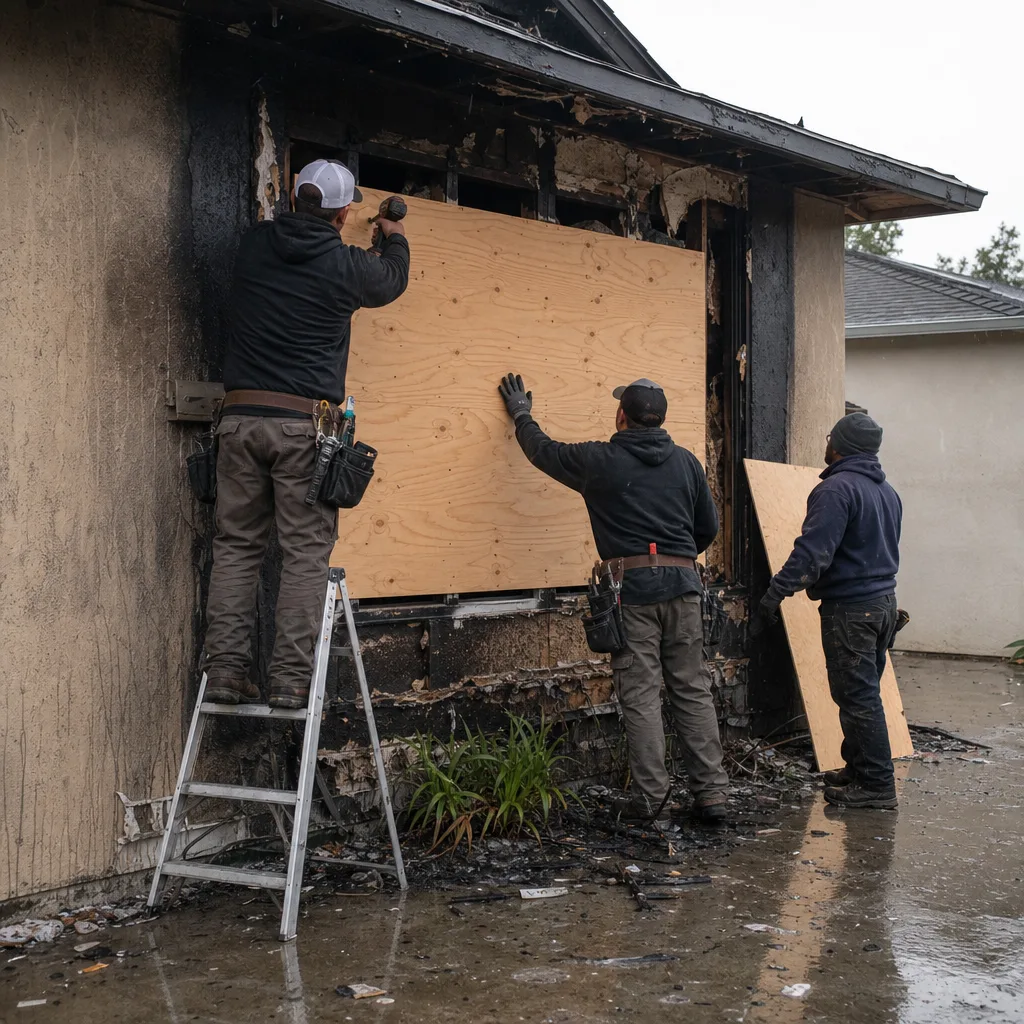
Fire damage is visually obvious. Smoke damage often is not, and its early indicators are frequently misread as cleaning issues or aging materials.
Acid etching on metal surfaces: Within 72 hours of even a contained kitchen fire, acidic combustion byproducts settle on cool metal surfaces - refrigerator handles, door hardware, window frames. The tell is a subtle dulling or rainbow discoloration that doesn’t wipe clean. In an Orchard Hills home, a homeowner noticed this on stainless appliances two days after a stovetop grease fire that was extinguished immediately. Investigation found that smoke had penetrated the HVAC return, carrying particulate throughout the system. Early detection allowed duct cleaning and surface restoration before corrosion required replacement of $8,000 in appliances.
Thermal tracking on walls: Smoke follows convection currents and deposits where surfaces are coolest - at exterior walls, behind pictures, at ceiling corners. The early indicator is a faint yellowing or darkening in these patterns, often visible only when furniture is moved or pictures are taken down. It doesn’t wash off; it’s a chemical deposit that requires specific cleaning agents matched to the fuel source (protein fires from kitchen grease respond to different chemistry than synthetic fires from plastics).
Odor persistence: A “burnt” smell that lingers beyond 48 hours after cleaning indicates particulate embedded in porous materials - drywall, insulation, carpet cushion, upholstered furniture. Surface cleaning doesn’t reach these reservoirs. The test: close the room for 24 hours with no ventilation, then enter. If odor is detectable upon entry, source removal or specialized deodorization is required.
Documentation for fire and smoke claims requires particular attention to the chain of custody for contents. Photograph every item before it is moved. Note pre-existing damage. For items that require restoration vs. replacement, obtain a written assessment from a qualified restorer - insurance policies typically cover restoration to pre-loss condition, not replacement with new, and the distinction can be thousands of dollars. Fire & Smoke Damage Restoration in Irvine includes contents inventory with photo documentation as part of our standard scope.
Storm and Sewage: When Speed Changes the Cost Structure
Water damage from clean sources - a burst supply line, rainwater intrusion - becomes category 2 (gray water) within 48 hours and category 3 (black water) within 72-96 hours as microbial growth progresses. Storm and sewage damage starts at category 3. The cost structure is not linear: emergency extraction and proper drying within the first 24 hours typically costs 60-70% less than the same square footage after 72 hours of unaddressed saturation, when demolition scope expands and mold remediation becomes necessary.
Storm-specific indicators in Irvine: Our Mediterranean climate produces concentrated rainfall in winter months, often on soils compacted by summer drought. The result is surface water accumulation faster than drainage systems handle. In lower-lying areas of Woodbridge and Northwood, street flooding can reach garage thresholds and foundation vents within hours. The warning sign is not water inside - it’s water against the building perimeter sustained for more than 2 hours. Sandbagging, perimeter dewatering, or temporary sump installation at that stage prevents intrusion.
Sewage backup indicators: Multiple drains backing up simultaneously, especially lowest-level fixtures first, indicates a main line blockage rather than a localized clog. Gurgling in toilets when sinks drain, or water rising in shower drains when washing machines discharge, are pre-backup indicators. In Irvine’s older neighborhoods - parts of University Park and Rancho San Joaquin built in the 1970s - tree root intrusion in clay sewer mains is a recurring cause. Annual camera inspection of the main line, typically $200-350, identifies intrusion before it becomes backup.
Health and safety: Category 3 water contains pathogenic organisms. Do not attempt extraction without proper PPE. Do not use household fans to “dry it out” - this aerosolizes contaminants. The correct response is containment, extraction with proper equipment, and antimicrobial application before drying begins. Our crews use B-Air and Phoenix professional drying systems, with HEPA air filtration and negative air containment where required, documented to IICRC S500 and S520 standards.
Speed language applies here: DryMark Restoration Irvine home maintains live phone coverage 24 hours a day, 7 days a week with no voicemail on emergency lines. Storm and sewage damage does not wait for business hours, and our response protocol reflects that reality. But speed without documentation is liability - we photograph before extraction, moisture-map after, and deliver a written scope with line-item pricing before reconstruction begins. Haven Standard, Clause 1: written price before work starts, every time, no exceptions.
Common Mistakes to Avoid
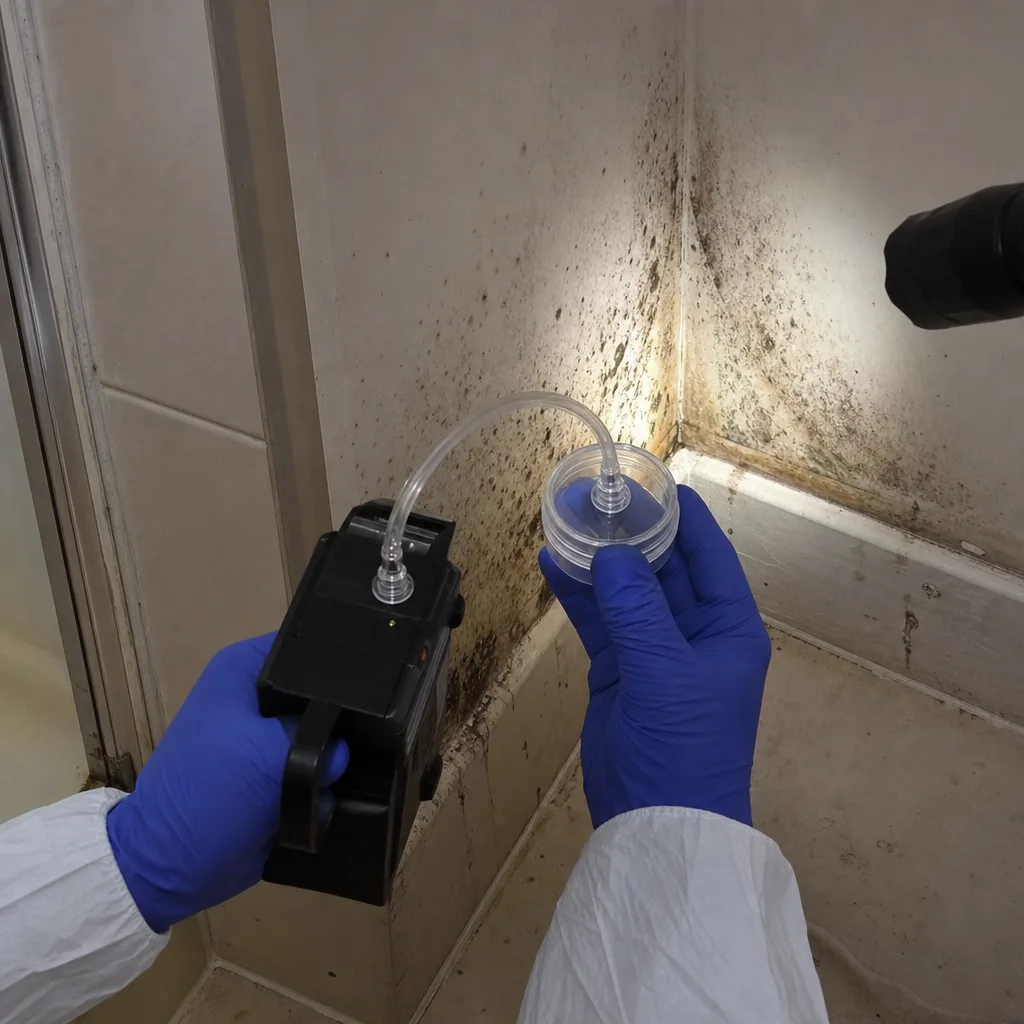
- Waiting for visible mold before calling. By the time mold is visible, colonization typically extends 3-5 times the apparent area within wall cavities. In Irvine’s mild climate, this threshold is reached in 72-96 hours after moisture intrusion. The $400 intervention becomes $4,000 remediation.
- Using bleach on mold. Bleach kills surface growth but leaves viable hyphae in porous materials. It also adds moisture to the substrate. We’ve documented cases where repeated bleach application fed recurrent growth for months, each episode documented by the homeowner as “cleaned it myself.”
- Running fans on wet drywall without dehumidification. This accelerates evaporation but raises indoor humidity, potentially spreading moisture to unaffected areas. Proper drying requires controlled dehumidification, air movement, and temperature management - the psychrometric balance that professional equipment maintains.
- Ignoring efflorescence as “just salt.” In Irvine’s stucco construction, efflorescence confirms a water path through the entire wall assembly. Cleaning it without addressing the source guarantees interior damage progression, often in the wall cavity where it remains hidden until structural compromise appears.
- Accepting “we’ll bill your insurance” without a written scope. This is how scope creep happens. Haven Standard, Clause 1 exists because we’ve seen homeowners charged for work never authorized, with no documentation to dispute it. A written price before work begins protects both parties.
- Discarding damaged materials before documentation. Insurance adjusters require evidence of damage to authorize replacement. That waterlogged carpet pad, that section of drywall, that warped baseboard - photograph it, moisture-map it, and confirm with your adjuster before disposal. We’ve had claims reduced by thousands because a homeowner “cleaned up” before the adjuster visited.
When to Call a Professional
Call when moisture readings exceed the thresholds in this guide, when odors persist beyond 48 hours, when efflorescence appears, or when any water intrusion involves category 2 or 3 sources. Call when you’re unsure - the Free Second Opinion exists for exactly that uncertainty.
DryMark Restoration Irvine offers free estimates in Irvine - call (657) 212-2570. Every assessment includes a photo record, moisture mapping, and a written scope with line-item pricing before any work begins. The 365-Day Done Right Promise, backed by The Haven Standard, applies to every job we accept. If it’s not done right, we make it right. That’s not a marketing line; it’s a signed guarantee.
Frequently Asked Questions
Our initial assessment and written estimate are free. The assessment includes thermal imaging scan, moisture readings at affected and adjacent areas, and a photo-documented scope with line-item pricing. Call (657) 212-2570 to schedule - estimates are free and carry no obligation.
Most policies cover sudden and accidental damage but exclude gradual deterioration. The key is documentation: a dated photo of a warning sign, a hygrometer log showing sustained elevation, or a contractor’s letter establishing when the condition became actionable. Without documentation, adjusters often argue gradual damage and deny. With it, you have evidence to support coverage. We document every assessment to IICRC and RIA standards specifically to support this evidentiary need.
Live person answers every call, 24 hours a day, 7 days a week - no voicemail trees. Emergency response for water, fire, storm, and sewage damage deploys as quickly as crew availability allows; we do not quote specific arrival times because traffic and current job status vary. What we guarantee is that a live person will answer, assess your situation, and give you an honest estimate of response time based on current conditions. Reconstruction and non-emergency work is scheduled, not dispatched.
Visible mold growth exceeding 10 square feet, or any growth in HVAC systems, requires professional remediation per California guidelines. For smaller areas, the determining factor is the moisture source: if you cannot identify and fix the source with confidence, cleaning the surface is temporary. We’ve been called to dozens of Irvine homes where DIY cleaning was repeated quarterly for years, never addressing the leaking shower pan or slab moisture that fed recurrence. A professional assessment identifies the source and gives you a documented basis for decision.
We do, if you authorize us. Our documentation - photo records, moisture logs, written scopes - is formatted for adjuster review. We participate in joint inspections, respond to documentation requests, and defend our scopes based on the evidence we collected. This is part of our founding purpose: the documentation gap that costs homeowners their claims is the problem Back to Dry was built to solve. You remain the policyholder and make all decisions; we provide the evidence to support them.
A free inspection often produces a verbal ballpark or a range designed to get a crew in the door. Our assessment produces a written scope with specific line items, quantities, and prices - the Haven Standard, Clause 1 guarantee. You can take our written estimate to any competitor for comparison, or bring us theirs for our Free Second Opinion. The difference is evidence you can act on, not a sales conversation.
The Bottom Line
Damage restoration in Irvine is not about reacting to visible symptoms - it’s about reading pre-visible indicators and documenting them correctly. The moisture threshold that matters is 16% in wood, 1% in drywall, 75% in slab relative humidity. The tool that distinguishes emergency from false alarm is a $30 hygrometer and two weeks of disciplined logging. The documentation that turns a claim dispute into a paid claim is dated photos, captioned at capture, stored redundantly, and summarized in writing within 24 hours. These practices cost nothing but attention, and they save thousands in unnecessary remediation. When professional intervention is warranted, demand what The Haven Standard requires: a written price before work begins, a photo record on every visit, and a guarantee that stands behind the result.
Written by Alicia Brennan, Owner at DryMark Restoration Irvine, serving Irvine since 2011.