
Last updated September 23, 2026
Free visual inspection and a written scope of work before any mitigation begins - photos, moisture readings, and drying logs go in your claim file
The scope we write is the scope we bill. Anything new gets shown to you, in writing, before we touch it.
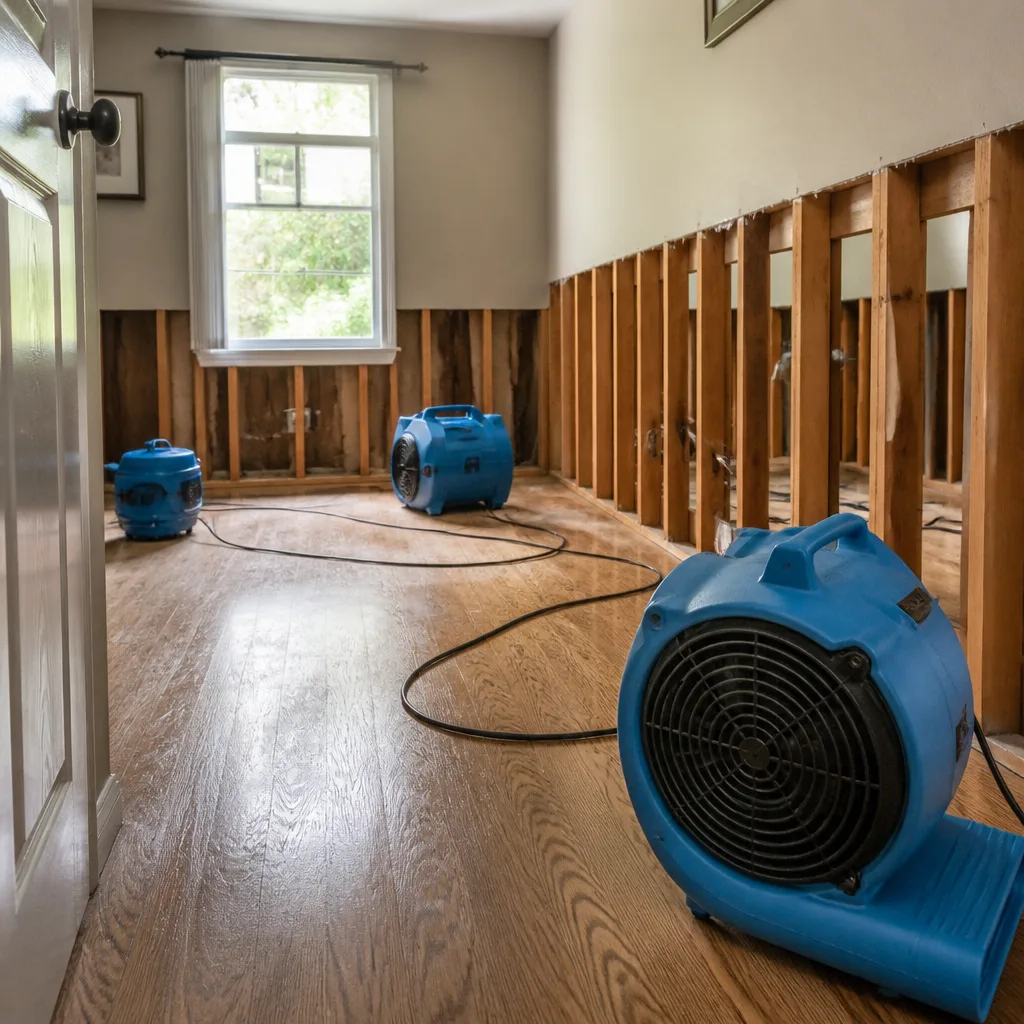
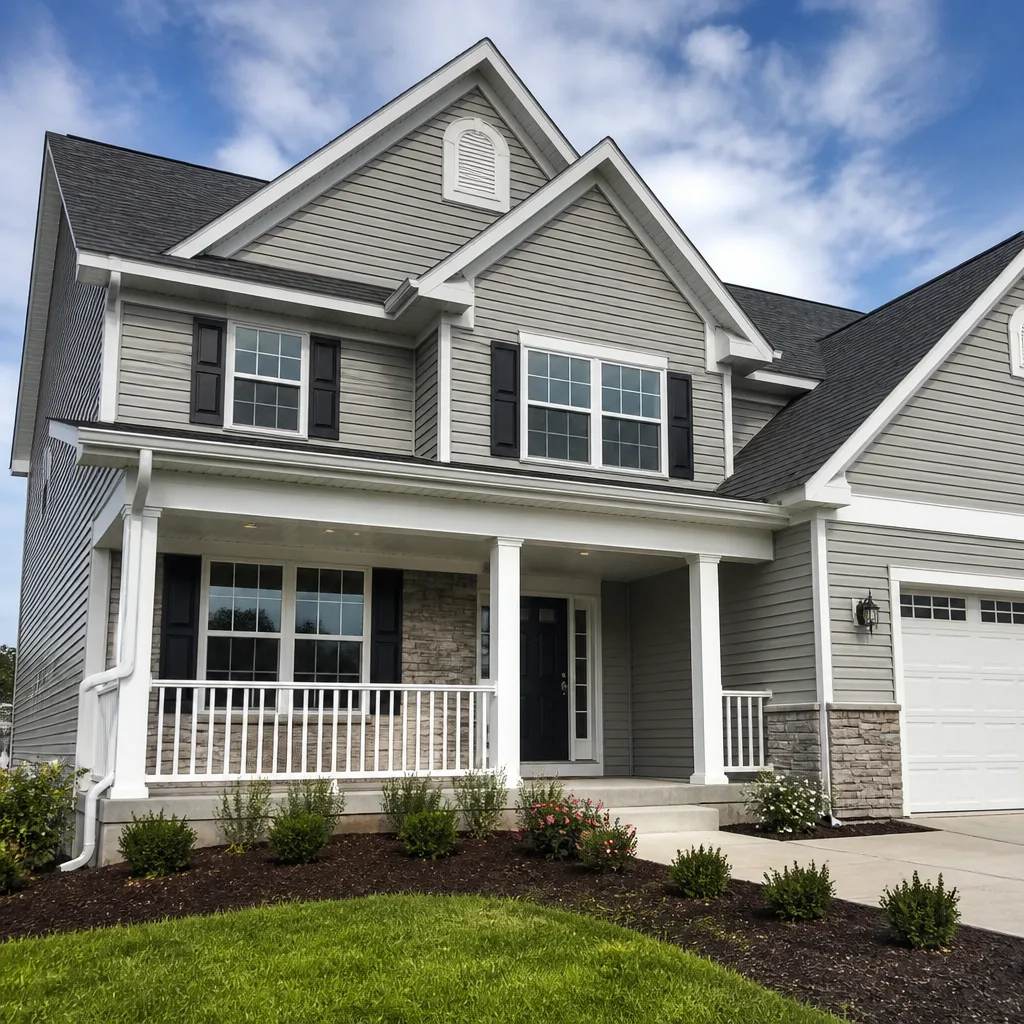
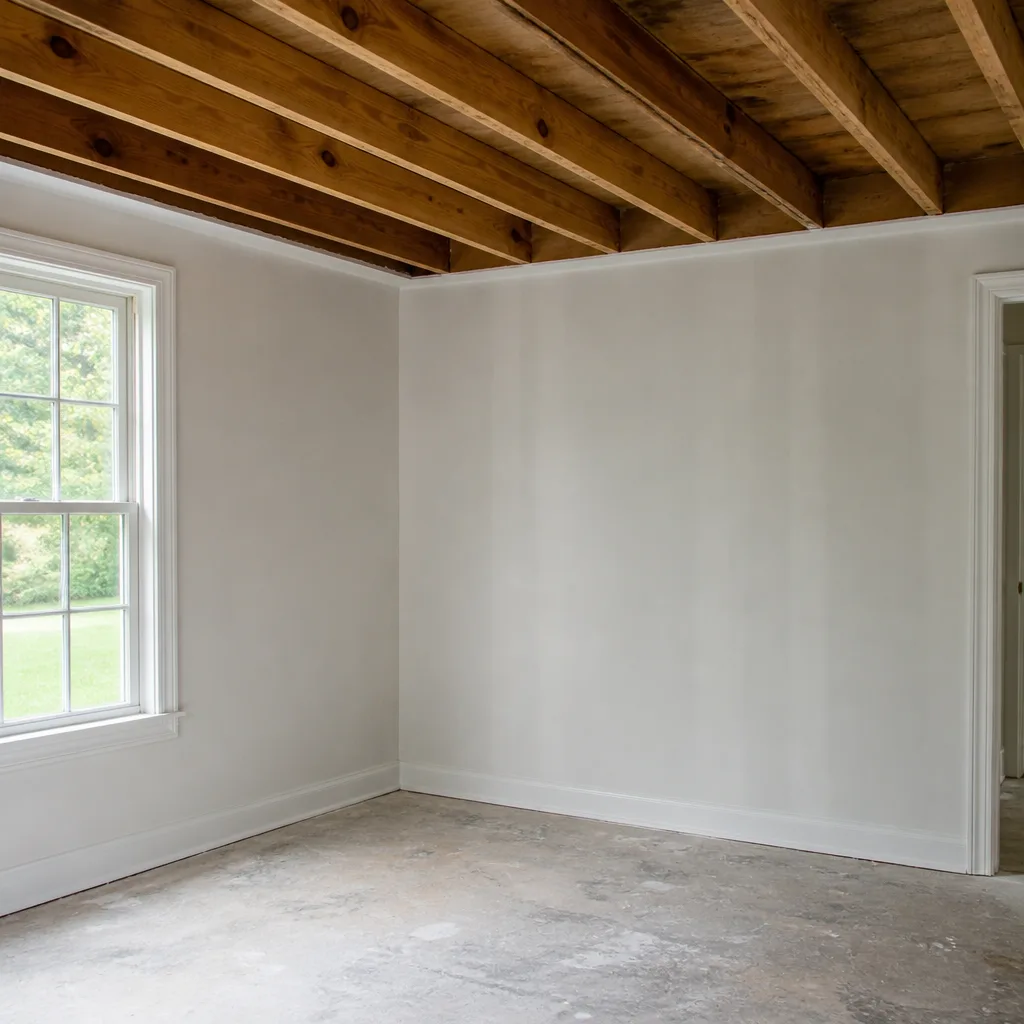
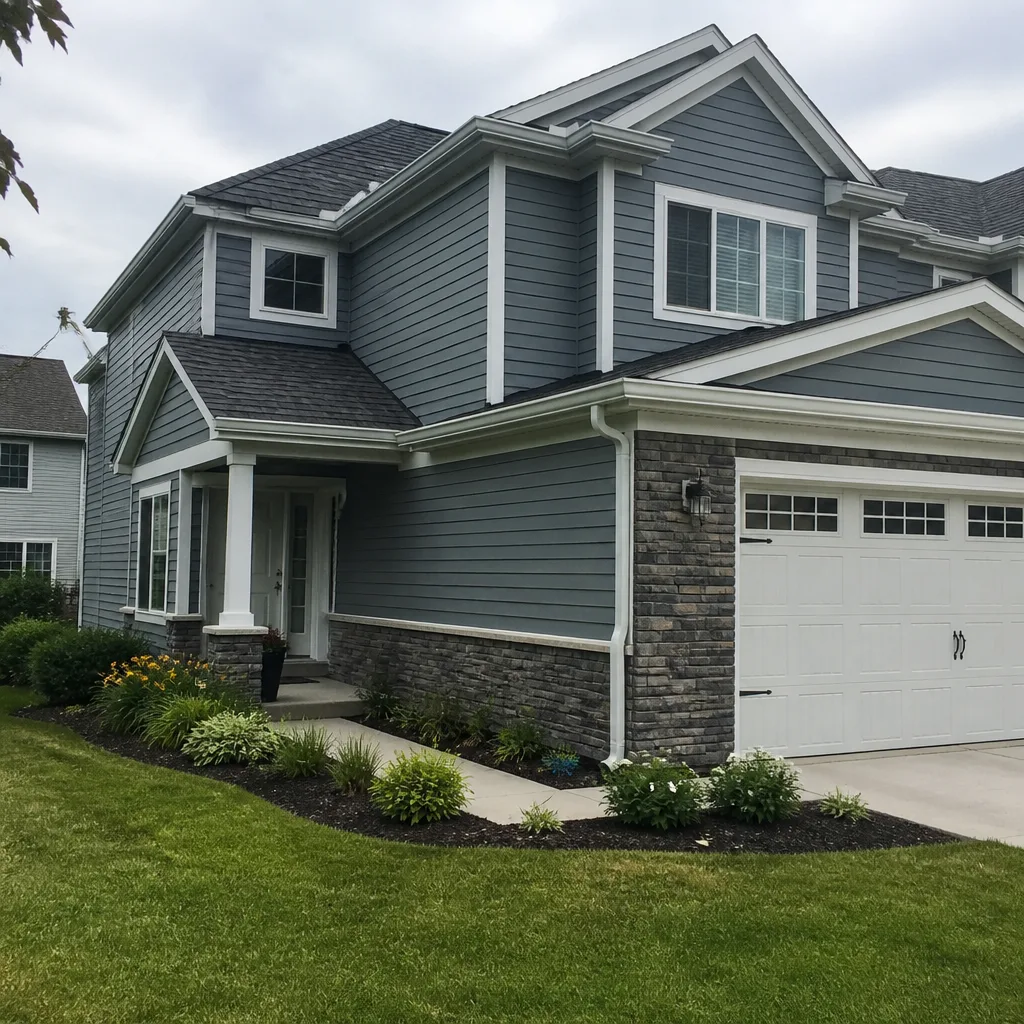
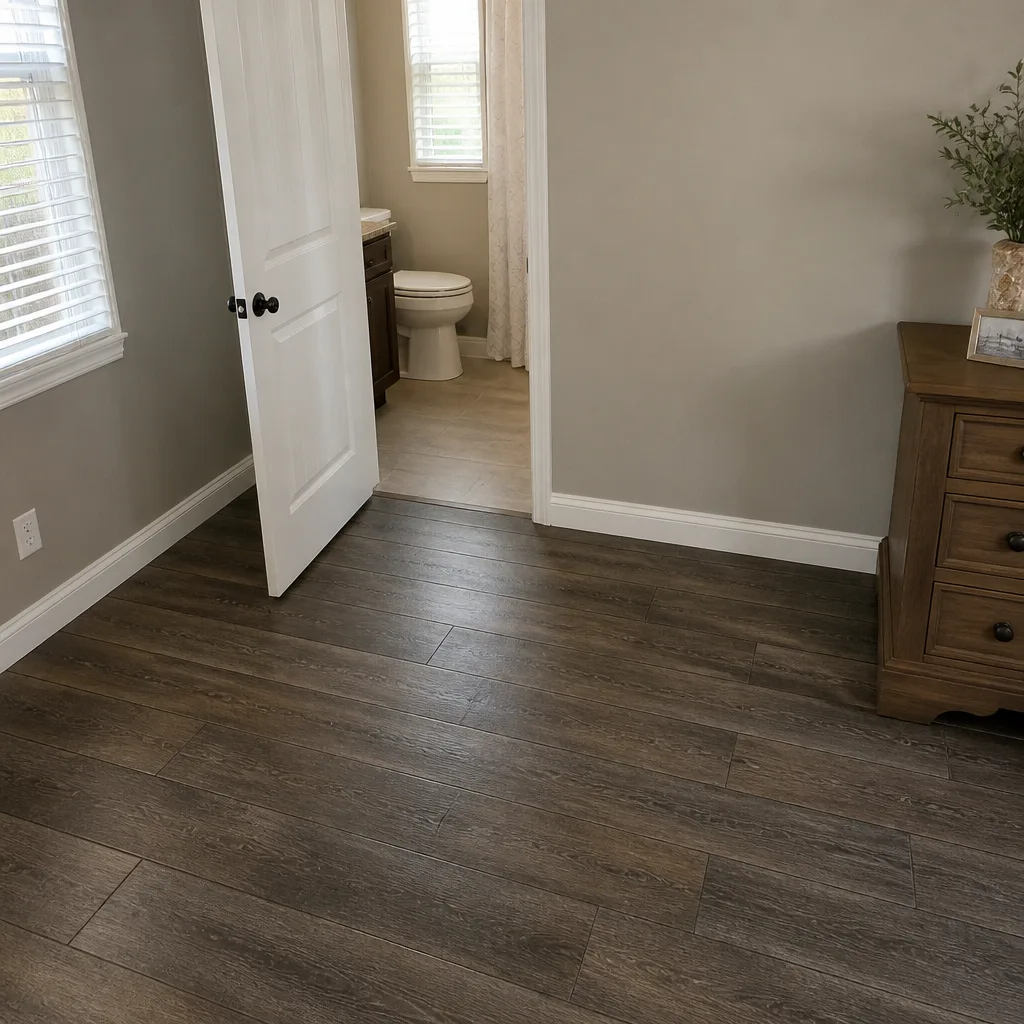
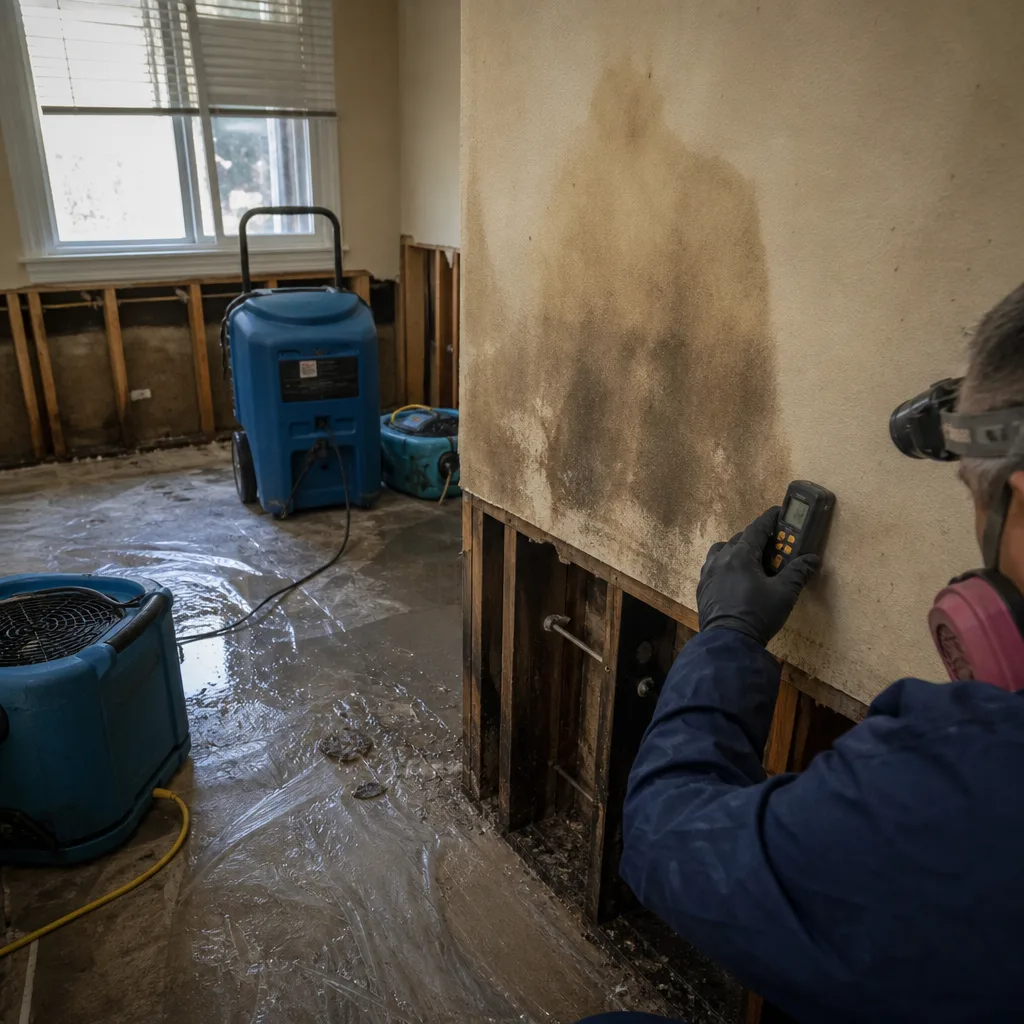 Before
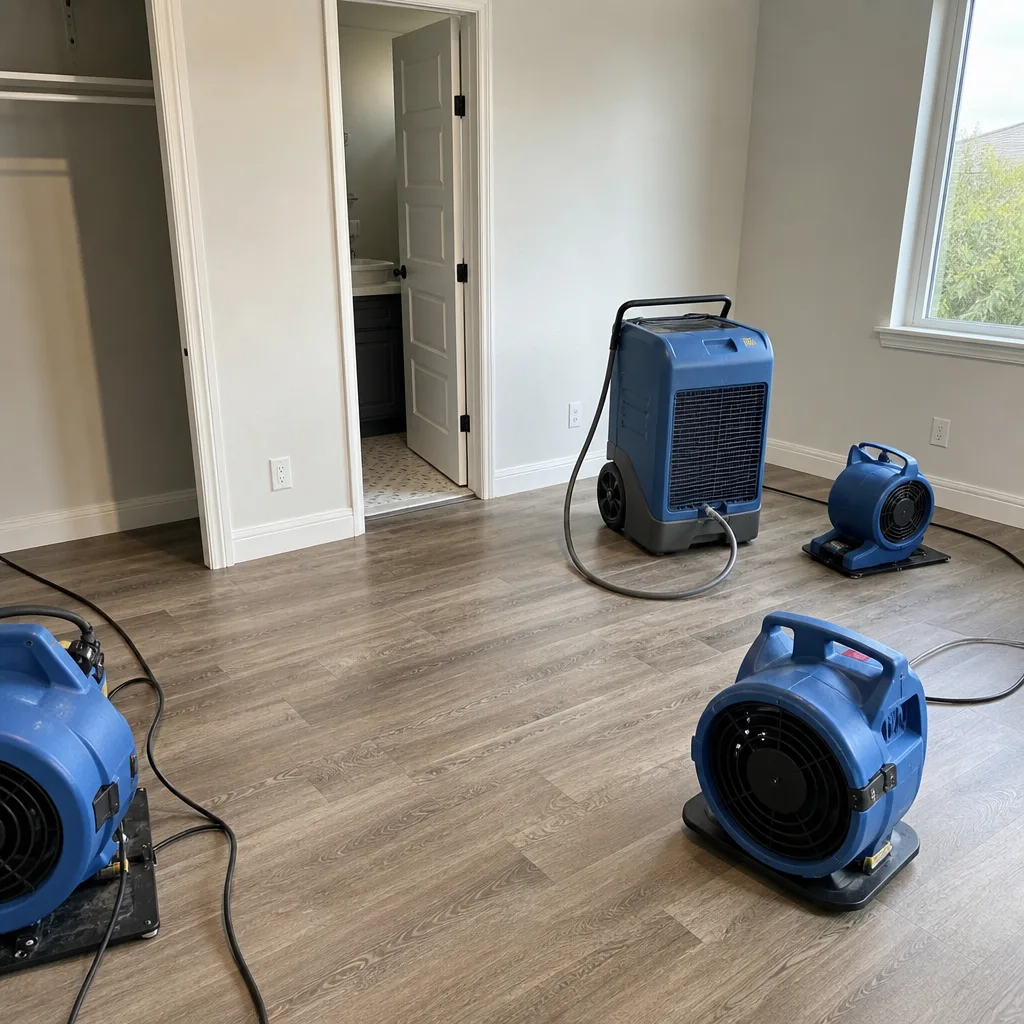 After
After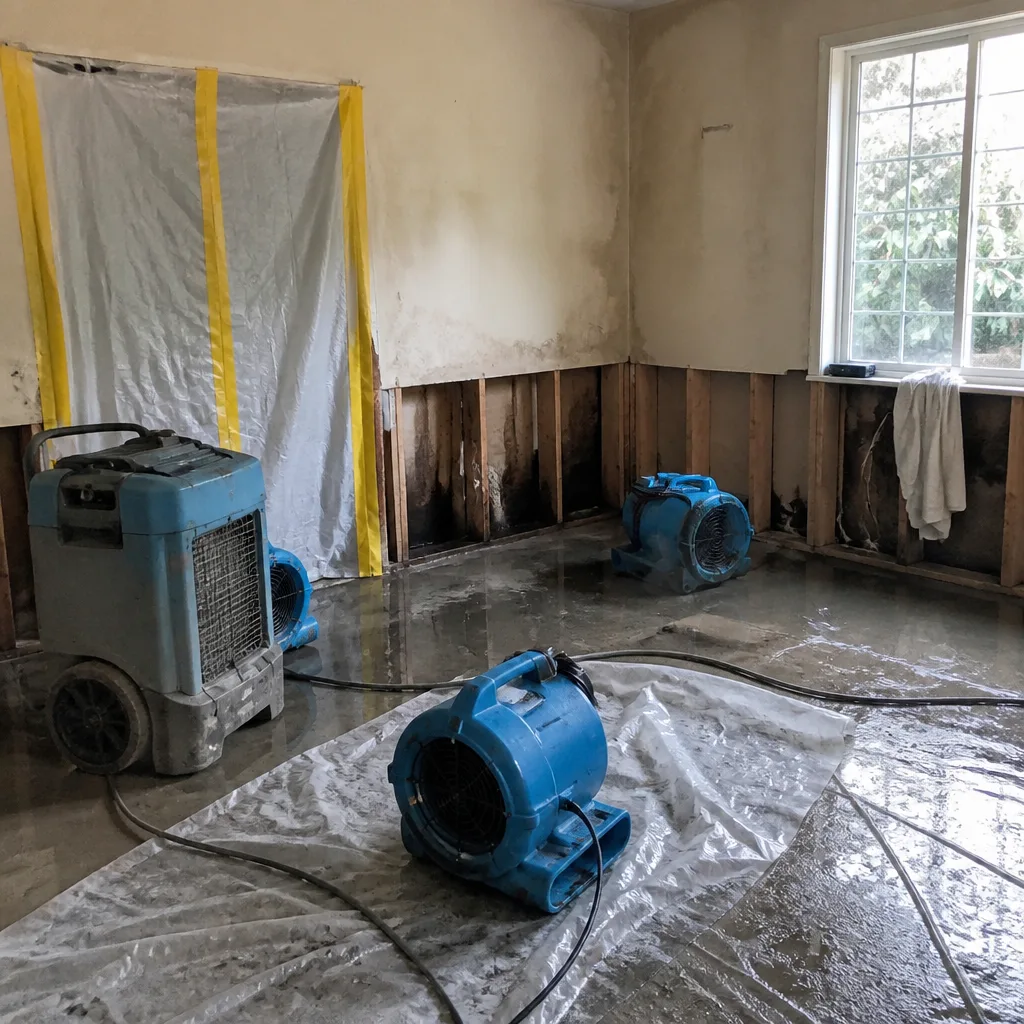 Before
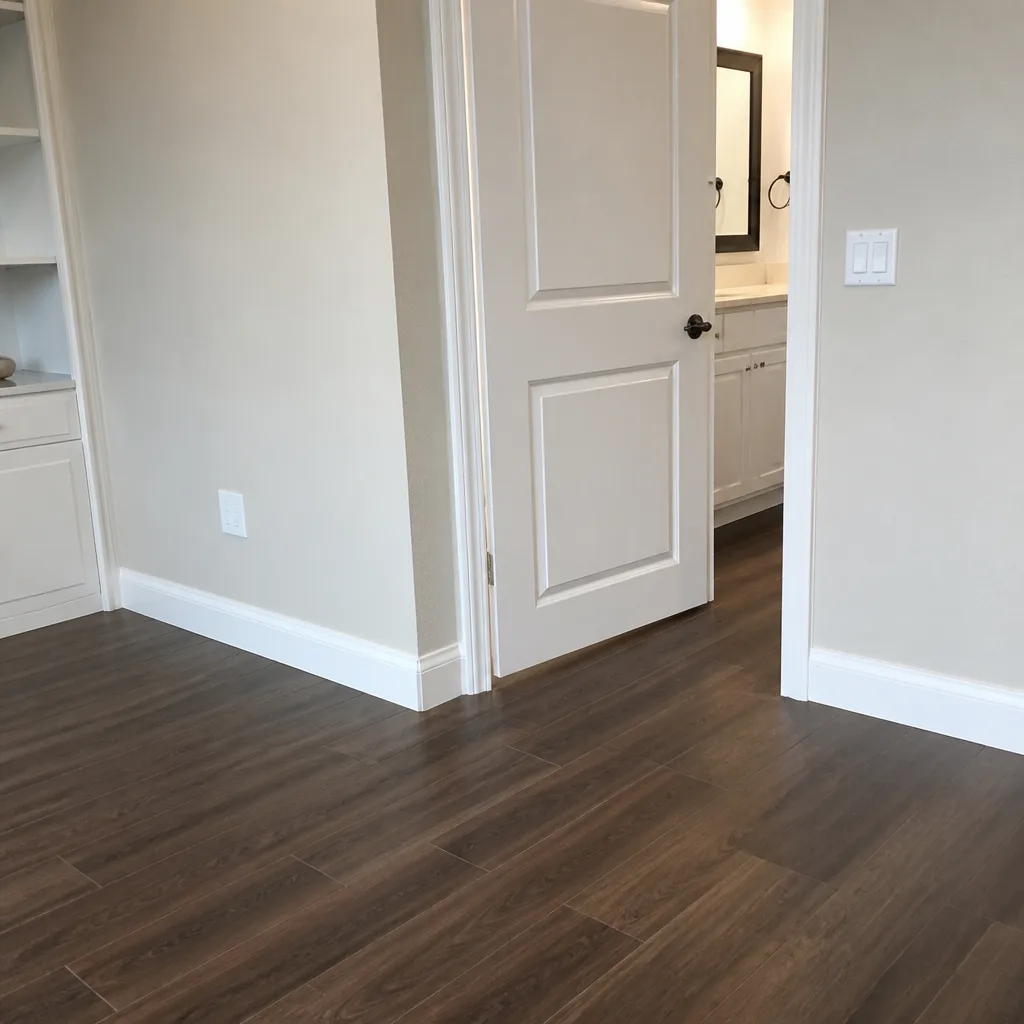 After
After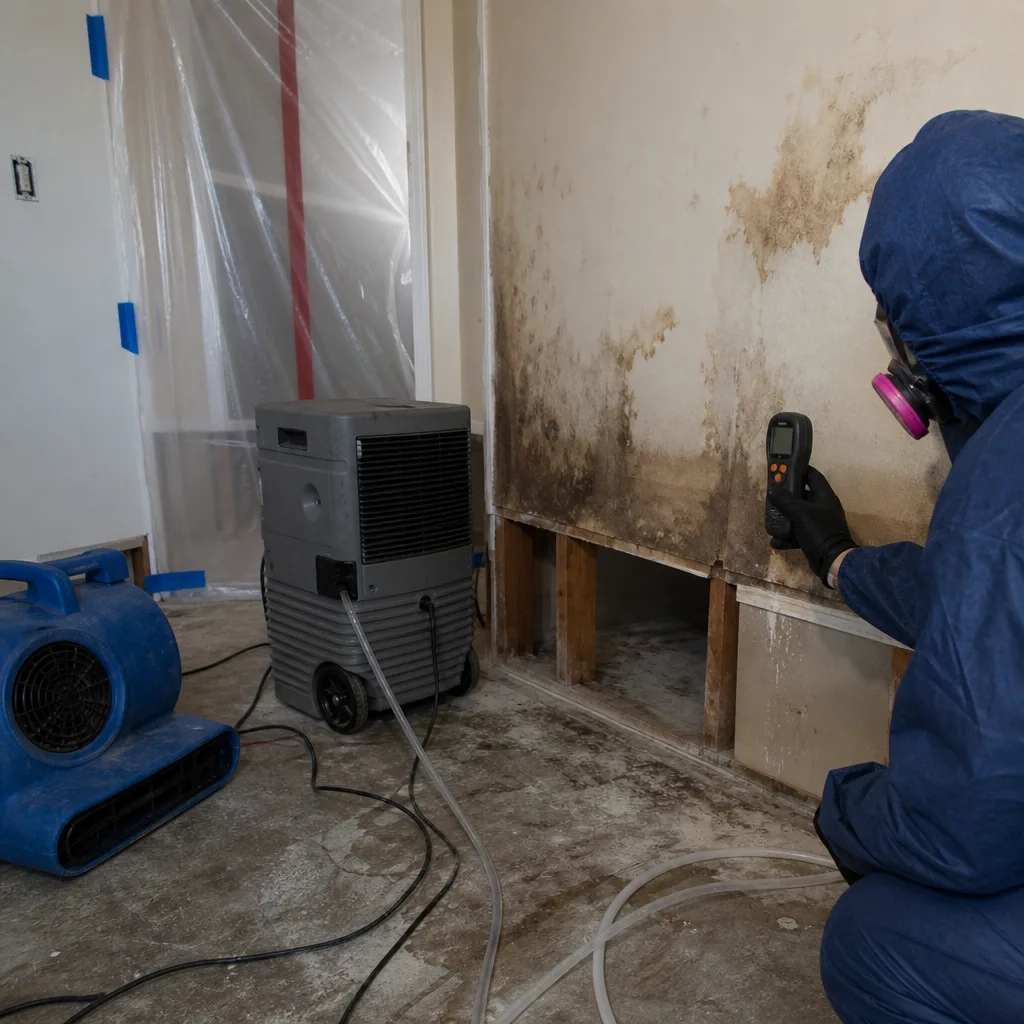 Before
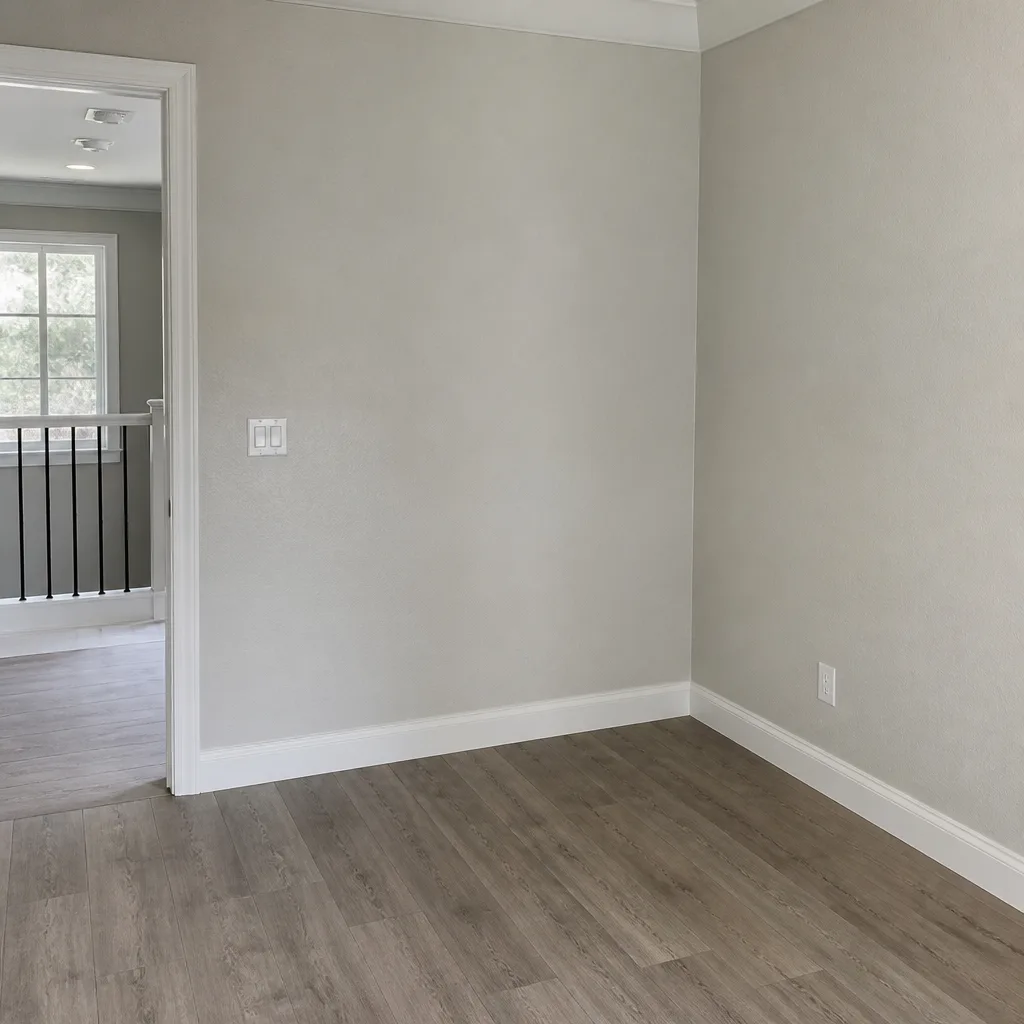 After
AfterDamage Restoration Cost Breakdown: The Irvine Homeowner’s Reference for 2026
The single line item with the widest legitimate cost variance on an Irvine water damage invoice is not demolition or rebuild. It is equipment rental, where daily drying unit counts can double the mitigation total without any visible difference in how the job looks from the hallway. A Category 2 water loss in an 1,800 square foot Irvine home can run from $3,200 to $8,900 depending almost entirely on how many air movers and dehumidifiers are deployed, for how many days, and whether the crew is monitoring psychrometric data or simply leaving machines running. In this guide, we deconstruct every line item that appears on a typical Orange County restoration invoice so you can read a contractor’s estimate instead of just signing it, and for Damage Restoration Warning Signs: A Irvine Homeowner’s Reference Guide see our companion resource.
Quick Answer
Water damage restoration in Irvine typically costs $2,800-$9,500 for residential mitigation, with most 1,500-2,500 sq ft homes falling in the $4,200-$6,800 range. Final pricing depends on water category, affected square footage, equipment-day totals, and whether demolition or reconstruction is required. Insurance claims processed through Xactimate pricing usually cover mitigation in full when the loss is sudden and accidental, though homeowners may face out-of-pocket costs for policy deductibles, coverage limits, or non-covered finishes.
Table of Contents
- How Water Damage Costs Are Built: Line by Line
- The Equipment-Day Calculation: Verifying Your Drying Invoice
- Insurance Pricing vs. Retail Pricing: What You Actually Pay
- What a Written Scope Before Work Begins Protects Against
- 24-Hour Response vs. 72-Hour Response: The Cost of Waiting
- Mold, Fire, and Storm Damage: Different Cost Structures
- Irvine-Specific Factors That Move the Price
- Common Mistakes to Avoid
- When to Call a Professional
- Frequently Asked Questions
 Before
 After
AfterHow Water Damage Costs Are Built: Line by Line
Most homeowners receive a restoration invoice with a single large number and little explanation. That number is actually a stack of discrete line items, each with its own unit cost, quantity, and markup structure. Understanding this stack is the difference between a claim that processes cleanly and one that sits in review for weeks; our Damage Restoration Permits, Codes & Inspections in CA: What You Need to Know guide explains the regulatory side.
Here is how a typical Category 2 water loss in an 1,800 sq ft Irvine home breaks down, using current Orange County labor and material rates:
| Line Item | Typical Range (Irvine, 2026) | What Drives Variance |
|---|---|---|
| Emergency water extraction | $380-$720 | Gallons removed, truck-mounted vs. portable extractors |
| Air movers (per unit, per day) | $28-$42 | Count determined by affected square footage + IICRC formula |
| Dehumidifiers (per unit, per day) | $85-$140 | Capacity in pints/day; LGR units cost more than conventional |
| Air scrubbers/negative air (per unit, per day) | $45-$75 | Required for Category 2/3 or if microbial growth suspected |
| Daily monitoring and moisture readings | $185-$295/visit | Frequency; psychrometric data logging vs. basic meter check |
| Controlled demolition (drywall, baseboard, flooring) | $1,200-$3,400 | Linear feet affected; asbestos/lead testing if pre-1985 build |
| Antimicrobial application | $280-$550 | Square footage; EPA-registered vs. generic product |
| Containment barriers | $340-$680 | Zip-wall systems vs. poly sheeting; room count |
| Content manipulation (moving/storing furniture) | $450-$890 | Volume; on-site blocking vs. pack-out to storage |
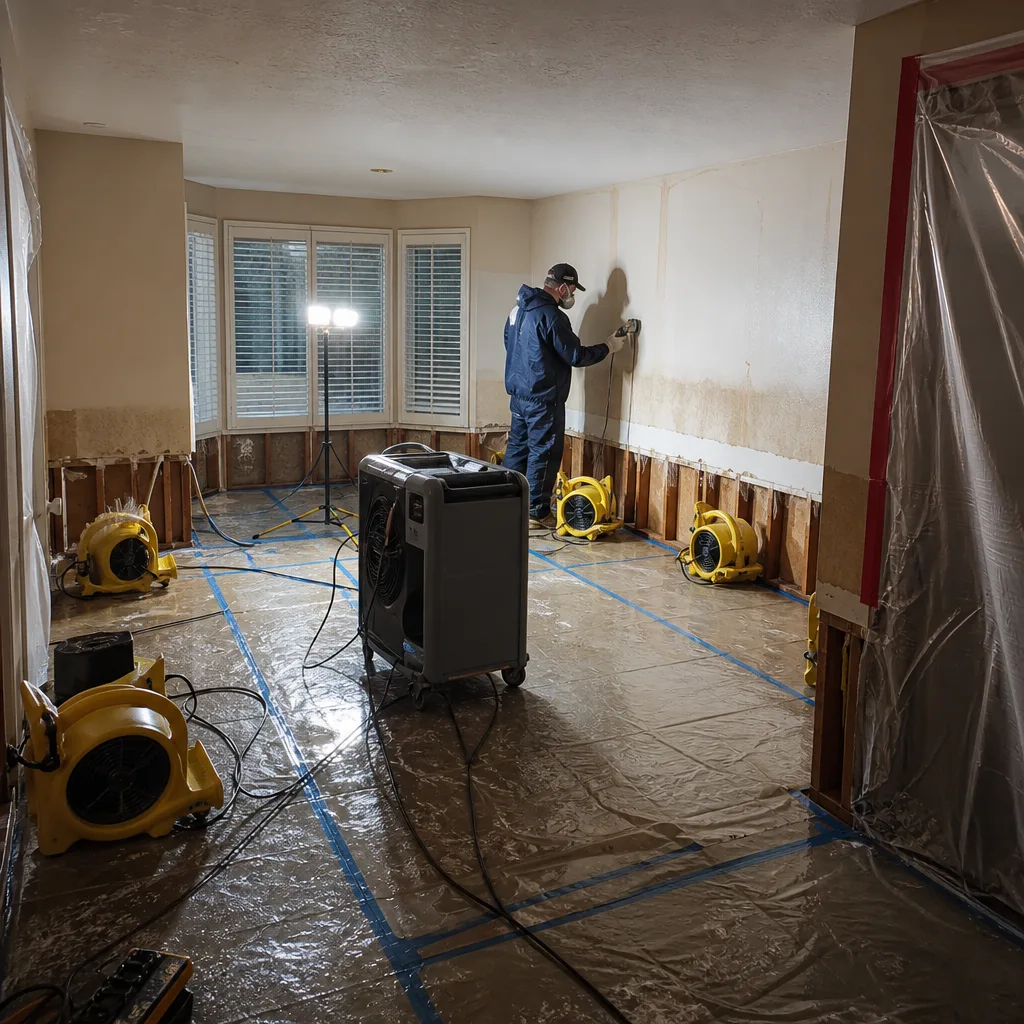
The extraction line is usually the smallest on the invoice despite being the most visible. Crews spend two to four hours pumping water, then three to five days managing the drying environment. That is where equipment rental accumulates.
At DryMark Restoration Irvine, we itemize every unit in our written scope before work begins. Haven Standard, Clause 1 requires it. You see the air mover count, the dehumidifier model, and the daily rate for each before anyone starts work.
The Equipment-Day Calculation: Verifying Your Drying Invoice
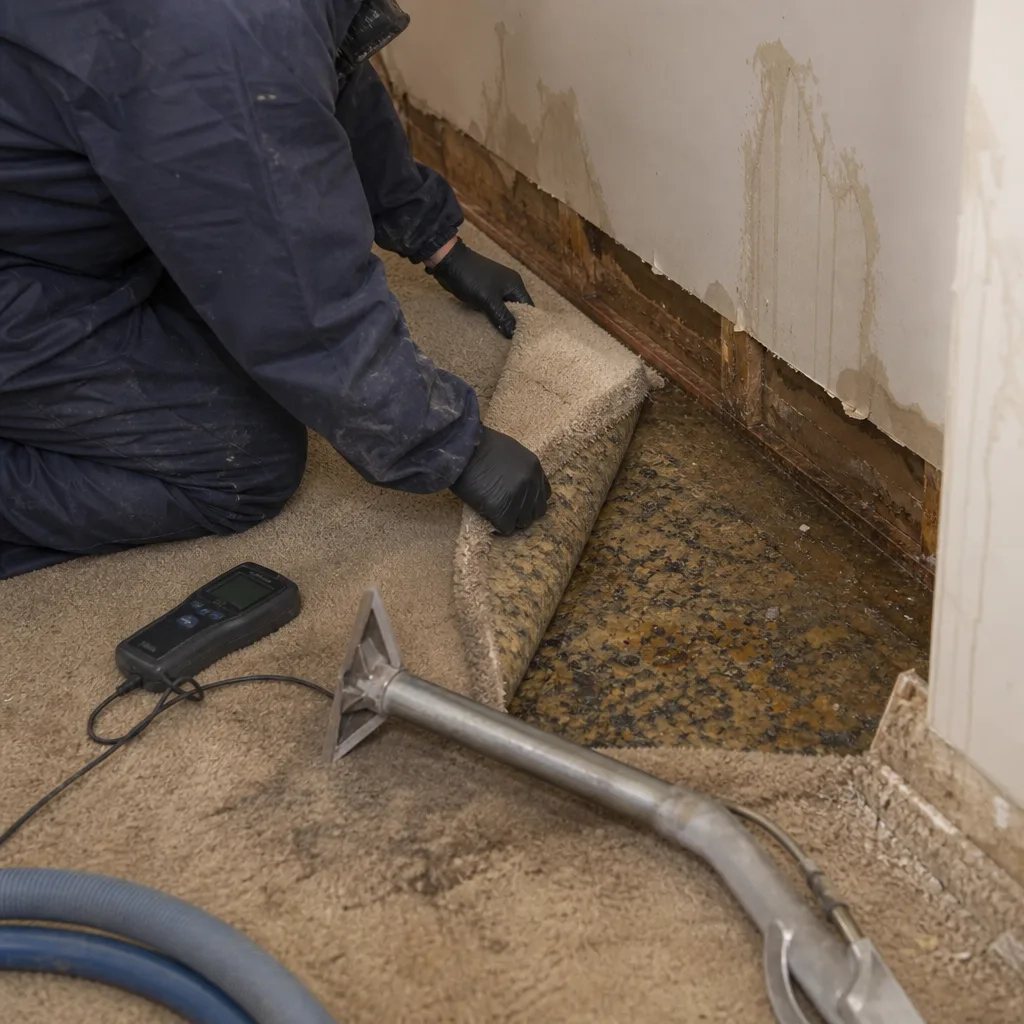
Equipment rental is where restoration invoices inflate most often, and where homeowners have the least ability to verify what they are paying for. A “day” of equipment rental is typically defined as a 24-hour period or any portion thereof. Three dehumidifiers running for four days equals twelve equipment-days. At $110 per day per LGR dehumidifier, that is $1,320 on one line item alone.
The industry-standard formula for air mover placement comes from IICRC S500, the water damage restoration standard. For structural drying, one air mover is typically placed for every 50-70 square feet of affected wet area in open spaces, with adjustments for airflow obstructions, ceiling height, and material density. A 400 square foot living room with wet carpet and pad might warrant six to eight air movers. Add two dehumidifiers sized to the cubic volume. Add an air scrubber if the water category warrants it.
Here is how to verify equipment counts on any invoice:
- Measure the affected area yourself, or request the moisture mapping diagram that documents it. Every professional restoration company should produce one.
- Apply the 50-70 sq ft per air mover rule for open areas. Closets, bathrooms under sinks, and wall cavities need additional units for airflow.
- Check dehumidifier capacity against room volume. A 70-pint LGR dehumidifier handles roughly 1,200-1,500 cubic feet under normal conditions. Irvine’s coastal humidity, typically 65-75% in spring and fall, pushes requirements toward the higher end.
- Verify drying days against moisture readings. Daily logs should show descending moisture content percentages in wood framing and subfloors. If readings plateau, the equipment count or configuration should change, not simply continue billing.
- Request the psychrometric data: temperature, relative humidity, and specific humidity readings taken at each monitoring visit. This data, recorded on Dri-Eaz or Phoenix equipment with built-in sensors, proves the drying environment was actively managed rather than passively waited out.
In our experience across Irvine, from Northwood to Woodbridge to Quail Hill, the most common equipment overbilling we review in competitor estimates involves air movers left running in already-dry rooms. Our daily moisture logs, documented to IICRC standards, prevent this. If the wood framing reads 12% moisture content and the drywall reads below 1.0% on a pinless meter, the equipment moves to the next phase or comes off the job.
Insurance Pricing vs. Retail Pricing: What You Actually Pay
Most restoration work in Irvine is paid through property insurance. That means the invoice is typically built on Xactimate, the pricing database used by adjusters and contractors to establish “fair and reasonable” costs by ZIP code. Xactimate prices for Orange County reflect local labor rates, material costs, and permit fees. They do not always reflect the actual invoice a retail customer would receive if paying out of pocket.
The gap works in the homeowner’s favor when insurance is involved. Xactimate pricing for water mitigation in Irvine often runs 15-25% below retail market rates for the same services. The trade-off is documentation burden: insurers require photo evidence, moisture logs, and detailed scope notes to release payment. Sloppy documentation means delayed payment or denied line items.
Homeowner out-of-pocket exposure typically appears in these forms:
- Policy deductible: Standard in California is $1,000-$2,500 for water damage, though some policies carry higher windstorm or sewer backup deductibles.
- Coverage limits: Some policies cap water damage at $10,000 or exclude gradual leaks entirely. A $6,800 mitigation job plus $12,000 reconstruction can bump these limits quickly.
- Depreciation on non-structural items: Personal property, decorative finishes, and some flooring types may be paid at actual cash value (depreciated) rather than replacement cost, leaving a gap the homeowner covers.
- Code upgrade requirements: Irvine’s building code may require upgrades during reconstruction (e.g., low-flow plumbing fixtures, updated electrical GFCI placement) that the policy does not cover as part of the direct repair.
- Non-covered perils: Long-term leaks, groundwater intrusion, and sewer backup without specific rider coverage are frequently excluded.
At DryMark Restoration Irvine, we photograph every room before work begins, at each equipment check, and after completion. Our photo records are included as a standard deliverable, never an upsell. This documentation is what turns a restoration invoice into a payable insurance claim.
What a Written Scope Before Work Begins Protects Against
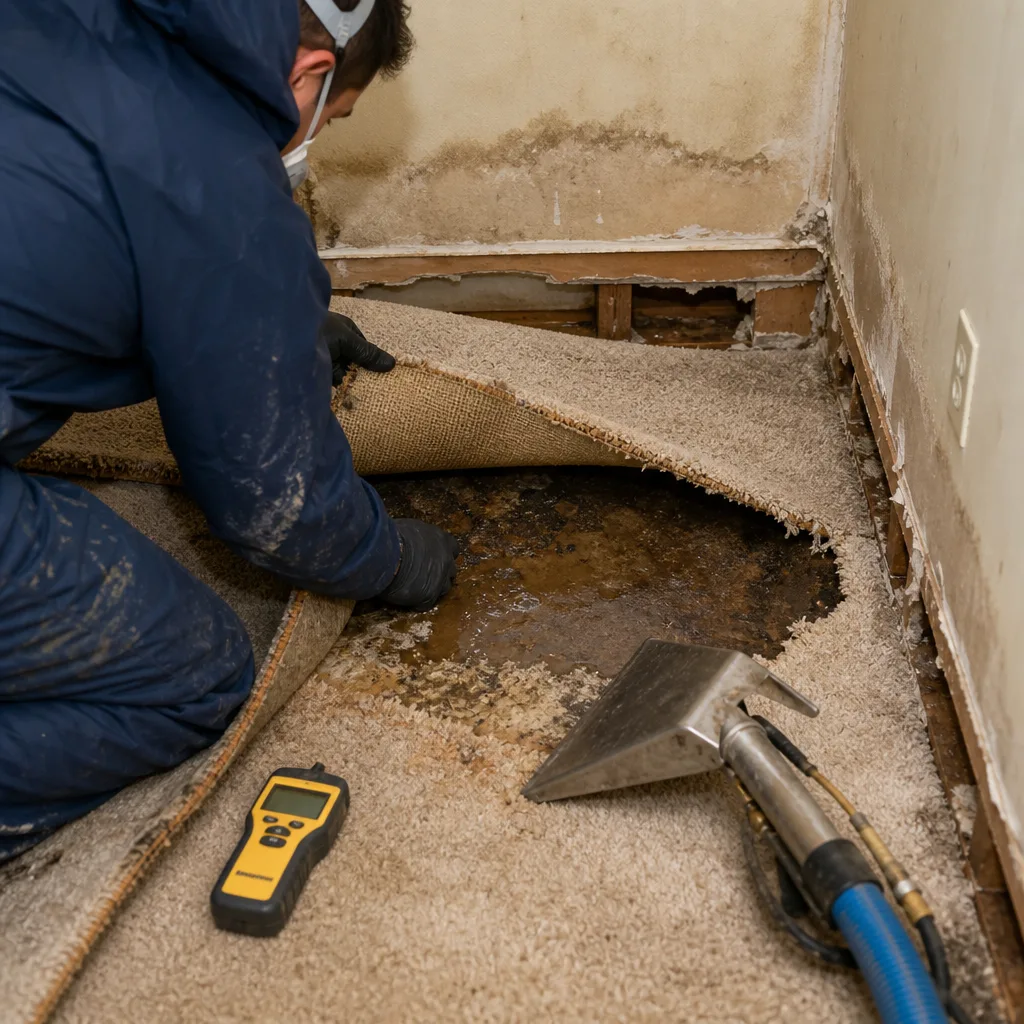
Haven Standard, Clause 1 states: a written price is delivered before anyone starts work, every time, with no exceptions. This clause exists because the most common complaint we hear from homeowners who call us for a second opinion involves supplemental billing, the practice of adding charges after work is underway.
Supplemental billing is not always fraudulent. Legitimate supplements occur when hidden damage is discovered behind walls, under cabinets, or beneath flooring. The problem is distinguishing legitimate supplements from scope creep, where a contractor lowballs the initial estimate to win the job, then adds line items once the crew is inside and the homeowner feels pressured to approve-something we cover in DIY vs Professional Damage Restoration: The Irvine Homeowner’s Decision Guide.
Common supplemental billing triggers in Irvine water damage jobs include:
- “We opened the wall and found mold.” Mold behind wet drywall is predictable in a water loss. If the initial scope did not include cavity inspection or antimicrobial treatment, the contractor either missed it or held it back intentionally.
- “The subfloor is saturated deeper than expected.” Moisture meters with deep-wall probes detect subfloor saturation during the initial assessment. A written scope should specify whether subfloor drying or replacement is included.
- “We need more equipment.” Equipment additions should follow daily moisture readings, not vague impressions. The written scope should state the initial equipment count and the conditions under which additions are authorized.
- “Code requires us to…” Irvine building code requirements are knowable in advance for most reconstruction work. Demolition and rebuild scopes should reference applicable code sections or flag them for verification.
- “Your insurance won’t cover this, but it’s necessary.” This phrase often precedes an upsell. Every line item should be in the written scope or require a documented change order with homeowner signature.
Our written scopes specify each of these elements: equipment count and daily rate, demolition linear footage, reconstruction line items with material specifications, and a clear statement of what conditions trigger supplemental authorization. The homeowner initials each section before work begins. No crew member has authority to add charges without a signed change order.
We also offer a Free Second Opinion on any competitor’s written estimate. Bring another contractor’s scope and we will review it at no charge, flagging where items appear missing, inflated, or ambiguously defined.
24-Hour Response vs. 72-Hour Response: The Cost of Waiting
The difference between calling a restoration company within 24 hours of discovery versus waiting 72 hours is not merely a matter of water continuing to spread. It is a categorical shift in what line items appear on the invoice, how long they run, and whether insurance coverage remains uncomplicated.
Here is how the same initial water loss diverges:
| Line Item | 24-Hour Response | 72-Hour Response |
|---|---|---|
| Water extraction volume | Moderate; standing water removed | Higher; wicking into drywall and insulation |
| Demolition required | Limited; baseboard, minimal drywall | Extensive; 2-4 foot flood cuts common |
| Insulation replacement | Rare in walls | Standard in exterior walls |
| Antimicrobial treatment | Preventive, limited area | Broader application; possible mold remediation protocol |
| Equipment days | 3-5 days typical | 5-8 days typical; secondary damage extends drying |
| Content cleaning | On-site wiping, minor pack-out | Full pack-out; textile and document restoration |
| Mold testing | Usually unnecessary | Frequently required; adds $400-$800 |
| Total mitigation range | $3,200-$5,800 | $5,400-$9,500+ |
The 72-hour job does not simply cost more. It introduces complexity that slows insurance processing. Mold concerns trigger additional documentation requirements. Some insurers treat mold as a separate peril with its own limits or exclusions. The homeowner’s out-of-pocket exposure increases even when coverage exists.
In Irvine’s climate, the risk is amplified by seasonal patterns. Santa Ana wind events in fall and winter create rapid humidity drops that accelerate surface drying while trapping moisture inside wall cavities. A homeowner sees dry carpet and assumes the problem is solved. Three days later, the drywall behind the baseboard reads 18% moisture content and microbial growth is visible.
Our live phone coverage, available 24 hours a day, 7 days a week with no voicemail on emergency lines, exists precisely because this timeline matters. A call at 10 PM on a Saturday prevents the Monday morning discovery that the loss has migrated from Category 2 to Category 3.
Mold, Fire, and Storm Damage: Different Cost Structures
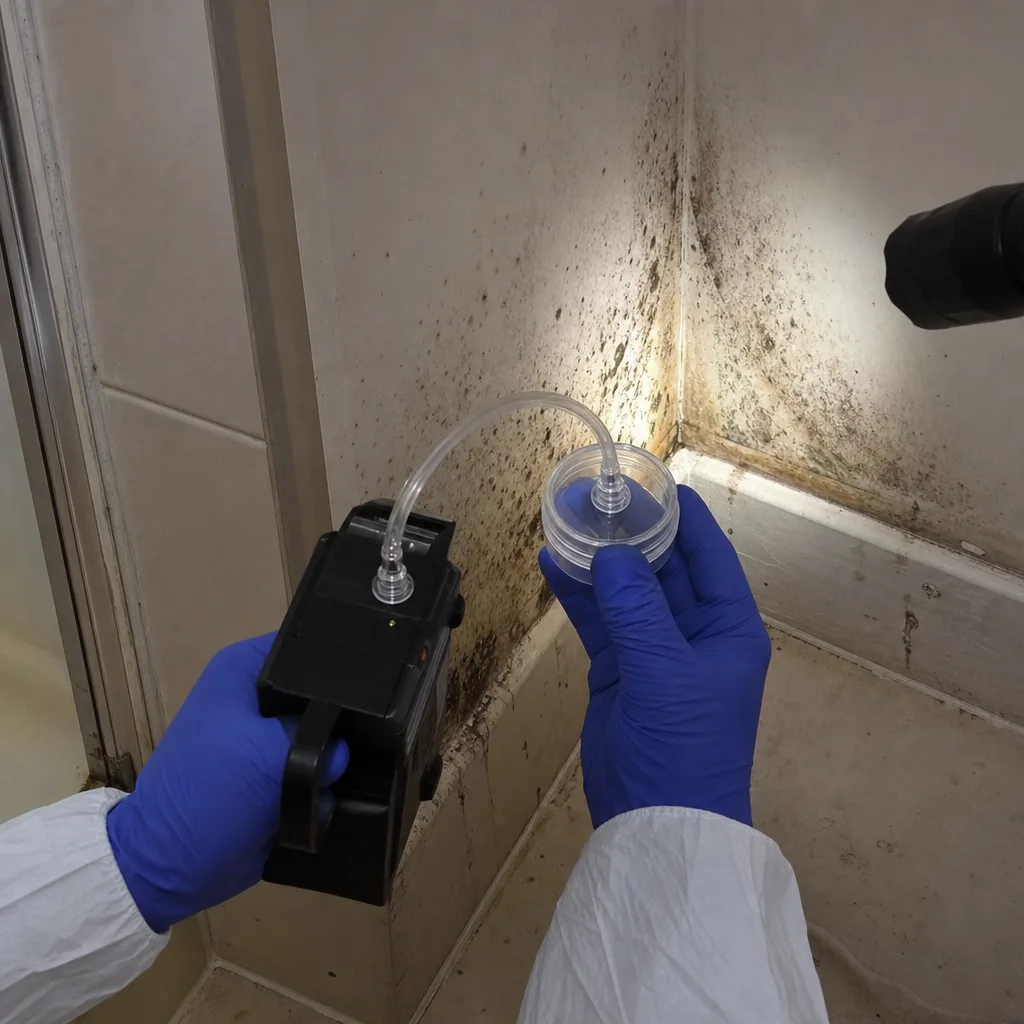
Water damage dominates restoration volume in Irvine, but mold remediation, fire and smoke restoration, and storm damage each carry distinct cost architectures that homeowners should understand before reviewing an estimate.
Mold Remediation
Mold work is priced by containment area, not by square foot of visible growth. A 10 square foot patch of mold on a bathroom ceiling might require a 200 square foot containment zone to prevent cross-contamination during removal. Costs in Irvine typically run $15-$30 per contained square foot, with most residential jobs falling between $2,800 and $7,500.
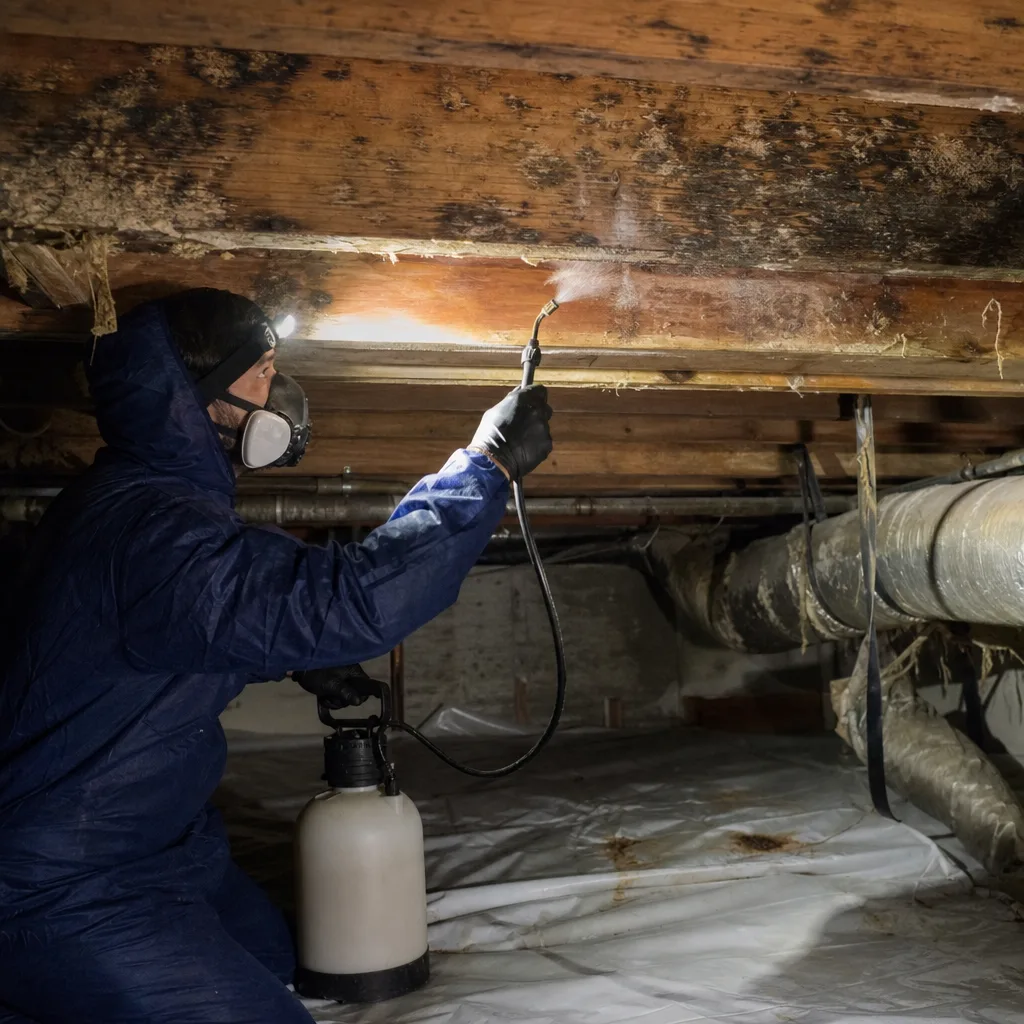
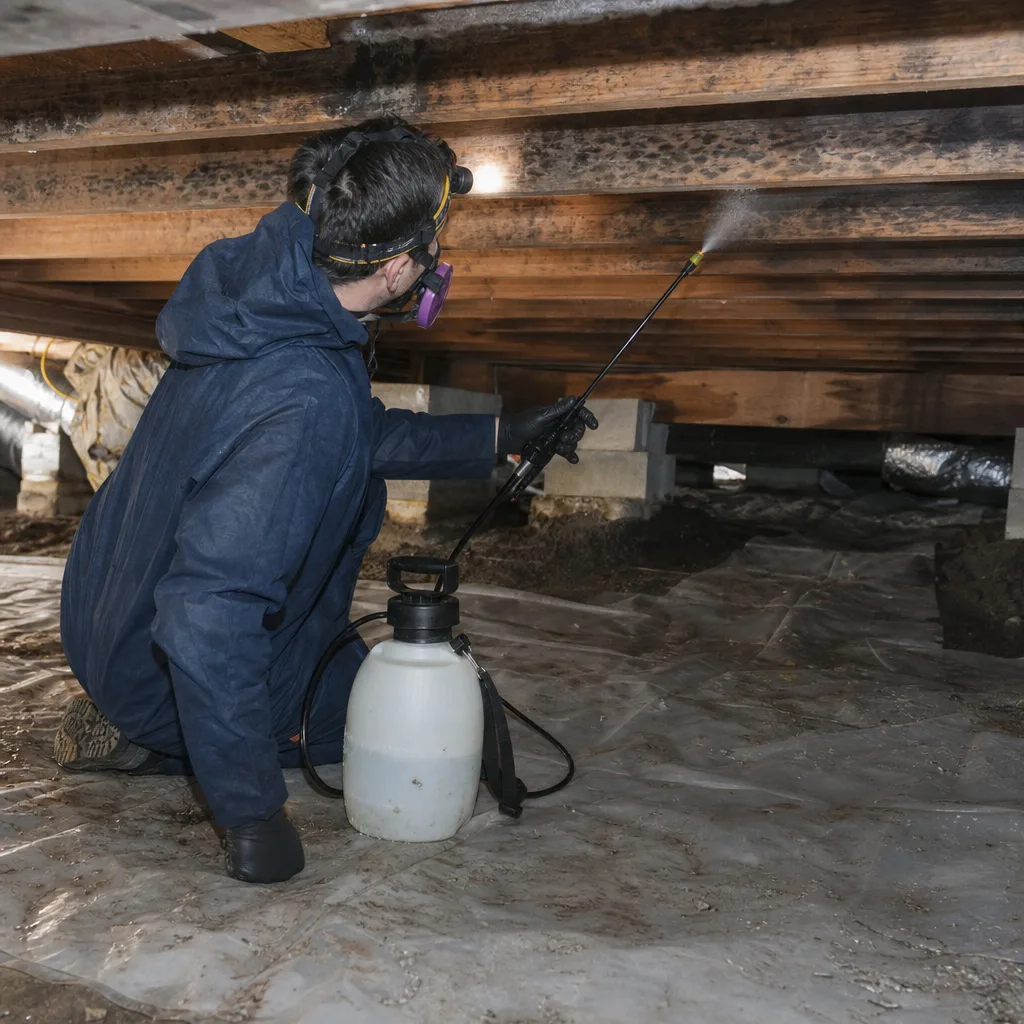
Critical line items that competitors often omit from initial quotes include: post-remediation verification (PRV) testing by an independent hygienist, which runs $400-$700; HEPA air filtration during work; and structural repair of the moisture source that enabled growth. A written scope that ends at “remove mold” without addressing causation invites recurrence.
Mold Remediation in Irvine requires particular attention in older Irvine neighborhoods like University Park and the original Woodbridge village, where 1970s and 1980s construction used paper-faced drywall and limited exterior sealing that modern building science has improved upon.
Fire and Smoke Damage
Fire restoration pricing diverges sharply based on whether the job is structural cleaning (smoke and soot removal from intact surfaces) or reconstruction (demolition and rebuild of burned elements). Structural cleaning in Irvine runs $4,500-$12,000 for a typical single-family home, while reconstruction adds $25,000-$75,000+ depending on affected square footage and finish quality.
Smoke damage is often more extensive than flames. Protein fires from kitchen incidents leave nearly invisible residues that require specialized cleaning agents and thermal fogging. Synthetic smoke from plastic and petroleum products produces acidic residues that etch glass and metal if not treated within hours. The written scope must specify cleaning methodology by material type, not generic “smoke cleaning.”
Fire & Smoke Damage Restoration in Irvine frequently involves coordination with the Irvine Fire Department’s post-incident documentation and the city’s building division for permit triggers on structural repairs.
Storm and Disaster Damage
Storm work in Irvine is less frequent than in inland Orange County but carries unique elements when it occurs. Roof damage from Santa Ana wind events, tree impact from the eucalyptus and sycamore stands in older neighborhoods, and flash flooding from overwhelmed drainage in lower-lying areas near the San Diego Creek channel all require specific response protocols.
Storm pricing is typically emergency-rate for the first 72 hours, with higher labor multipliers for after-hours and holiday deployment. Tarps, board-up, and temporary weatherproofing are separate line items from permanent repair. Documentation for FEMA or SBA disaster loan applications requires additional photo protocols beyond standard insurance documentation.
Irvine-Specific Factors That Move the Price
Restoration costs are not uniform across Orange County. Irvine’s particular conditions affect pricing in measurable ways.
HOA coordination requirements: Most Irvine neighborhoods operate under homeowners associations with specific contractor insurance requirements, work-hour restrictions, and material specifications. DryMark Restoration Irvine carries the general liability and workers compensation coverage that major Irvine HOAs require, but not all competitors do. A contractor who cannot meet HOA requirements may leave the homeowner managing that coordination, or facing fines.
Building age and material variance: Homes built during Irvine’s 1970s-1980s expansion, particularly in Turtle Rock, University Park, and the original Woodbridge, often contain asbestos-containing joint compound or lead-based paint. Testing adds $300-$600 and positive findings trigger Cal-OSHA abatement protocols that multiply demolition costs by 2-3x.
Coastal humidity and drying dynamics: Irvine’s proximity to the Pacific moderates temperature extremes but maintains higher baseline humidity than inland Orange County cities. Psychrometric drying calculations must account for this. A dehumidifier that achieves target conditions in Anaheim may run 20-30% longer in Irvine for the same water loss, directly affecting equipment-day totals.
Permit and inspection timelines: The City of Irvine Building Division requires permits for reconstruction involving structural, electrical, or plumbing work. Permit fees are modest ($200-$600 for typical residential repair) but inspection scheduling can add days to project timelines. A contractor unfamiliar with Irvine’s inspection sequence may promise faster completion than the city allows.
High-value finish requirements: Irvine’s newer construction in Orchard Hills, Shady Canyon, and Quail Hill uses premium materials, custom millwork, and imported fixtures that cannot be matched from standard supplier inventory. Reconstruction scopes must specify like-kind replacement or acknowledge visible mismatch, which affects both material costs and homeowner satisfaction.
Common Mistakes to Avoid
- Signing an estimate without equipment unit counts specified. A scope that says “drying equipment as needed” gives the contractor unlimited billing authority. Insist on initial counts and conditions for additions.
- Assuming insurance covers everything. Read your policy’s water damage and mold provisions. Many Irvine homeowners discover $10,000 sublimits or gradual-leak exclusions only after the loss.
- Delaying the call to document moisture. Even if you plan to handle minor cleanup yourself, a professional moisture reading establishes baseline documentation for potential insurance claims. We provide this at no charge.
- Accepting verbal promises about “working with your insurance.” This phrase often means the contractor will bill your insurance directly, not that they will accept whatever the insurer pays. You remain responsible for uncovered amounts.
- Ignoring the reconstruction scope in the mitigation estimate. Some contractors specialize in mitigation and partner loosely with rebuild crews. The quality and pricing of reconstruction should be knowable before mitigation begins, not an afterthought.
- Failing to verify the moisture source is resolved. A beautiful dry-out means nothing if the leaking pipe or failed flashing is still active. The written scope should include causation identification or a clear statement of limits.
- Choosing by speed of arrival alone. Rapid response matters, but the crew that arrives fastest is not always the crew that documents best. A two-hour delay for a company that produces daily drying logs may save weeks of insurance back-and-forth.
When to Call a Professional
Call for professional assessment when water has affected drywall, insulation, or subflooring; when you smell musty or earthy odors indicating possible mold; when sewage or gray water is involved; when electrical outlets or panels have been wet; or when the water source is unclear and may still be active. In each case, the priority is stopping damage progression and establishing documentation.
DryMark Restoration Irvine offers free estimates in Irvine. A trained technician arrives with moisture detection equipment, documents findings with photographs, and provides a written scope with line-item pricing before any work begins. Call (657) 212-2570 to schedule. Our live dispatch answers 24 hours a day, 7 days a week with no voicemail on emergency lines. Explore more guides & resources on our blog.
Frequently Asked Questions
Most residential water damage mitigation in Irvine costs between $3,200 and $7,800, with the majority of 1,500-2,500 square foot homes falling in the $4,200-$6,400 range. Reconstruction adds $12,000-$35,000 depending on finish quality and affected area. Call (657) 212-2570 for a written estimate specific to your loss.
Sudden and accidental water damage is typically covered under standard California homeowners policies, subject to your deductible and any policy sublimits. Gradual leaks, groundwater intrusion, and sewer backup without specific rider coverage are frequently excluded. We document every loss to insurance standards and coordinate directly with adjusters to maximize covered amounts. Call (657) 212-2570 to discuss your specific policy situation.
A fair estimate specifies equipment counts and daily rates, demolition linear footage, material specifications for reconstruction, and conditions for supplemental authorization. It is delivered in writing before work begins. We offer a Free Second Opinion on any competitor’s written estimate at no charge.
Extraction removes standing water in hours. Drying removes bound water from structural materials over days, requiring continuous operation of air movers, dehumidifiers, and monitoring equipment. In an 1,800 square foot Irvine home, equipment rental often represents 40-55% of the mitigation total because of the multi-day drying requirement.
Typical residential drying takes 3-5 days in Irvine’s coastal climate, with 5-7 days for Category 2 losses or homes with dense structural materials. Daily moisture readings should show progressive decline; if readings plateau, equipment configuration should change. Our daily logs document this progression to IICRC standards.
The Haven Standard is DryMark Restoration Irvine’s operating protocol, established when Alicia Brennan founded the company in 2011. Clause 1 requires a written price before any work starts. The 365-Day Done Right Promise guarantees that if work is not done right, we make it right. Every job receives a documented photo record on every visit. These are not marketing claims; they are contractual commitments signed on every job.
The Bottom Line
Restoration pricing is not a black box. It is a stack of knowable line items, each with its own unit cost, quantity, and verification method. The homeowner who understands equipment-day calculations, insurance pricing structures, and written scope protections can read an estimate critically, ask informed questions, and avoid the supplemental billing and scope creep that inflate costs without adding value. In Irvine’s specific market, coastal humidity, HOA requirements, and high-value finishes add further variables that competent contractors address explicitly. The documentation-first approach, backed by a written price before work begins and daily moisture logs throughout, is what turns a restoration invoice into a claim that processes without dispute.
Written by Alicia Brennan, Owner at DryMark Restoration Irvine, serving Irvine since 2011.