
Last updated September 23, 2026
Free visual inspection and a written scope of work before any mitigation begins - photos, moisture readings, and drying logs go in your claim file
The scope we write is the scope we bill. Anything new gets shown to you, in writing, before we touch it.
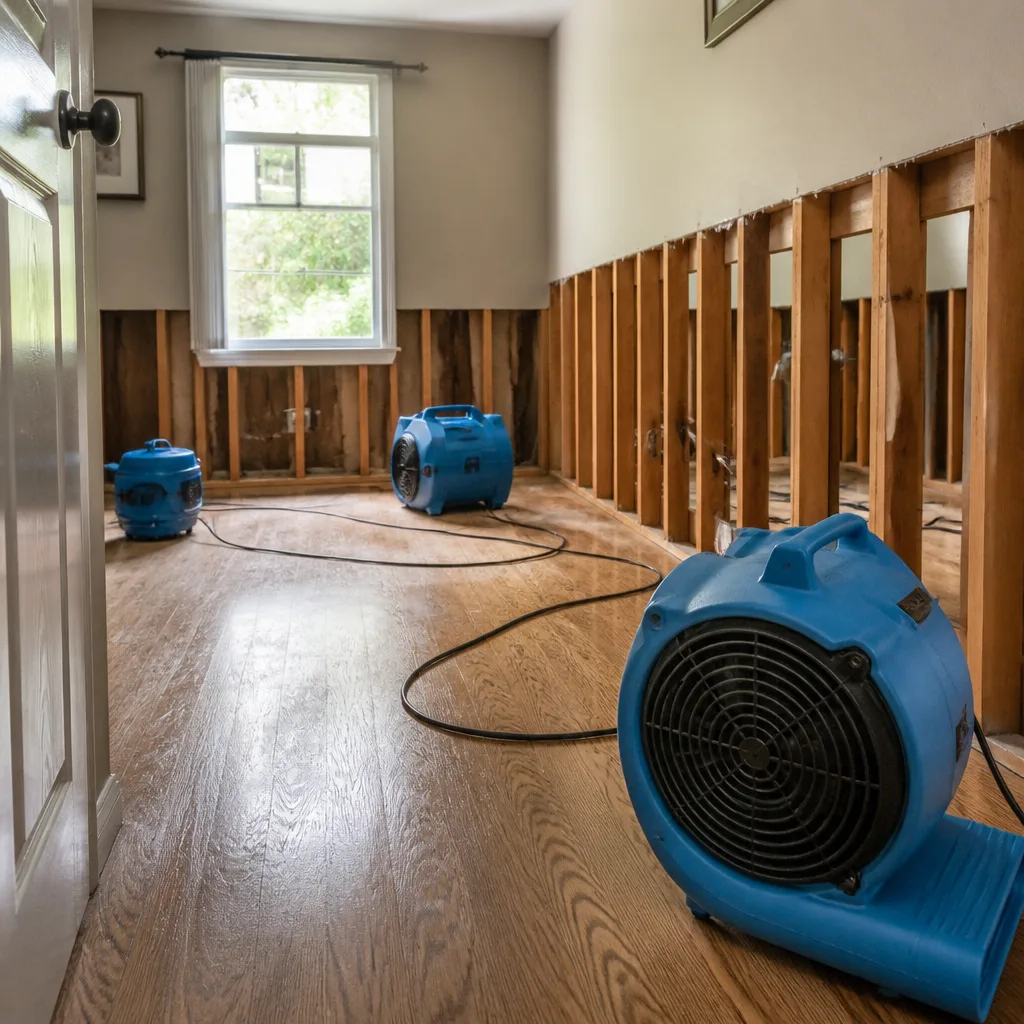
 Before
 After
After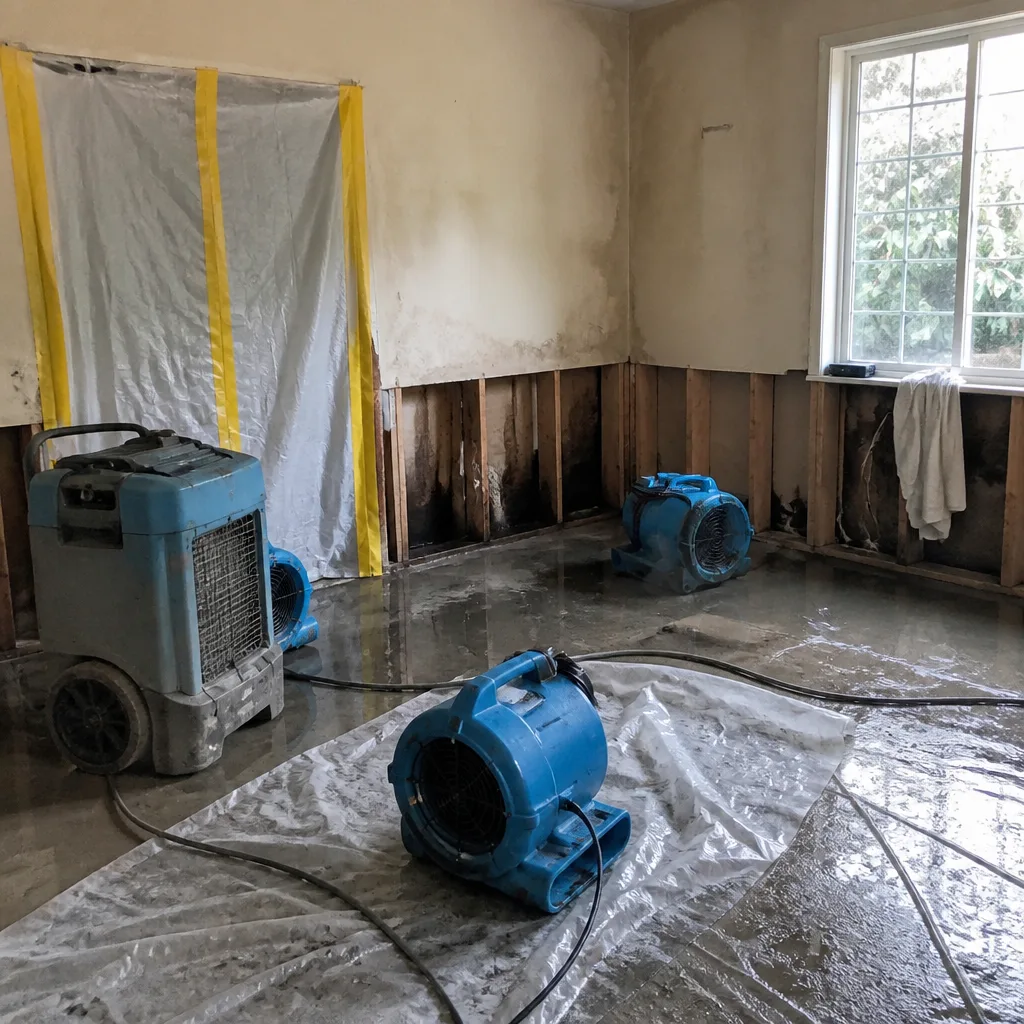 Before
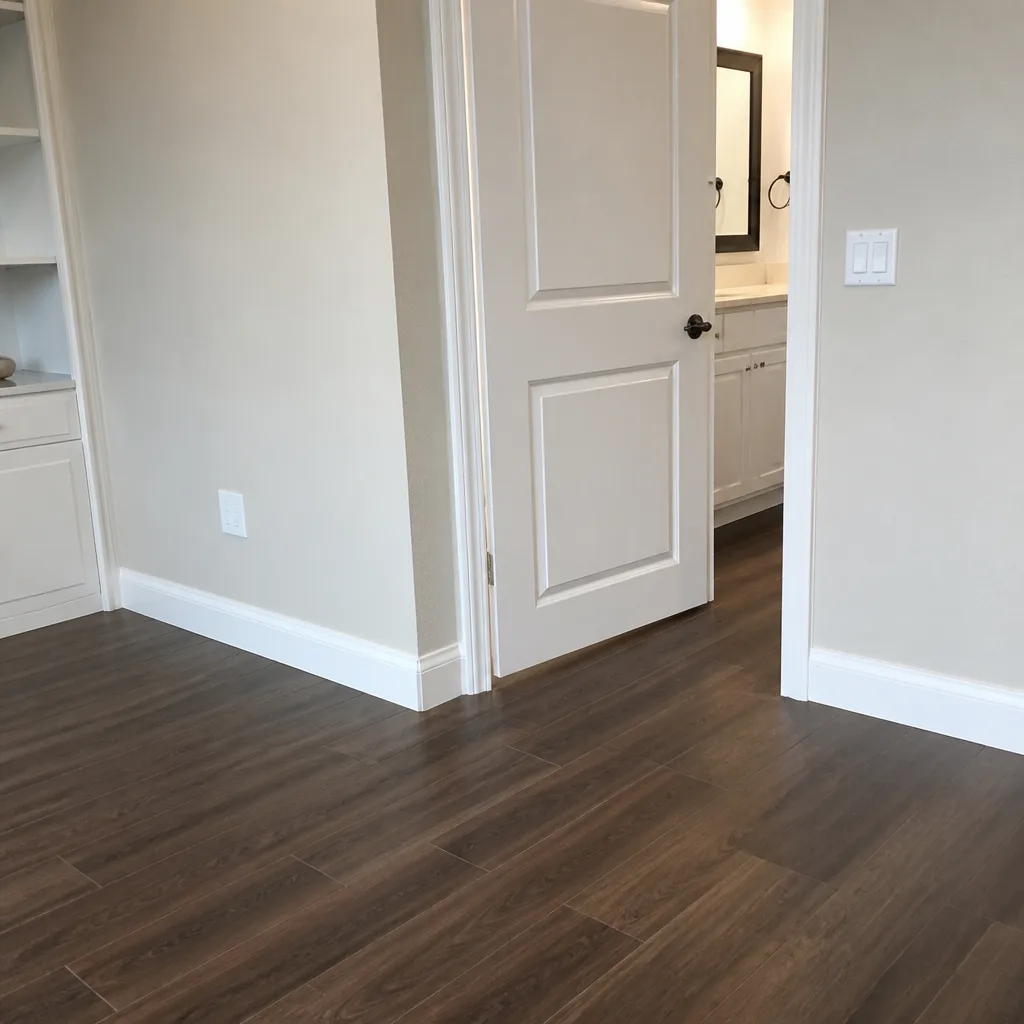 After
After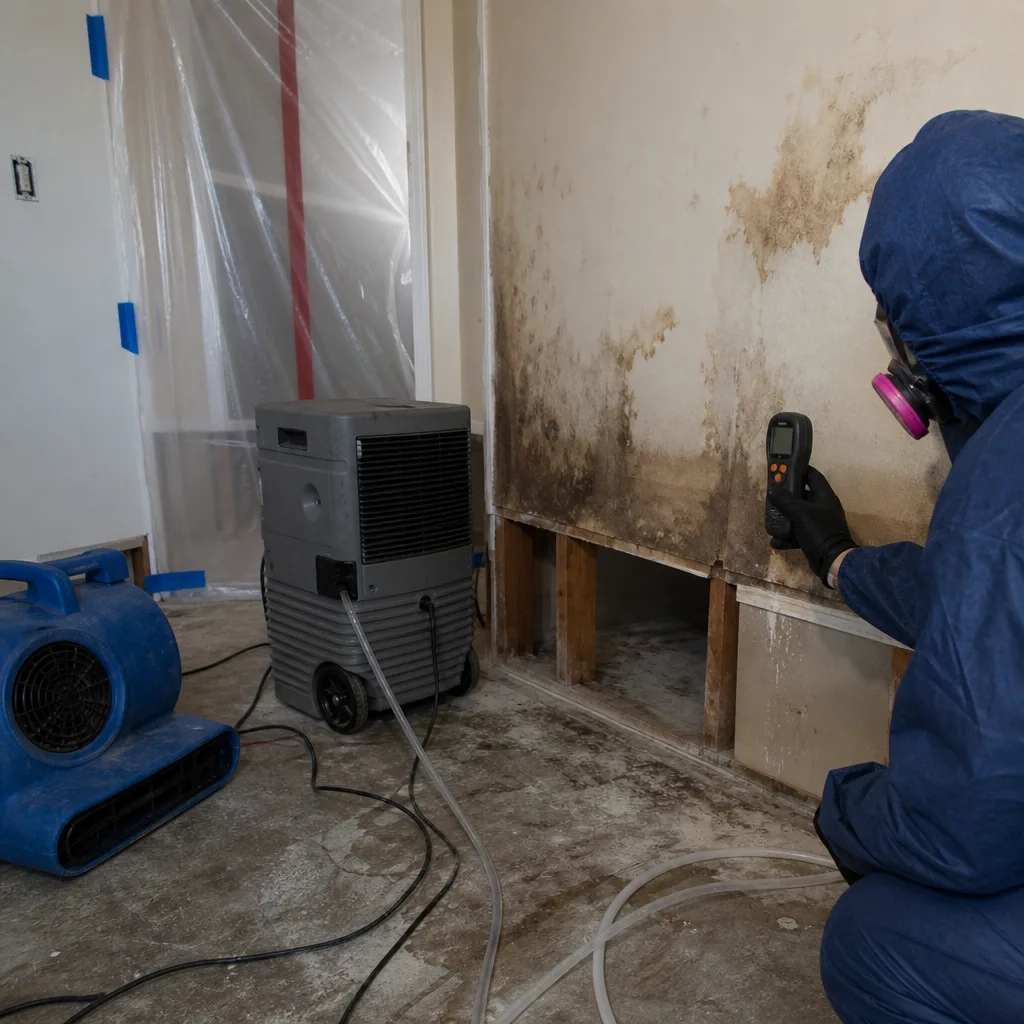 Before
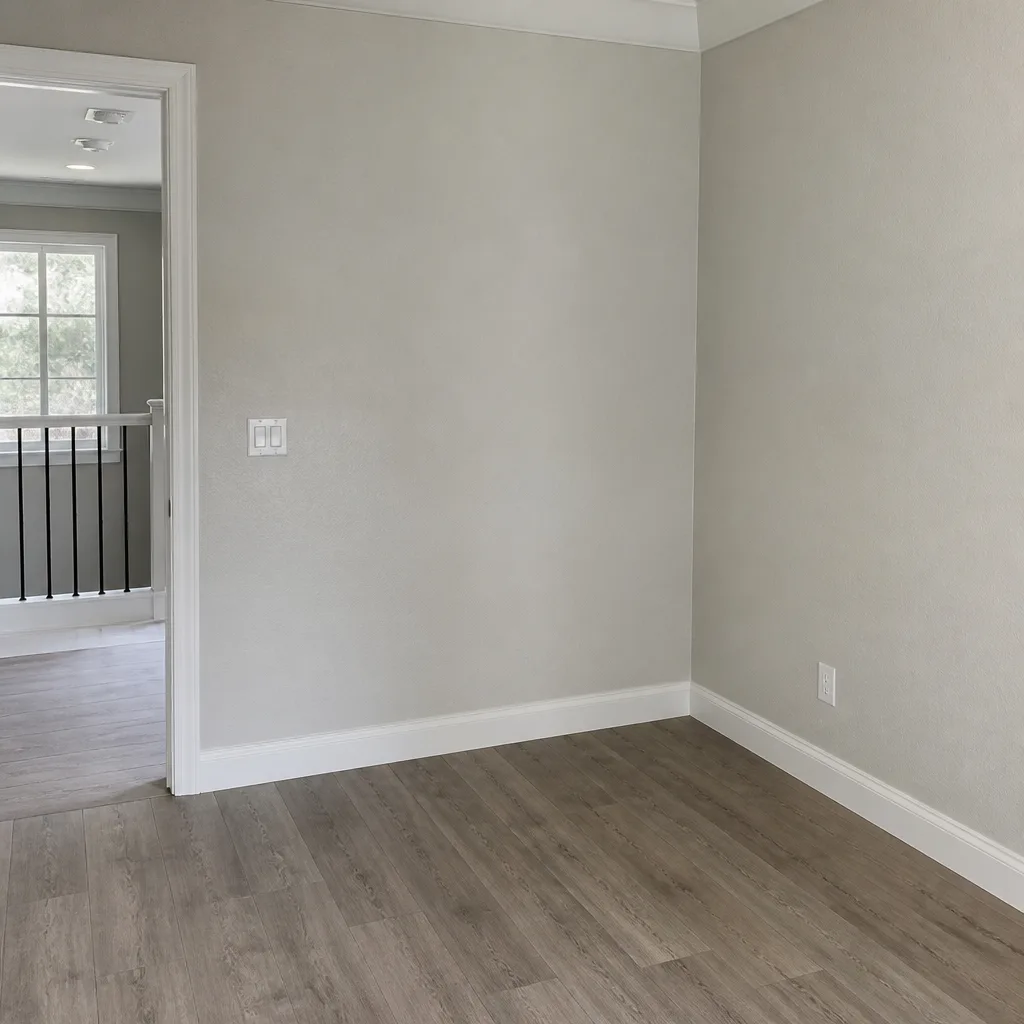 After
AfterThe Complete Guide to Damage Restoration in Irvine
The average disputed water damage claim in California takes 47 days longer to settle than an undisputed one - and the difference almost always comes down to whether daily moisture logs exist, not whether the drying actually happened. In Irvine, where slab-on-grade construction dominates newer neighborhoods and Santa Ana wind events can reintroduce moisture weeks after initial cleanup, the gap between “dry enough to paint” and “dry enough to document” costs homeowners thousands in out-of-pocket repairs. This guide explains what the damage restoration process actually involves in Irvine, what documentation determines whether your insurer pays in full, and how to read a restoration file the way a claims adjuster does - and for more guides & resources, visit our blog.
Quick Answer
Damage restoration in Irvine follows a five-phase process: emergency mitigation to stop active loss, structural drying with documented moisture readings, remediation of unsalvageable materials, reconstruction of finished surfaces, and final documentation for insurance submission. In Irvine’s climate, full mitigation and drying typically takes 3-5 days for water damage, with reconstruction adding 1-3 weeks depending on material availability and HOA approval timelines. The critical factor determining insurance payment is not the quality of drying but the quality of documentation - daily drying logs, photo records, and written scopes that prove each phase was necessary and complete.
Table of Contents
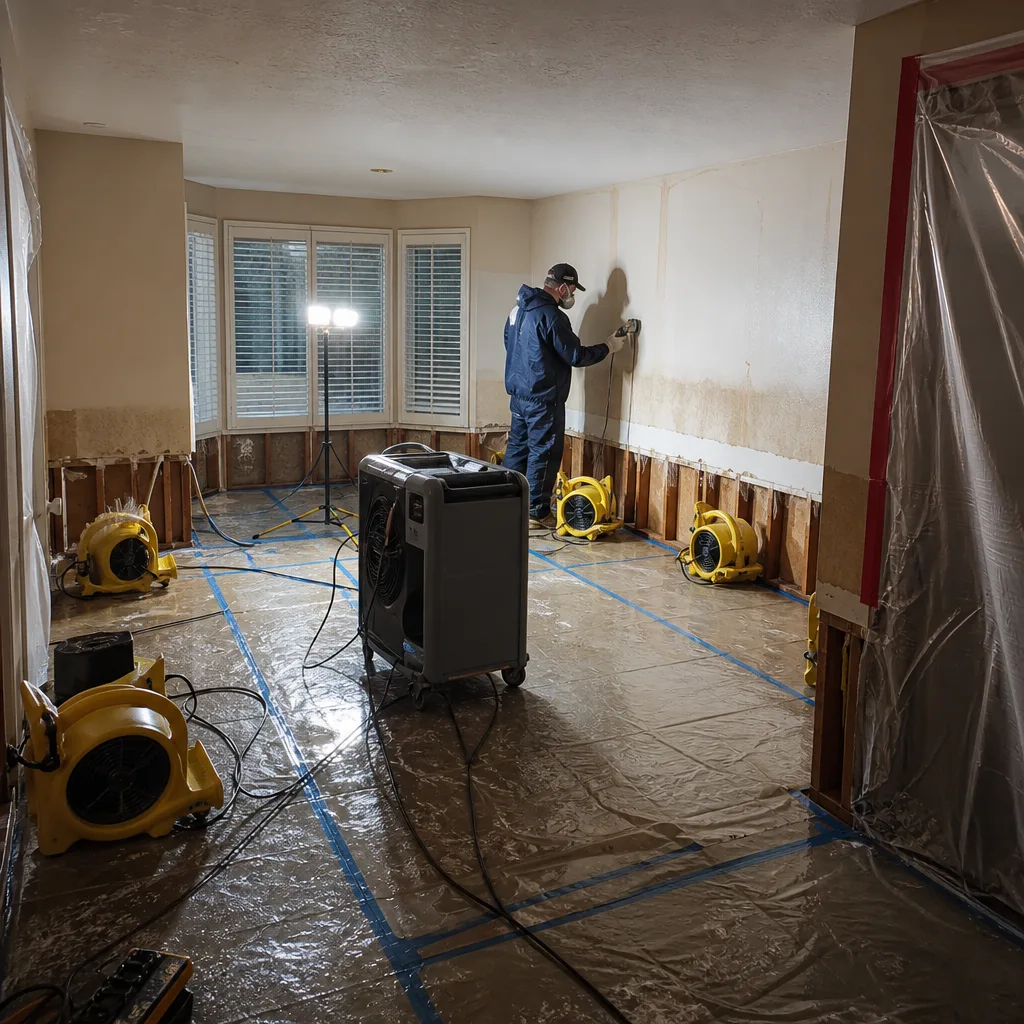
- How Irvine’s Slab-on-Grade Construction Changes Moisture Behavior
- The Five Phases of Damage Restoration
- The Four Documents That Determine Your Insurance Outcome
- Mitigation vs. Remediation: Why Confusing Them Triggers Denials
- Santa Ana Wind Events and Secondary Damage Windows
- What Your File Looks Like to a Claims Adjuster
- Costs and Timeline in the Irvine Market
- Choosing a Restoration Company in Irvine
 Before
 After
AfterHow Irvine’s Slab-on-Grade Construction Changes Moisture Behavior
Most homes built in Irvine after 1985 sit on concrete slabs poured directly at grade level, with no crawl space or basement to absorb and release moisture. This changes everything about how water moves, where it hides, and what proves it’s gone.
In a two-story framed home with a crawl space, water that escapes from a second-floor supply line travels down through wall cavities, pools in the subfloor, and often drains toward perimeter foundations where it can be detected and extracted. In Irvine’s slab construction, that same leak hits the concrete slab and spreads laterally, wicking into drywall through capillary action and creating a moisture front that can extend 8-12 feet from the visible damage before it becomes apparent on the surface.
We’ve measured this repeatedly in Orchard Hills and Northwood homes where a kitchen leak produced readings above 16% moisture content in baseboards three rooms away, with no visible staining. The slab acts as a reservoir, not a drain. Standard surface drying - fans pointed at wet carpet - leaves the slab saturated, and when flooring goes back down, the trapped moisture creates the exact conditions for mold growth that triggers a second claim six months later.
What should appear in your drying log to prove full recovery:
- Concrete slab moisture readings below 4% using a calcium chloride test or in-situ relative humidity probe, not just surface meter readings
- Wood framing moisture content at or below 16% - the equilibrium moisture content for coastal Southern California
- Vapor pressure differential readings showing the slab is releasing, not absorbing, atmospheric moisture
- Tertiary drying phase documentation: after primary extraction and secondary dehumidification, a third phase using heat-directed drying or negative air pressure to pull bound moisture from dense materials
Tertiary drying is the phase most restoration companies skip. It’s labor-intensive and extends the job by 24-48 hours. But it’s also the phase that produces the documentation - the declining moisture curve over 72+ hours - that proves to an adjuster that drying was complete, not merely declared complete. Without it, insurers routinely apply “inherent vice” exclusions, claiming the damage resulted from long-term maintenance failure rather than a sudden, covered event.
In Portola Springs and Great Park neighborhoods, where newer slabs incorporate post-tensioned cables, moisture detection becomes more complex. Standard pin meters can strike cables, producing false readings or safety hazards. Your restoration company should document that they used non-invasive scanning or ground-penetrating radar to map cable locations before probing. This belongs in your written scope, not as a verbal assurance.
The Five Phases of Damage Restoration
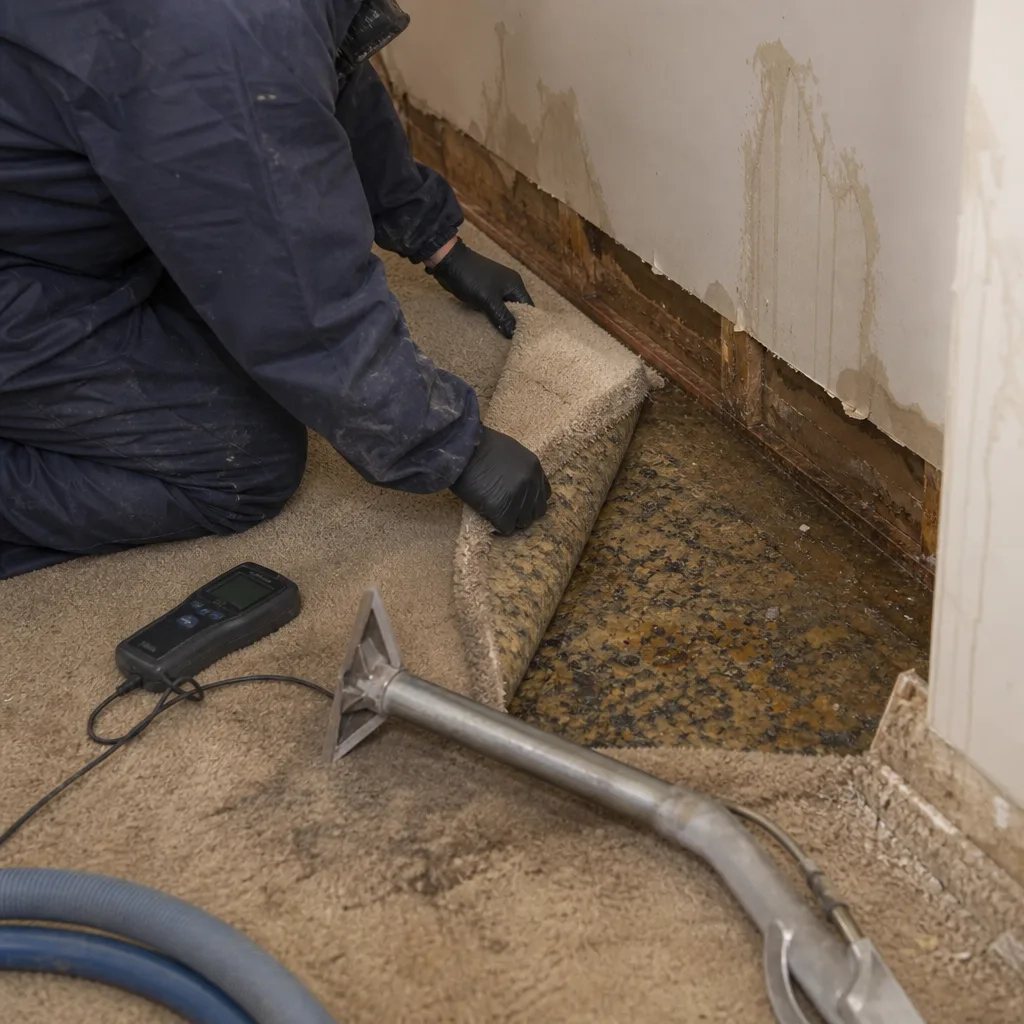
The water damage restoration process in Irvine follows a sequence that IICRC S500 standards define clearly, but that many contractors execute poorly or document incompletely. Each phase must be scoped in writing before it begins, with a separate line-item price, per Haven Standard, Clause 1.
Phase 1: Emergency Mitigation (Hours 0-24)
Mitigation stops the loss from expanding. This means source containment, extraction of standing water, and establishment of a drying environment. In Irvine, where many homes have polybutylene supply lines (common in 1985-1995 construction) or aging angle stops, the source itself may need plumber coordination before extraction can begin.
What mitigation includes:
- Water source stop or plumber-assisted shutoff, documented with timestamp
- Extraction using truck-mounted or portable extraction systems - we deploy Dri-Eaz and Phoenix systems rated for Category 1, 2, or 3 water classification
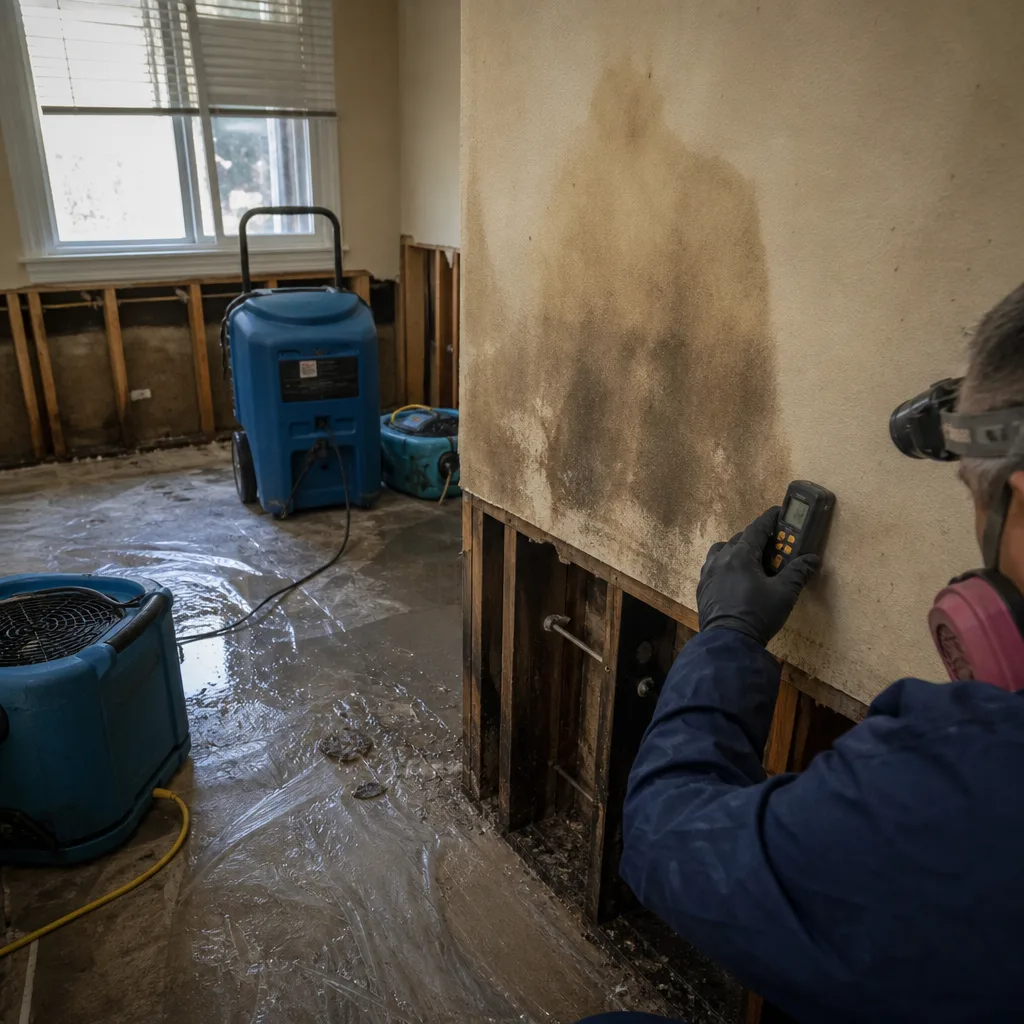
- Initial moisture mapping with thermal imaging and penetrating meters, producing a room-by-room grid of readings
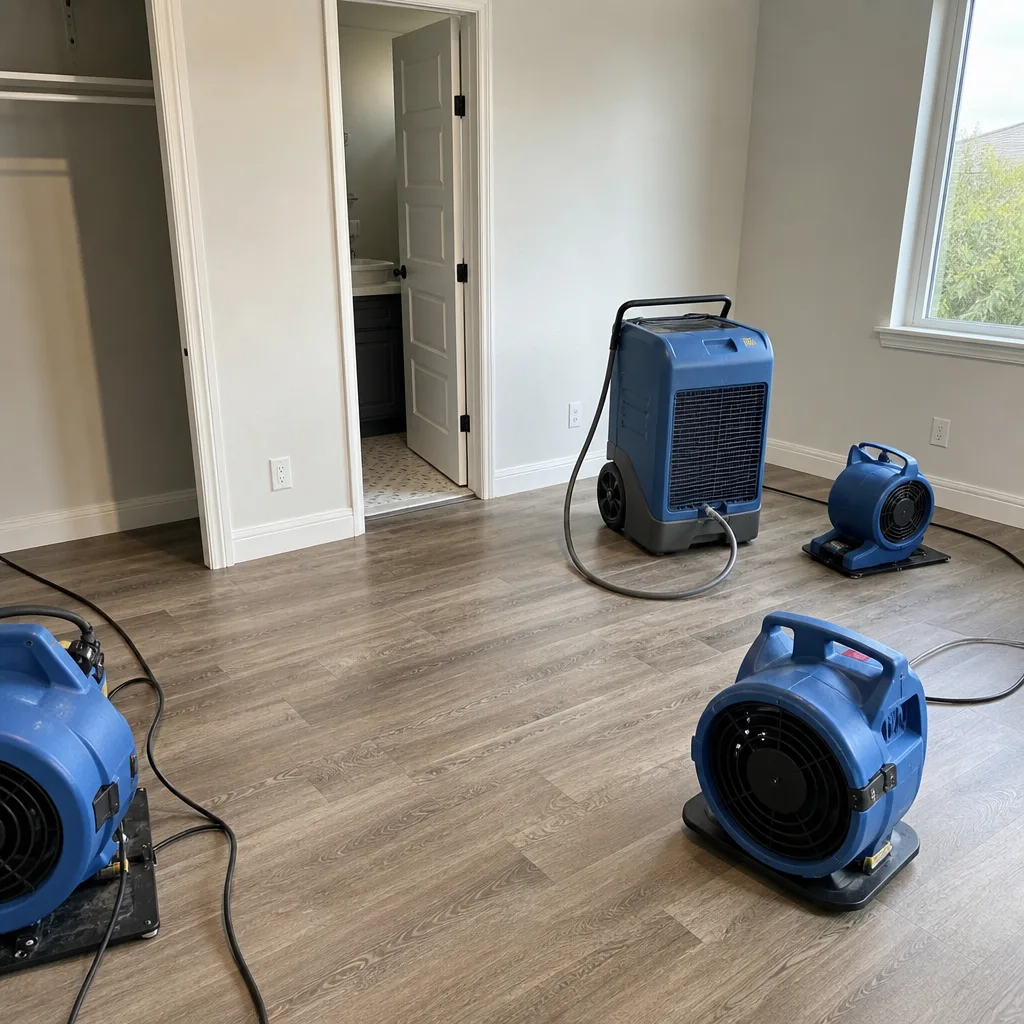
- Placement of air movers and dehumidifiers sized to the affected cubic footage, not the square footage
- Containment barriers if Category 2 or 3 water has crossed into unaffected areas
The initial moisture map is your baseline. Every subsequent reading references this document. If your restoration company cannot produce it on request, they cannot prove drying progress, and your adjuster knows this.
Phase 2: Structural Drying (Days 1-5)
This is where documentation separates professional restoration from carpet cleaning with extra equipment. Drying requires daily monitoring - psychrometric data recording temperature, relative humidity, and specific humidity at multiple points - to prove the environment is progressively removing moisture from materials, not just circulating air.
Psychrometric data sounds technical, but it’s simple: it’s the measurement of how much water the air can hold and whether it’s actually pulling water from wet materials. If relative humidity in the drying chamber stays above 60%, materials won’t release moisture regardless of how many fans are running. Your daily log should show declining humidity and declining material moisture content in parallel.
Equipment in this phase typically includes LGR (low-grain refrigerant) dehumidifiers from Phoenix or Dri-Eaz, axial air movers from XPOWER or B-Air, and specialized drying systems like Injectidry floor mats or wall-cavity injection for hardwood and plaster. Each piece should appear on your equipment list with serial numbers - this proves to adjusters that professional-grade systems were used, not rental-store fans.
Phase 3: Remediation of Unsalvageable Materials
Not everything dries. Category 3 water (sewage or ground water) requires removal of porous materials per IICRC standards. Even Category 1 or 2 losses may destroy MDF baseboards, laminate flooring, or insulation that has lost structural integrity.
Remediation requires a written scope specifying:
- Exact square footage and material type to be removed
- Disposal classification and documentation for hazardous materials
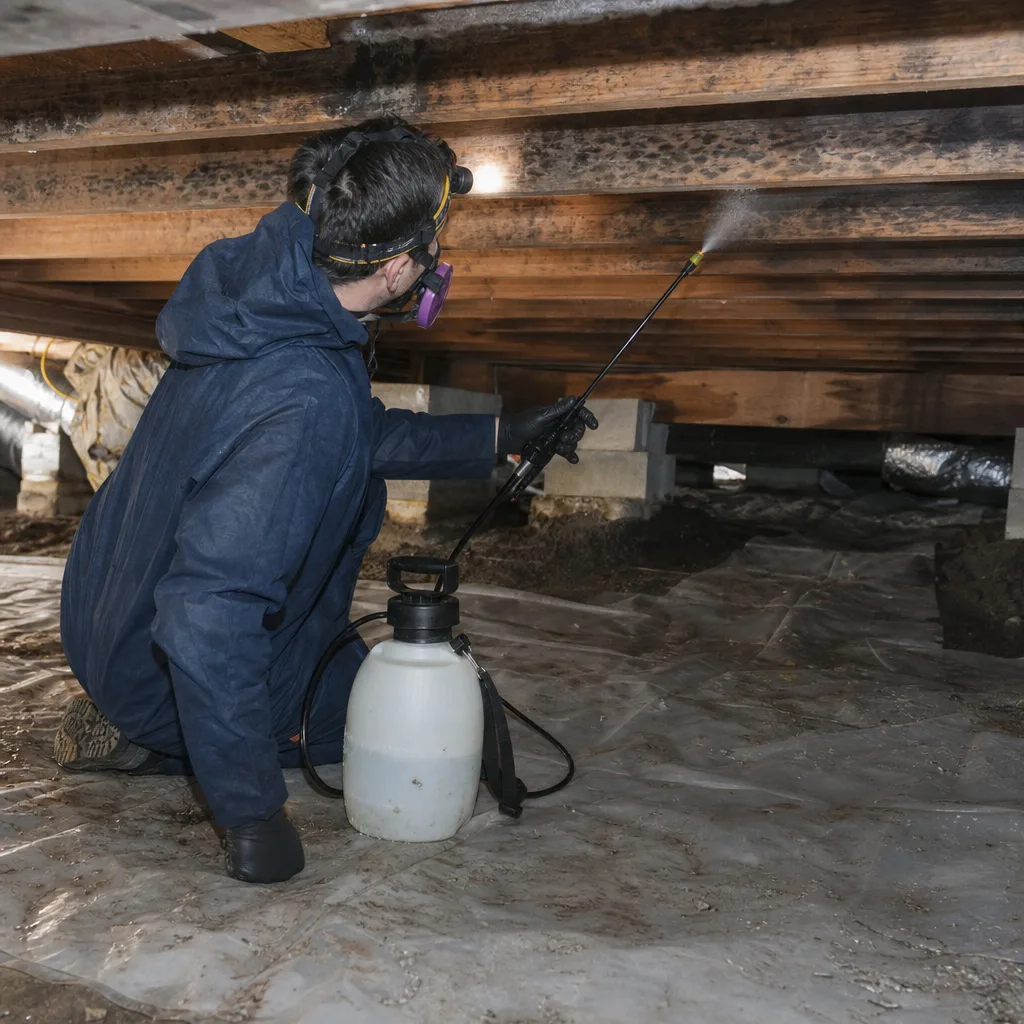
- Antimicrobial treatment of remaining structural elements, with product SDS sheets
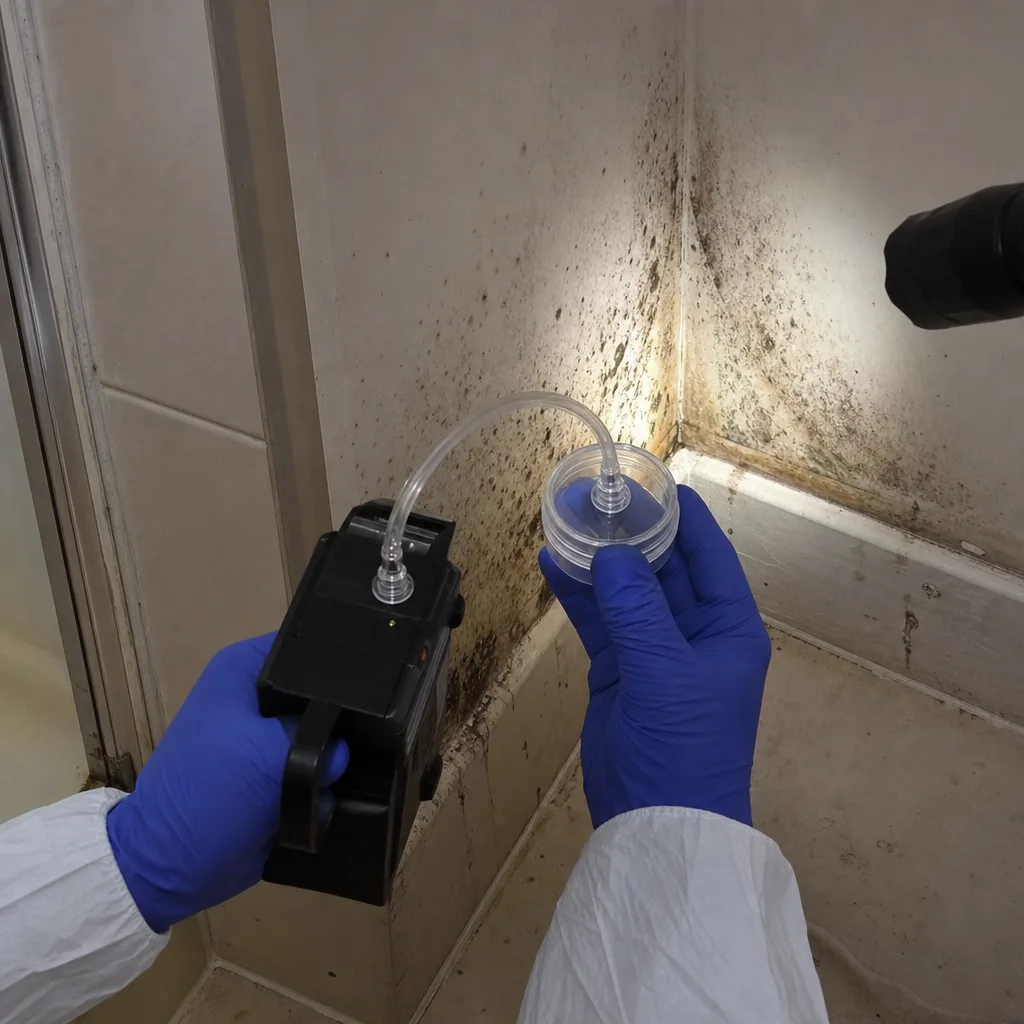
- Post-remediation verification testing, typically air sampling or ERMI/HERSTMI-2 dust analysis for mold-sensitive environments
In mold remediation specifically, Irvine’s mild winters mean homes rarely achieve the deep drying that cold climates provide. Mold can remain active in wall cavities at 60°F and 70% relative humidity - conditions common in Irvine’s shaded north-facing rooms from November through March. Remediation without post-verification is incomplete remediation, and adjusters increasingly reject invoices that lack it.
Phase 4: Reconstruction
Reconstruction restores finished surfaces to pre-loss condition. This is not emergency work. It is scheduled, scoped, and priced in writing like any remodeling project. No same-day dispatch applies. No urgency language belongs here.
In Irvine, reconstruction often involves HOA architectural review, especially for exterior finishes, window replacements, or roofing. Your restoration company should coordinate permit applications and HOA submissions as part of their scope, or explicitly document that these are homeowner responsibilities - see Damage Restoration Permits, Codes & Inspections in CA: What You Need to Know for details. Ambiguity here produces delays that insurers may not cover - “additional living expense” coverage typically runs 12-24 months from the loss date, and HOA review can consume 2-4 months of that timeline.
Phase 5: Documentation and Claim Submission
The final phase assembles the file that determines payment. This includes the initial scope, all daily drying logs, the complete photo record, equipment logs, remediation verification, reconstruction invoices, and a certificate of completion stating that work was performed to IICRC standards and the space is ready for reoccupancy.
The Four Documents That Determine Your Insurance Outcome
Most homeowners assume their insurer pays for drying that happened. Adjusters pay for drying that was documented. These four documents are the difference.
1. Written Scope (Protects You From: Scope Creep and Post-Work Billing)
Haven Standard, Clause 1: a written price before work begins, every time, with no exceptions. The written scope is this price, itemized by phase, with quantities, unit costs, and total. It should specify what is included, what is excluded, and what conditions would trigger change orders. In our experience, the most common post-work disputes arise not from fraud but from ambiguity - “repair bathroom” means different things to different people.
A proper scope for an Irvine water loss might read: “Mitigation: Extract standing water from 340 sq ft living area and 120 sq ft hallway; deploy 4 LGR dehumidifiers and 12 air movers; daily monitoring for 3-5 days. Remediation: Remove and dispose 48 linear feet MDF baseboard; 12 sq ft drywall 2′ above floor line; treat exposed framing with antimicrobial. Reconstruction: Not included; separate scope upon completion of drying.” Each line has a price. Nothing is implied.
2. Daily Drying Logs (Protects You From: Inherent Vice Denials)
These logs prove the loss was sudden and that drying was pursued diligently. Each log should record: date and time of visit, technician name and license number, equipment operating and readings, moisture measurements at established monitoring points, psychrometric data, and any adjustments to the drying plan. A 5-day dry should produce 5 logs minimum, often 7-10 if monitoring frequency increased.
The log protects against the insurer’s claim that damage resulted from long-term leakage. If your logs show drywall at 85% moisture content on Day 1, declining to 12% by Day 4, that’s sudden damage. If they show 35% on Day 1 with no decline, that’s a maintenance issue - and your claim is denied.
3. Photo Record (Protects You From: Dispute Over Pre-Existing Conditions)
Every visit, every phase, every material condition - documented with timestamps and geolocation. The photo record should include: source of loss, extent of visible damage, moisture meter readings with serial numbers visible, equipment placement, demolition boundaries, and post-completion condition. In Irvine’s competitive real estate market, where homes sell with disclosure requirements, this record also protects future sale value by proving professional remediation.
We deliver this as a standard deliverable, never an upsell. If your restoration company treats photos as optional, they do not understand what an adjuster requires.
4. Certificate of Completion (Protects You From: Reopened Claims)
This document states that work was completed per IICRC standards, that the space is safe for reoccupancy, and that the restoration company warrants their work. Our certificate includes the 365-Day Done Right Promise - if it’s not done right, we make it right - backed by The Haven Standard, not a verbal assurance. This gives your insurer a responsible party if mold recurs or odors develop, reducing their incentive to dispute the original payment.
Mitigation vs. Remediation: Why Confusing Them Triggers Denials
California insurance policies distinguish between mitigation - emergency measures to stop further loss - and remediation - removal and treatment of damaged materials. These carry different coverage limits, different deductibles, and different documentation requirements. When a restoration invoice lumps them together as “water damage restoration,” adjusters routinely apply the lower mitigation limit to the entire bill.
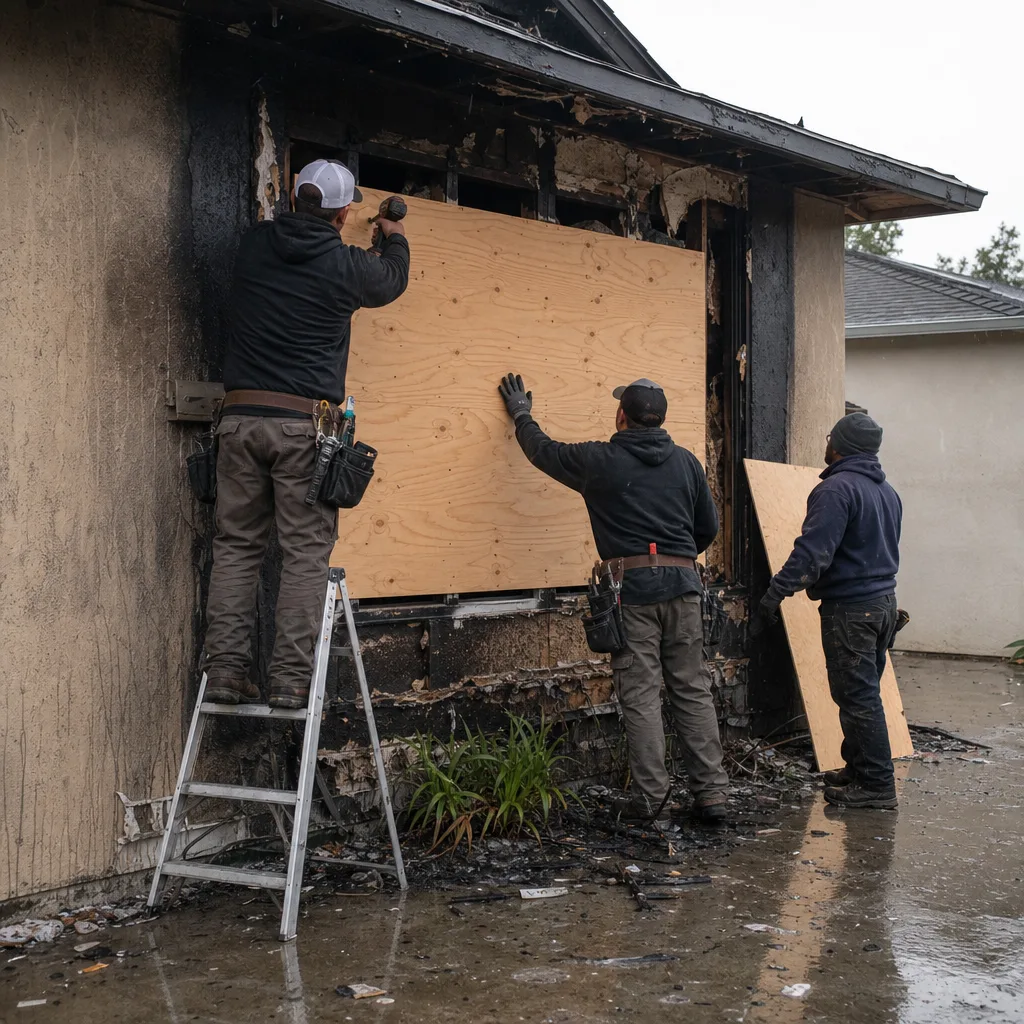
The distinction matters in practice. Mitigation is: extraction, initial drying setup, and emergency tarping or board-up. It is time-sensitive, unscheduled, and typically covered at 100% after deductible. Remediation is: demolition, antimicrobial treatment, content cleaning, and disposal. It requires scope approval and may be subject to depreciation or limits.
In fire and smoke restoration, the distinction is even sharper. Mitigation includes emergency board-up and soot stabilization; remediation includes structural cleaning, odor removal, and content restoration. Reconstruction is a third category entirely. An invoice that reads “fire damage restoration: $47,500” without phase separation invites a request for itemization that delays payment 30-60 days.
We separate these explicitly in every scope, with separate line-item prices. This is not administrative preference; it is how claims get paid without negotiation.
Santa Ana Wind Events and Secondary Damage Windows
Irvine’s location in the Santa Ana wind corridor creates a restoration challenge that coastal California cities don’t face: the same dry, hot winds that make October through January pleasant can reintroduce moisture into structures that appeared fully dried, as covered in our guide to Damage Restoration Warning Signs: A Irvine Homeowner’s Reference Guide.
Here’s the mechanism. Santa Ana winds drop relative humidity to 10-15% and drive temperatures above 90°F even in December. This accelerates surface drying dramatically, often producing moisture meter readings that suggest completion 24-48 hours earlier than actual equilibrium. When the wind event ends - typically 2-3 days - normal onshore flow returns, humidity rebounds to 60-70%, and the incompletely dried structure begins reabsorbing moisture from the air. Materials that read “dry” on Wednesday show elevated moisture by Saturday.
This creates what we call a secondary damage window: a period 7-14 days after apparent drying completion when mold risk actually increases. In our work across Turtle Rock and University Park, we’ve documented cases where hardwood flooring was reinstalled after “successful” drying, only to buckle two weeks later when the subfloor, still at 18% moisture content, equalized with the now-humid environment.
Proper documentation addresses this with:
- Extended monitoring through at least one full weather cycle after equipment removal
- In-situ probes left in slab or subfloor for 72-hour post-drying verification
- Written recommendation for re-inspection if Santa Ana conditions occurred during drying
Your certificate of completion should note whether drying occurred during Santa Ana conditions and whether extended verification was performed. Without this notation, an adjuster may classify subsequent mold as a new, uninsured event.
What Your File Looks Like to a Claims Adjuster
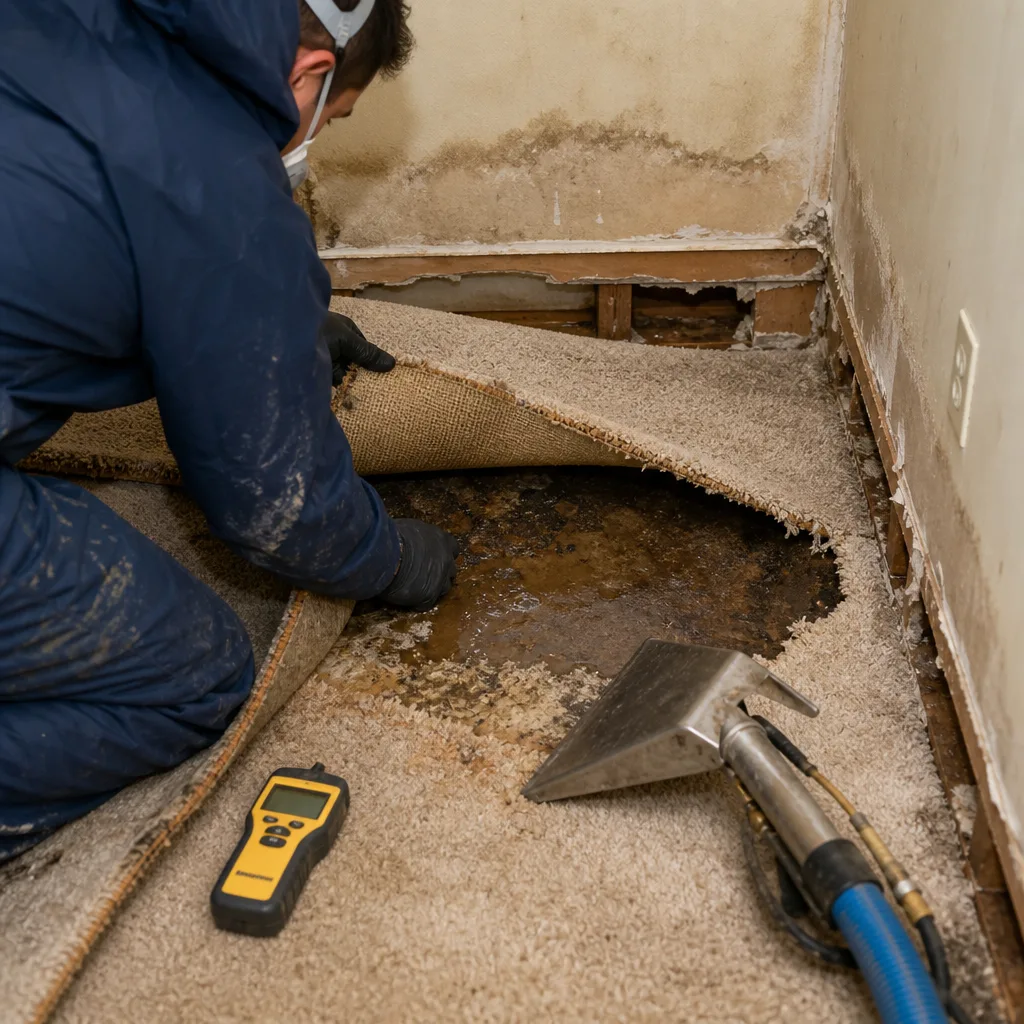
Before founding DryMark Restoration Irvine, Alicia Brennan spent years reviewing restoration invoices from the adjuster’s side of the desk. The difference between files that paid in 10 days and files that paid in 57 days was rarely the extent of damage. It was the organization of documentation.
A legitimate restoration file contains:
- First Notice of Loss with date, time, and cause - documented, not assumed
- Emergency scope with line-item pricing, signed by homeowner before work begins
- Daily drying logs with psychrometric data, moisture readings, and technician identification
- Photo record with timestamps, showing progressive condition
- Change orders with homeowner approval for any deviation from original scope
- Remediation verification (clearance testing) where mold or Category 3 water was involved
- Reconstruction scope as separate document with its own pricing and timeline
- Certificate of completion with warranty terms
- Direct adjuster coordination with photo documentation shared proactively, not upon request
What most restoration invoices actually contain: a single-page summary with a lump-sum total, a brief equipment list, and a note that “drying was successful.” The adjuster receiving this must request itemization, wait for response, compare to comparable estimates, and often engage a third-party reviewer. Each step adds days.
We built our documentation system around eliminating these requests before they happen. Daily logs upload to a shared file that adjusters access directly. Photo records are organized by room and date. Scopes reference IICRC standards by section number. The result is payment without negotiation - which, for a homeowner paying additional living expenses out of pocket, means thousands in avoided hotel and rental costs.
Costs and Timeline in the Irvine Market
Restoration pricing in Irvine reflects Southern California labor rates, material costs, and the documentation standard required for clean insurance submission - see our Damage Restoration Cost Breakdown: The Irvine Homeowner’s Reference for 2026 for detailed ranges. These ranges represent what we observe in our market; your specific loss requires a written scope per Haven Standard, Clause 1.
Water Damage Mitigation (Irvine market, 2024-2025):
- Emergency extraction and setup: $1,200-$2,800 depending on affected area and water category
- Structural drying (3-5 day standard): $150-$250 per day per dehumidifier; $35-$50 per day per air mover
- Typical residential drying setup: $2,800-$5,500 total for mitigation phase
- Category 3 (sewage) losses: 40-60% premium for PPE, disposal, and antimicrobial treatment
Remediation:
- Drywall removal and disposal: $3.50-$5.50 per square foot including containment
- Hardwood floor removal: $4.00-$7.00 per square foot
- Antimicrobial treatment: $1.50-$3.00 per square foot of treated surface
- Post-remediation air quality testing: $400-$800 for standard panel; $1,200-$2,500 for ERMI/HERSTMI-2
Reconstruction:
- Drywall installation and finish: $4.50-$8.00 per square foot
- Hardwood installation (engineered, floating): $12-$18 per square foot
- Tile installation: $15-$28 per square foot depending on material and pattern
- Baseboard and trim: $6-$12 per linear foot
Timeline expectations: Mitigation begins same day for emergency losses. Drying typically completes in 3-5 days for Category 1-2 water in standard residential construction. Category 3, extensive mold, or losses affecting multiple floors extend to 7-14 days. Reconstruction requires separate scheduling, typically 2-6 weeks after mitigation completion, with HOA review potentially adding 2-4 weeks in Irvine’s master-planned communities.
We provide a Free Second Opinion on any competitor’s written estimate - bring their scope and we’ll review it at no charge, identifying documentation gaps or pricing anomalies that could affect your claim.
Choosing a Restoration Company in Irvine
The selection criteria that matter for insurance outcomes are not the ones most homeowners evaluate first. Response time matters for mitigation, but documentation quality matters for payment. Equipment brand matters for drying efficiency, but technician licensing matters for claim validity.
Questions to ask any restoration company before signing:
- Will you provide a written scope with line-item pricing before work begins? (If the answer involves “we’ll assess and then quote,” this violates Haven Standard, Clause 1 and exposes you to open-ended billing.)
- Who will perform daily monitoring, and what does the log include? (Should specify: technician name, license number, moisture readings at established points, psychrometric data, equipment adjustments.)
- What photo documentation do you provide, and how is it organized? (Should answer: every visit, timestamped, by room, delivered as standard not upsell.)
- How do you handle adjuster communication? (Should answer: proactive sharing, direct coordination, not reactive response to requests.)
- What warranty backs your work? (Should be written, specific, and assignable - not “call us if you have issues.”)
In Irvine specifically, verify that the company understands local conditions: slab-on-grade moisture behavior, Santa Ana wind drying effects, HOA reconstruction requirements, and the documentation standards that California insurers apply. A company that advertises “serving Orange County” without specifying Irvine experience may not understand these factors.
Our technicians are background-checked, uniformed, and licensed, with license numbers provided on request. Equipment includes professional-grade drying systems from Dri-Eaz, Phoenix, and XPOWER, documented to IICRC, RIA, and IFA standards. Live person answers every call, 24 hours a day, 7 days a week - no voicemail trees, no next-business-day callbacks while water is still moving.
Common Mistakes to Avoid
- Waiting for insurance approval before calling restoration. Most policies require “reasonable and necessary” mitigation; delays that allow mold growth or structural damage may be partially denied as failure to mitigate. Call immediately, document everything, sort coverage later.
- Accepting a verbal estimate. Without a written scope, you have no basis to dispute additional charges or prove to your insurer that work was necessary. Haven Standard, Clause 1 exists because we’ve seen too many homeowners trapped by open-ended agreements.
- Ignoring the slab in slab-on-grade homes. Surface drying that doesn’t address concrete moisture produces callbacks, mold, and denied secondary claims. Demand calcium chloride or in-situ RH testing, not just surface meter readings.
- Rebuilding before verification testing. In Irvine’s mild climate, mold can remain hidden in wall cavities for months. Reconstruction without post-remediation verification transfers liability to you if mold appears later.
- Not documenting Santa Ana wind exposure. If drying occurred during October-January wind events, request extended monitoring notation. Without it, subsequent moisture issues may be classified as new events.
- Signing blanket authorizations. “I authorize all necessary work” gives unlimited scope. Authorize specific phases with specific prices, in writing, with change order requirements for deviations.
- Choosing by response time alone. Fast arrival with inadequate documentation produces faster claim disputes. Evaluate documentation systems with equal weight.
When to Call a Professional
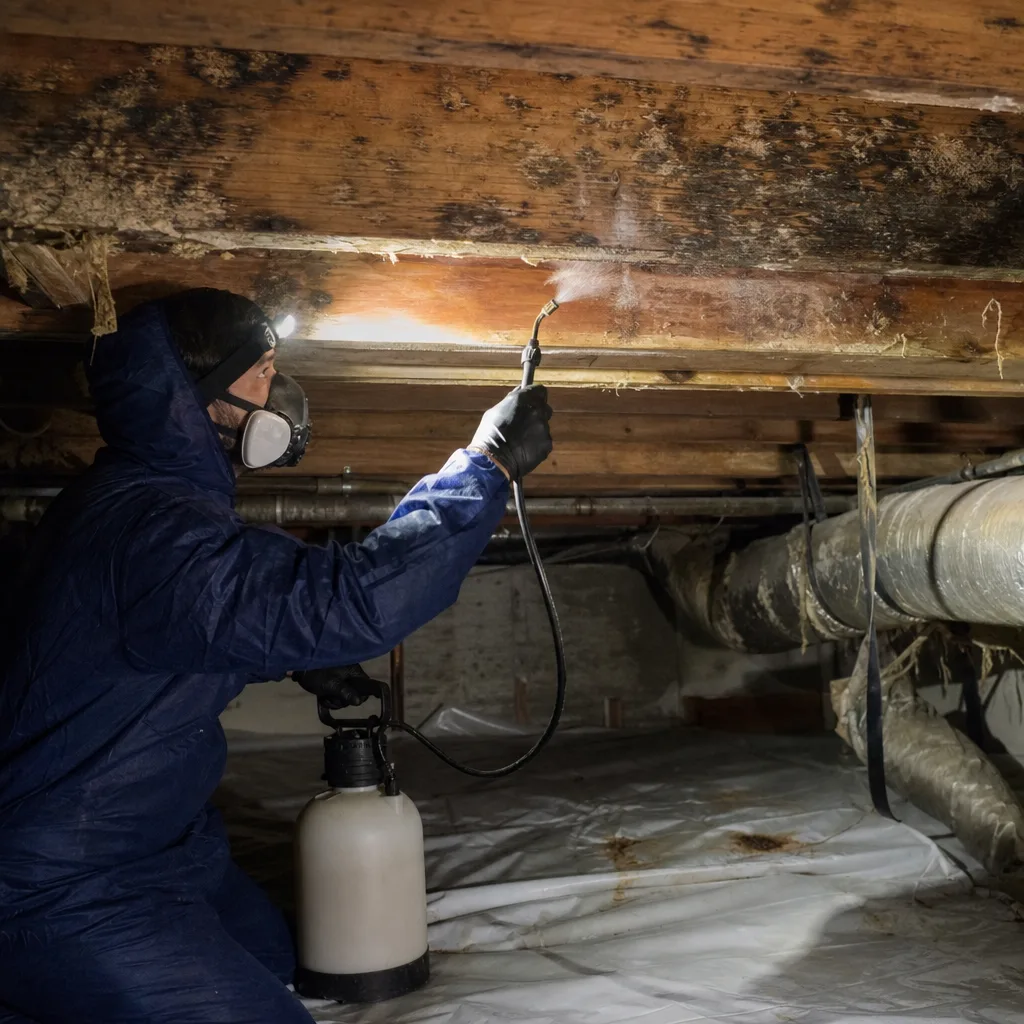
Call for professional assessment when: water has affected drywall, insulation, or flooring; you smell musty odors after any water event; visible mold exceeds 10 square feet; sewage or gray water is involved; or your insurer has requested documentation you cannot produce. In Irvine, where slab construction hides moisture migration, even “minor” leaks from ice makers, dishwasher supply lines, or AC condensate drains can produce significant hidden damage.
DryMark Restoration Irvine offers free estimates in Irvine - call (657) 212-2570. Every estimate includes a written scope with line-item pricing before any work begins, per Haven Standard, Clause 1. We also provide a Free Second Opinion on any competitor’s written estimate.
Frequently Asked Questions
Water damage mitigation and drying typically takes 3-5 days for standard residential losses in Irvine’s climate, with reconstruction adding 2-6 weeks depending on material availability and HOA approval requirements. Category 3 water, mold involvement, or Santa Ana wind events during drying can extend the timeline to 7-14 days for mitigation alone. Call (657) 212-2570 for a specific timeline based on your loss - estimates are free.
Full coverage depends on your policy terms, the cause of loss, and - critically - the quality of documentation your restoration company provides. Policies that cover “sudden and accidental” damage deny claims where adjusters cannot distinguish recent damage from long-term maintenance issues. Daily drying logs, photo records, and written scopes are what make that distinction provable. We coordinate directly with adjusters and provide the documentation that supports full payment. Call (657) 212-2570 to discuss your specific policy.
Mitigation is emergency work to stop further loss: extraction, initial drying setup, board-up. Remediation is removal and treatment of damaged materials: demolition, antimicrobial application, disposal. California insurers often apply different coverage limits to each. Lumping them together on one line item triggers requests for itemization that delay payment 30-60 days. We separate these explicitly in every scope with distinct pricing. Bring any competitor’s estimate and we’ll review it free - our Free Second Opinion identifies these issues before they cost you.
Without daily readings, you cannot prove drying progress to your insurer, and you cannot detect when drying stalls or when Santa Ana winds produce false “dry” readings. We’ve seen homeowners in Woodbridge and Westpark run rental equipment for a week, reinstall flooring, and face $15,000+ in mold remediation six months later when the slab moisture finally expressed. Daily readings with professional-grade meters are what prevent this - and what make your claim payable. Call (657) 212-2570 for documentation standards that protect your recovery.
Most Irvine master-planned communities require architectural review for exterior changes, roofing, window replacement, and sometimes even paint color matching. This review typically takes 2-4 weeks and must be completed before work begins. Your restoration scope should explicitly address whether HOA submission is included or your responsibility. We coordinate this as part of reconstruction planning, with documentation that supports your additional living expense claim during the delay.
Request them in writing. If they cannot produce dated logs with technician identification, moisture readings, and psychrometric data, they cannot prove their work to your insurer - and you may be left with uncovered costs or denied secondary claims. This is precisely why we built our documentation system around daily transparency. Our Free Second Opinion on any competitor’s estimate includes a documentation review; bring their paperwork and we’ll identify what’s missing.
The Bottom Line
Damage restoration in Irvine succeeds or fails on documentation, not drying technique alone. The five-phase process - mitigation, drying, remediation, reconstruction, documentation - produces an insurance outcome only when each phase is scoped in writing, executed with measurable standards, and recorded in a file that an adjuster can review without requesting clarification. Slab-on-grade construction, Santa Ana wind patterns, and California’s insurance documentation requirements make Irvine-specific expertise essential. The homeowners who recover fully are those who treat restoration as a documentation problem from the first phone call, not as a contractor problem they hope works out.
Written by Alicia Brennan, Owner at DryMark Restoration Irvine, serving Irvine since 2011.